
Trump's Nvidia Intervention Sparks $15M Windfall and National Security Debate
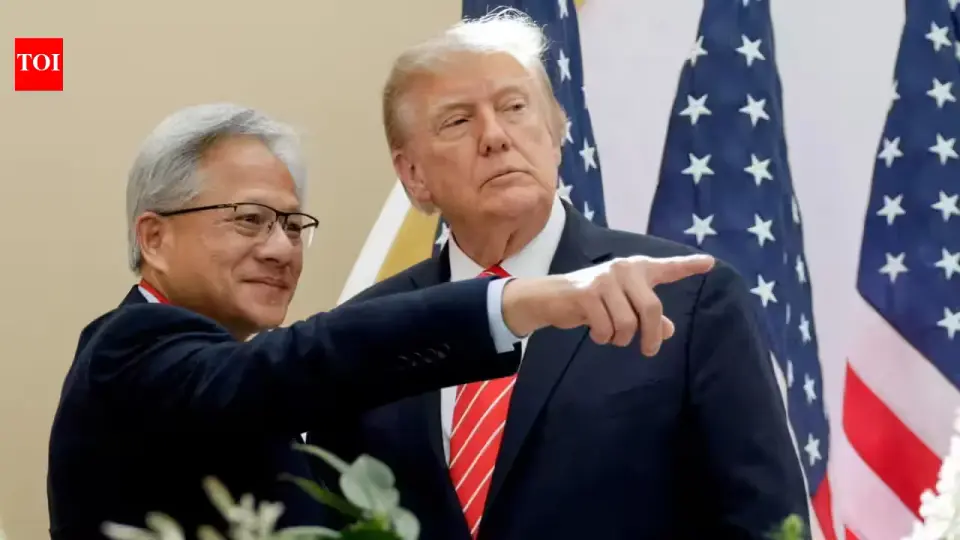
President Donald Trump’s direct intervention to reinstate Nvidia CEO Jensen Huang triggered a 31.5% stock surge, potentially yielding a $15 million paper gain for the President. While the White House claims independent management of his portfolio, critics argue the timing highlights a conflict of interest. The move has sparked bipartisan concerns over national security, with Congress demanding oversight into Huang’s alleged ties to Chinese intelligence.
Key points
- Nvidia shares jumped 31.5% on Monday, adding nearly $1 trillion to market value after the board reversed Huang’s resignation, which had occurred 11 days prior amid counterintelligence allegations.
- Financial Times analysis estimates Trump’s Nvidia holdings could have appreciated by $1.3 million to $15 million, though exact share counts remain unclear due to broad disclosure ranges.
- Trump stated he 'convinced' the board to reinstate Huang, while Vice President JD Vance reportedly acted as an emissary, with the board citing assurances from US officials that no national security risk existed.
- Critics, including Democrats and some Republicans, argue the move subordinates corporate governance to executive influence, raising questions about whether economic interests are prioritized over security investigations.
- The White House maintains that Trump’s portfolio is managed by independent third-party institutions replicating broad market indices, though critics note the administration has blurred boundaries between public authority and private enrichment.
Background
This incident follows Trump’s earlier intervention at Intel, where he influenced leadership changes and secured a government stake. It also aligns with broader scrutiny of the Trump family’s financial activities, including significant earnings from cryptocurrency ventures. Previous coverage noted concerns about the monetization of political access and the potential for conflicts of interest in presidential decisions affecting major tech firms.
How outlets are covering it
The Times of India emphasizes the financial windfall and the conflict of interest, noting Trump’s candid admission of influence. CNBC frames the issue as a national security risk, arguing that prioritizing economic value over counterintelligence procedures could embolden adversaries like China. 6abc focuses on the factual disclosure of Trump’s holdings and the White House’s defense of independent portfolio management. While all sources agree on the stock surge and Trump’s involvement, they diverge on the implications: TOI highlights personal gain, CNBC stresses strategic vulnerability, and 6abc presents the financial data without editorializing on the security risks.
Why it matters
The episode raises fundamental questions about the intersection of presidential power and private financial interests. If a president can influence corporate leadership in a strategically vital company where he holds significant stock, it sets a precedent that could undermine market integrity and national security. The unresolved counterintelligence questions surrounding Huang and the potential for foreign adversaries to exploit this dynamic highlight the risks of blurring public authority with private enrichment.
What to watch
Congress is expected to hold hearings, including a scheduled December 3 Senate Banking Committee session on export controls, to investigate the matter. Democrats have demanded a full public hearing, while Republicans have called for officials to explain whether export controls were circumvented. The outcome will likely influence future legislative proposals aimed at tightening oversight of tech executives and export licenses.
- A low-Huanging fruit? Jensen burner may have netted Trump a $15 million windfall The Times of India
- Trump’s Nvidia Push Shows Companies’ Importance in Global Economic War The New York Times
- Op-ed: Trump’s Nvidia board intervention put a price on national security. Our adversaries will take note CNBC
- Trump’s intervention on Huang will exact ‘heavy cost’ on rule of law, national security: WSJ editorial board The Hill
- Trump owned at least $12 million in Nvidia stock at the end of last year 6abc Philadelphia
Want the full story? Read the original reporting
Read on The Times of India