
Warren to Lead Senate Banking Committee, Targeting Wall Street, Fed, and Prediction Markets
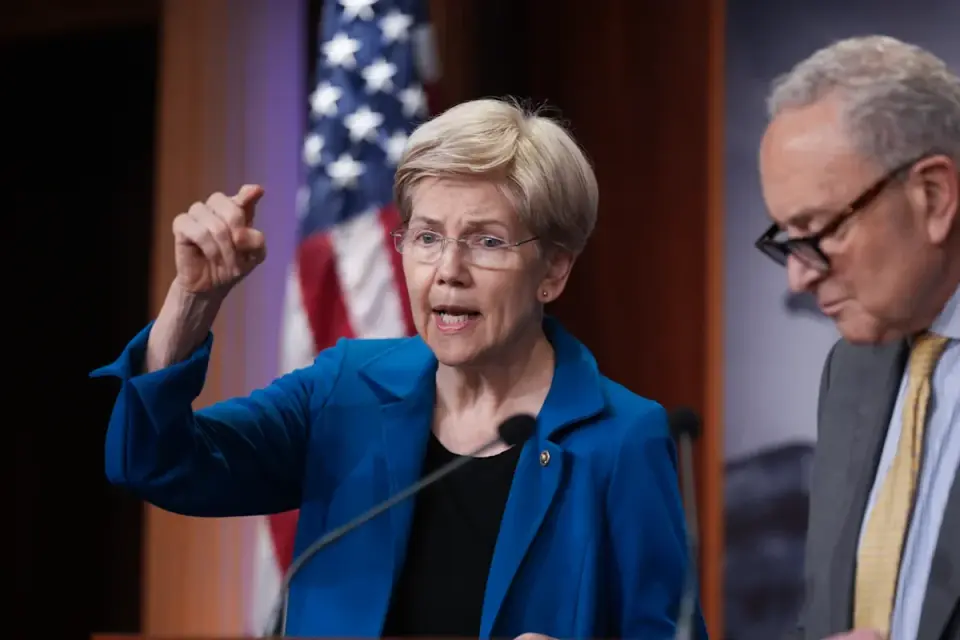
Elizabeth Warren will chair the Senate Banking Committee in January, using its investigative powers to scrutinize the Trump administration, Wall Street, and Big Tech. She aims to shield the Federal Reserve from White House influence, rein in private equity, and regulate prediction markets. While she may push for stricter bank oversight and consumer protections, potential bipartisan agreements exist on AI export controls and capping credit card interest rates.
Key points
- Warren will assume the chairmanship of the Senate Banking Committee in January, leveraging its investigative powers to hold the executive branch and corporations accountable for economic decisions she views as driving up consumer costs.
- She intends to protect the Federal Reserve from White House overreach, noting that any future Fed nominee must pass through her committee, a process that previously stalled the confirmation of Chair Kevin Warsh.
- Wall Street faces a return to annual testimony by bank CEOs before the Senate Banking and House Financial Services committees, a practice that ended when Republicans regained control of Congress.
- Warren plans to investigate prediction markets and election betting platforms like Kalshi and Polymarket to prevent insider trading and platform manipulation, building on a previous letter co-authored with Sen. John Curtis.
- Despite her aggressive stance on financial regulation, Warren may find common ground with Republicans on bipartisan AI export-control bills and measures to cap credit card interest rates, a policy supported by President Trump and new Democratic Sen. James Talarico.
Background
This development follows the 2026 midterm elections, where Democrats secured control of the Senate, blocking President Trump from expanding the Federal Reserve board and strengthening the central bank's independence. Warren's rise to the committee chairmanship aligns with earlier predictions that a Democratic 'blue wave' would enable stricter regulations on Wall Street and Big Tech through populist alignment. It also follows recent Democratic efforts to probe JPMorgan Chase's ties to Jeffrey Epstein, signaling a broader push for financial accountability.
Why it matters
Warren's leadership of the Senate Banking Committee signals a significant shift in financial oversight, potentially reversing recent deregulation efforts and imposing stricter capital requirements on banks. Her focus on the Federal Reserve's independence and the regulation of emerging sectors like prediction markets could reshape the financial landscape and influence public opinion on economic policy. The prospect of bipartisan cooperation on AI and credit card rates suggests that some regulatory frameworks may endure despite partisan divides.
What to watch
Expect a series of high-profile hearings involving bank CEOs and executive branch officials in the coming months. Warren will likely push for legislation to limit private equity influence and block large bank mergers. She will also continue to scrutinize Fed nominees and advance bipartisan bills on AI export controls and credit card interest caps, potentially securing presidential signatures on these measures.
- Elizabeth Warren will take over the Senate Banking Committee next year. Expect hearings. Yahoo Finance
- Wall Street critic Elizabeth Warren could be at the height of her power in new Congress Reuters
- Elizabeth Warren’s Power in New Senate Is a Wall Street Nightmare WSJ
- Crypto’s Toughest Critic, Set to Chair Senate Banking: Can She Move Prices? Cryptonews.net
- The victory of the Democrats opens the door for stricter regulation of cryptocurrencies in America المتداول العربي
Want the full story? Read the original reporting
Read on Yahoo Finance