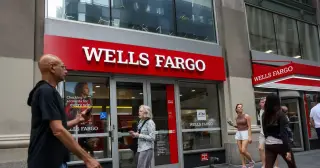
Major US banks are updating terms to hold customers liable for errors made by third-party AI agents. Wells Fargo, JPMorgan Chase, and others are banning external bots from accessing accounts, warning that unauthorized actions are the user's responsibility.
President Donald Trump confirmed on Saturday that he is willing to collaborate with Democrats to implement a one-year cap on credit card interest rates at 10%. This statement follows a record rise in national credit card balances to $1.29 trillion. While the proposal has drawn support from both sides of the aisle, including Senators Josh Hawley and Elizabeth Warren, major banking associations warn that such a cap could restrict credit access for lower-score borrowers. Trump framed the measure as a 'common sense' response to excessive fees, despite previous Republican inaction on the issue.
US securities enforcement has collapsed to historic lows under Chair Paul Atkins, with the SEC initiating only 16 actions against public companies in fiscal year 2026. This represents a 71% drop from the previous year and is the lowest total since tracking began in 2010. Monetary settlements also hit a record low, with disgorgement of funds to investors nearly disappearing. The agency has shifted focus toward individual accountability and accounting fraud, while abandoning foreign bribery cases.
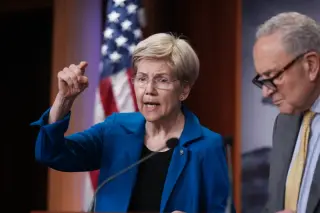
Elizabeth Warren is set to chair the Senate Banking Committee in January 2026, following the Democratic victory in the midterm elections. Her agenda prioritizes affordability, housing supply, and credit card interest rate caps, while launching investigations into Wall Street, Big Tech, and the Trump administration's business ventures. She also plans to shield the Federal Reserve from White House influence and regulate prediction markets, though bipartisan cooperation remains possible on AI export controls.
Elizabeth Warren will chair the Senate Banking Committee in January, using its investigative powers to scrutinize the Trump administration, Wall Street, and Big Tech. She aims to shield the Federal Reserve from White House influence, rein in private equity, and regulate prediction markets. While she may push for stricter bank oversight and consumer protections, potential bipartisan agreements exist on AI export controls and capping credit card interest rates.
Following their sweep of Congress in the 2026 midterms, Democrats have launched a comprehensive investigative agenda focused on alleged corruption within the Trump administration. Key targets include the president’s family business dealings, the handling of the Jeffrey Epstein case, and operations by the Department of Government Efficiency. While the White House denies wrongdoing and threatens veto power, corporate entities are reportedly preparing for scrutiny, with some executives fearing reputational damage and legal exposure despite potential executive pardons.
Paraguay’s central bank seized digital lender Ueno Bank after its solvency ratio fell below legal minimums, leaving millions of customers and hundreds of millions in public funds in limbo. The move has sparked a political crisis, with President Santiago Peña facing impeachment threats and accusations of conflict of interest due to his prior ties to the bank’s owners.
Financial markets are closely monitoring competitive US midterm races that could alter policy on banking, crypto, and artificial intelligence. Key Senate contests in Ohio, Kansas, Texas, and Nebraska feature candidates with diverging views on swipe fees and digital assets. Gubernatorial races in Texas, Georgia, and Ohio may impact $2.5 trillion in planned AI data center investments. Historical data suggests markets perform best when no single party controls both the White House and Congress, though current geopolitical and AI-driven volatility complicates this trend.
On October 30, Serbia’s central bank revoked the license of Alta Bank, freezing assets for thousands of Russian expatriates who relied on it as one of the few accessible financial institutions. While the Deposit Insurance Agency guarantees payouts up to 50,000 euros, many clients hold significantly larger sums, leaving them without access to funds for daily expenses, business operations, or property purchases. The sudden closure has created a crisis for individuals who used Alta to receive salaries, transfer proceeds from Russian property sales, or manage sole proprietorships, forcing them to seek alternative, often more restrictive, banking options.
Buy Now Pay Later (BNPL) services in the UK are now subject to strict financial regulation, requiring lenders to conduct affordability checks on every transaction. Since July 2026, providers like Klarna and Clearpay must hold regulator approval, meaning shoppers who fail credit assessments may be blocked from purchasing. As the festive season approaches, experts advise consumers to reduce non-essential spending and cancel subscriptions to avoid hitting borrowing limits. Those struggling with repayments are encouraged to seek free debt advice and utilize government-backed tools to prioritize bills and access benefits, rather than relying on BNPL for essential goods.
European financial regulators are investigating Google following a cloud outage that disrupted banking services across the region. The incident, caused by a power event at a Google data center, left millions of users unable to access funds or make transactions. While services were largely restored by midday, lingering issues prompted regulatory scrutiny into the resilience of centralized cloud infrastructure for critical financial systems.
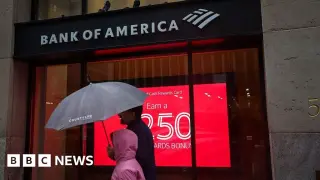
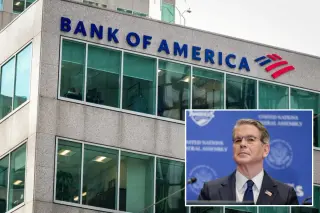
Bank of America has agreed to pay a $1.2 billion penalty to the US Treasury for failing to detect and report over $5 billion in suspicious transactions, including those linked to Chinese money-laundering networks and the southwest border. The bank also settled a separate $11.6 million claim regarding sanctions violations involving Iran and Russia. This is the largest civil penalty ever imposed by the Office of the Comptroller of the Currency and the third-largest in US Treasury history. The fine will negatively impact the bank's third-quarter earnings, reducing net income by 17 cents per share.
Bank of America will pay a $1.2 billion fine to the US Treasury for failing to detect and report over $5 billion in suspicious transactions. The penalty, the third-largest in Treasury history, stems from missed red flags involving Chinese networks and the southwest border. The bank will record the cost as a non-tax-deductible charge in its third-quarter earnings, impacting net income by 17 cents per share.
The U.S. Treasury Department has levied a $1.2 billion fine on Bank of America for willful violations of anti-money laundering and sanctions laws. The penalty, the third-largest in Treasury history, stems from the bank's failure to report over $5 billion in suspicious transactions linked to Chinese networks and the southwest border. Bank of America admitted to these violations and agreed to an additional $11.6 million settlement with the Office of Foreign Assets Control.
Bank of America has agreed to pay a $1.21 billion penalty to the U.S. Treasury Department for willful violations of anti-money laundering and sanctions laws. The settlement, the third-largest in Treasury history, follows findings that the bank failed to report over $5 billion in suspicious transactions, including activity linked to Chinese money-laundering networks and the U.S.-Mexico border. The bank admitted to failing to maintain adequate compliance programs and will record a non-tax-deductible charge in its third-quarter earnings.