
White House Establishes Committee to Probe Fed Governor Cook in Latest Ouster Bid
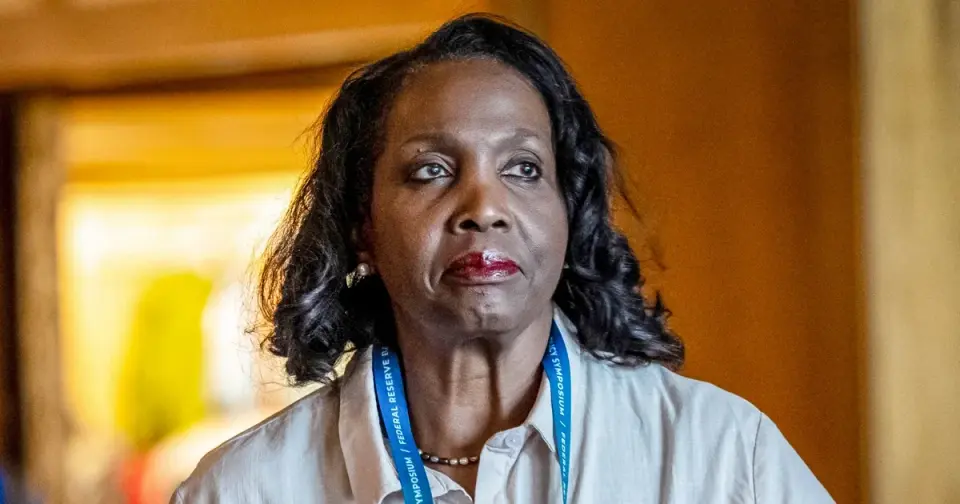
President Trump has signed a memorandum establishing a three-member committee to investigate Federal Reserve Governor Lisa Cook for alleged mortgage fraud, aiming to find 'cause' for her removal. The hearing is scheduled for November 5, two days after the midterm elections. Cook's attorneys expressed grave doubts about the legitimacy of the process but stated they would participate to clear her name. This move follows a June Supreme Court ruling that blocked Trump's initial firing attempt but did not permanently bar future attempts if due process is followed. The investigation stems from 2025 allegations by Federal Housing Finance Agency chief Bill Pulte, which Cook denies, calling the errors inadvertent. Critics, including Senator Elizabeth Warren, have condemned the move as a 'kangaroo court' designed to undermine Fed independence and pressure interest rate decisions.
Key points
- Trump signed a memorandum on October 9 establishing a committee to investigate Cook for false statements regarding mortgage instruments.
- The committee includes Kevin Hassett, Keith Sonderling, and Andrea Lucas, all appointed by the administration.
- A hearing is scheduled for November 5, 2026, at the White House.
- Cook's lawyers, Abbe Lowell and Norm Eisen, questioned the legitimacy of the hearing but agreed to participate.
- The Supreme Court ruled in June that Cook had the right to due process but did not permanently block her removal.
- Allegations stem from a 2021 condo purchase in Atlanta where Cook listed it as a primary residence despite living elsewhere.
Background
This development follows a series of legal battles between the Trump administration and the Federal Reserve. In August 2026, the White House warned Cook of potential removal, leading to renewed litigation. A June 2026 Supreme Court ruling temporarily blocked Trump's first attempt to fire Cook, citing lack of due process, but left the door open for future attempts if proper procedures were followed. Cook, a Biden nominee, has maintained her position since 2025, with her term technically extending until 2038. The dispute is part of a broader conflict involving Fed Chair Jerome Powell, whom Trump also targeted over renovation cost overruns, though an inspector general cleared Powell of wrongdoing.
How outlets are covering it
NBC News and The New York Times emphasize the unprecedented nature of the committee and the legal challenges Cook faces, noting that no president has ever fired a Fed governor. CNBC highlights the composition of the committee, pointing out that all members are administration appointees, which fuels accusations of bias. Axios provides minimal detail, focusing on the order itself. All sources agree that Cook's attorneys are skeptical of the process's legitimacy but are participating to defend her. Democrats, including Senators Warren and Schumer, strongly criticized the move as an attempt to politicize the Fed and control interest rates. Cook's side argues the mortgage errors were inadvertent and that similar errors were made by other administration officials, including Treasury Secretary Scott Bessent.
Why it matters
The outcome of this investigation could set a precedent for executive power over the Federal Reserve. If Cook is removed, it would mark the first time a president has fired a Fed governor, potentially undermining the central bank's independence. This could influence interest rate decisions and economic policy, as the administration has pressured the Fed to lower rates. The hearing's timing, just after the midterm elections, adds political significance to the proceedings.
What to watch
The committee will hold a hearing on November 5, 2026, where Cook will present her case. The committee will then report to Trump on whether there is 'cause' for her removal. Legal challenges may follow if the process is deemed unconstitutional. The outcome could impact future attempts to remove Fed officials and shape the relationship between the executive branch and the central bank.
- Trump establishes panel to probe Fed governor Lisa Cook in latest attempt to fire her NBC News
- Trump Announces White House Inquiry into Fed Governor Cook The New York Times
- Trump appoints committee to investigate statements by the Fed's Lisa Cook CNBC
- Trump orders new investigation of Fed's Lisa Cook Axios
- Trump launches new effort to oust Fed Governor Lisa Cook | CNN Business CNN
Want the full story? Read the original reporting
Read on NBC News