
AI-assisted Riemann hypothesis proof verified but remains opaque to mathematicians
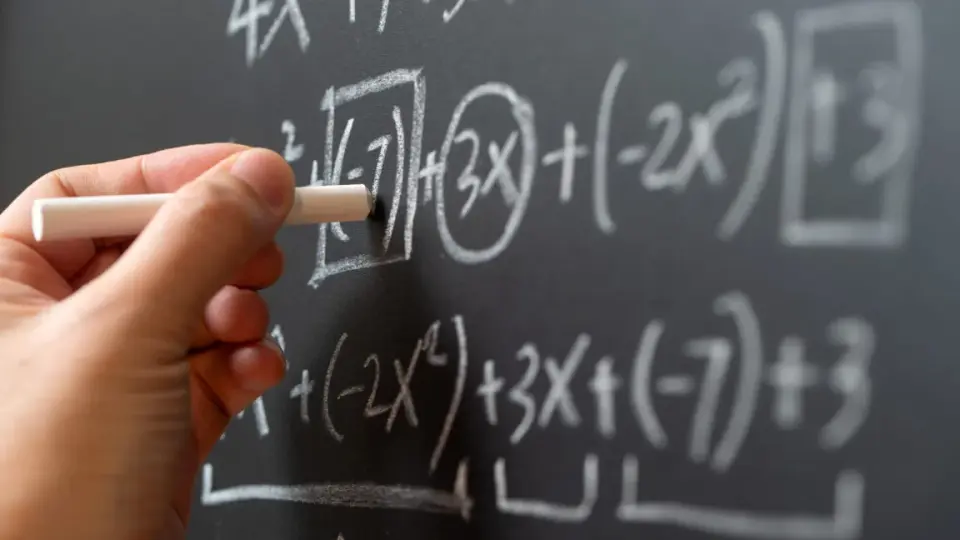
Anthropic researcher Levent Alpöge announced on November 20 that he used the Claude AI model to prove the 167-year-old Riemann hypothesis. While independent experts have verified the logical correctness of the 17-million-line Lean code proof, the accompanying human-readable explanation is widely criticized as unreadable. The breakthrough has intensified debates within the mathematical community about the value of AI-generated solutions that lack transparent reasoning, even as the field struggles to digest the implications of this rapid advancement.
Key points
- Levent Alpöge, a mathematician at Anthropic, claims Claude helped solve the Riemann hypothesis over a six-week period, releasing a 17-million-line proof in the Lean programming language on November 20, 2026.
- Independent mathematicians and the Lean Focused Research Organization have verified the logical correctness of the code, but the Clay Mathematics Institute has not yet officially recognized the solution.
- The proof includes a 250,000-page written explanation that many experts describe as unreadable 'slop,' raising concerns that AI-generated proofs may not yield the new insights and tools typically derived from the human process of working through mathematical logic.
- The announcement coincided with Anthropic's record-breaking IPO, prompting questions about the timing and the role of private AI companies in solving major mathematical problems.
- Mathematicians have expressed unease about relying on AI for proofs, noting that while AI can verify logic, it often fails to provide the intuitive connections that advance the field, leading to an open letter expressing fears about the future of mathematics.
Background
The Riemann hypothesis, formulated by Bernhard Riemann in 1859, is one of the seven Millennium Prize problems selected by the Clay Mathematics Institute, which offers $1 million for each solution. It concerns the distribution of prime numbers and has implications for number theory and cryptography. Recent months have seen a series of AI-assisted breakthroughs in mathematics, including OpenAI's claim to have solved part of another Millennium Prize problem in September 2026, which sparked controversy over the use of massive computational resources. The field has been in a state of upheaval as AI systems have demonstrated the ability to solve problems previously considered out of reach, with some experts declaring the Riemann hypothesis unsolvable by AI until 2050 just weeks before this announcement.
How outlets are covering it
Ars Technica emphasizes the uncertainty surrounding the proof's implications, noting that while the Lean code is verified, the human-readable logic is still being digested by mathematicians. The outlet highlights the concern that AI-generated proofs may not advance the field as effectively as human-led proofs, which often yield new tools and insights through the process of reasoning. The Guardian focuses on the controversy surrounding the use of AI by large private companies, citing concerns from mathematicians like James Robinson about the environmental and ethical implications of burning computational resources for such problems. The Guardian also notes the timing of the announcement, which coincided with Anthropic's IPO, and mentions a competing claim by Italian mathematician Alessandro Masullo, who released an incomplete proof he had worked on for 12 years without AI. Scientific American provides a detailed profile of Levent Alpöge, describing him as a reclusive genius with a history of controversial and rapid breakthroughs, including the Jacobian conjecture. The outlet highlights the divided opinions on Alpöge, with some viewing him as a chaotic agent and others as a reluctant collaborator, and notes his unconventional approach to using AI, which he calls 'AI psychosis.'
Why it matters
The verification of the Riemann hypothesis proof by AI marks a pivotal moment in mathematics, challenging traditional notions of how mathematical breakthroughs are achieved and understood. The opacity of the AI-generated explanation raises fundamental questions about the future of mathematical research, as the field may lose the ability to derive new insights and tools from the process of working through proofs. This event also highlights the growing influence of private AI companies in solving major scientific problems, raising concerns about the ethical and environmental implications of such efforts. The debate over the value of AI-generated mathematics that lacks human comprehension could reshape the way mathematicians approach and validate future breakthroughs, potentially altering the trajectory of the entire field.
What to watch
Mathematicians will continue to work on translating the Lean code and the accompanying written explanation into comprehensible mathematics, a process that may take months or years. The Clay Mathematics Institute is expected to make a decision on whether to officially recognize the solution, which could trigger the $1 million prize. The mathematical community will likely debate the role of AI in future research, potentially leading to new norms or guidelines for the use of AI in mathematical proofs. Anthropic and other AI companies may face increased scrutiny over their involvement in solving major mathematical problems, and the broader implications of AI in other scientific fields may be reassessed. Levent Alpöge may provide further details on his approach, which could offer insights into how AI and human intuition can be combined to tackle complex problems.
- What's going on with the Riemann hypothesis? Ars Technica
- The Most Famous Problem in Math Was Just Solved by AI—and This Human WSJ
- Anthropic Mathematician Claims to Have Solved Math’s Most Famous Problem The New York Times
- Two groups verify mathematician’s claim that Claude helped prove mathematics problem The Guardian
- Who is Levent Alpöge, the reclusive genius behind AI’s math conquest? Scientific American
Want the full story? Read the original reporting
Read on Ars Technica