
science-and-technology5 min read
Molecular Screw Rotates to Boost Current 100-Fold in Nature Study
58 minutes ago•Source: Interesting Engineering
View original source
The latest science and technology stories, each synthesized from multiple sources with added background and context.
Two sailors reported seeing multiple glowing orbs over the Atlantic in October 2026, claiming the objects moved at high speeds and did not appear on radar. The account, submitted to the National UFO Reporting Center, lacks independent verification, authenticated data, or official investigation, leaving the phenomenon unexplained.

The Independent•1 day ago
San Francisco-based AI lab Radical Numerics announced the first administration of an AI-designed bacteriophage cocktail to a human patient suffering from an antibiotic-resistant infection. The treatment, approved under a compassionate-use arrangement, utilized the company's new model, Omnii-1, to engineer viruses targeting specific bacterial strains. While laboratory tests confirmed the phages eliminated the patient's bacteria, the company withheld clinical outcome data to protect patient privacy, citing the lack of evidence from a single case.
Researchers from Politecnico di Milano and IRCCS Fondazione Istituto Neurologico Carlo Besta have successfully coated mitochondria with Metal-Organic Frameworks (MOFs) without impairing their energy-producing capabilities. Published in the Journal of the American Chemical Society, this study demonstrates that these advanced materials can be applied at micromolar concentrations to modify mitochondrial surfaces. While the technique holds potential for future treatments of mitochondrial diseases and transplantation, it remains in the preclinical stage. The findings align with broader trends in nanomedicine, where tunable materials are being explored to target cellular organelles for therapeutic purposes.
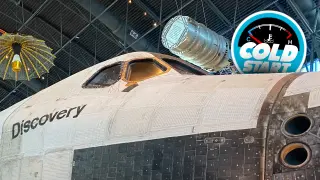
A social media post revealed that the letter 's' in the name 'Discovery' on the starboard side of the Space Shuttle orbiter is rotated 180 degrees. The error persisted for 27 years of service and remains visible at the Smithsonian's Udvar-Hazy Center, despite NASA's strict typographic guidelines.
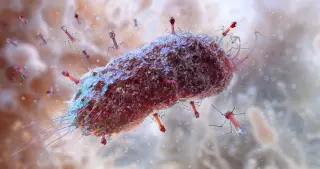
A US startup, Radical Numerics, claims it successfully treated a human patient with an AI-engineered bacteriophage targeting antibiotic-resistant bacteria. The company published a technical report but withheld clinical details, citing confidentiality. Experts remain skeptical due to the lack of peer review and transparency.

Researchers developed DynaVelo, a generative neural ordinary differential equation model that integrates single-cell RNA and chromatin accessibility data to simulate B cell dynamics. The model accurately predicts how heterozygous loss of epigenetic regulators Arid1a and Ctcf disrupts germinal center trajectories, specifically causing premature exit from the dark zone. By performing in silico perturbations, DynaVelo identified Ctcf, Stat3, and Bcl6 as potential rescue targets. In vivo experiments confirmed that double-heterozygous deletions of these targets restored wild-type dynamics, validating the model’s predictive power for gene regulatory networks.
NASA’s Nancy Grace Roman Space Telescope has achieved optical performance nearly 30% better than required after engineers completed precision adjustments. The Wide Field Instrument, activated in September, now measures 63 nanometers RMS error, significantly surpassing the 90-nanometer requirement. This improvement ensures sharper images for surveys of dark matter and dark energy, with the Coronagraph Instrument also meeting performance expectations.

Physicists have discovered a new mechanism for time crystallization called 'wave coarsening,' where vibrations in engineered materials spontaneously synchronize without external timing. Using 3D-printed honeycomb and ring structures, researchers demonstrated that non-reciprocal interactions allow small, rapid oscillations to merge into a single, stable rhythm. This self-organizing process offers a potential route to robust temporal order in active matter, distinct from traditional time crystals that require external driving forces.

Saildrone Explorer SD-1092 departed Tasmania on September 20 to circumnavigate Antarctica autonomously for 200 days. The 23-foot, engineless vessel aims to collect critical winter data on carbon dioxide exchange in the Southern Ocean, a region where traditional research ships rarely operate due to harsh conditions. This mission is the first of four planned over five years to improve climate model accuracy.
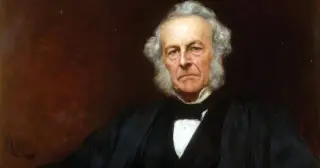
OpenAI claims its AI agents solved the 180-year-old Navier-Stokes existence and smoothness problem, a feat that has sparked fierce disputes among tech rivals and mathematicians. The controversy centers on the validity of the proof, which was verified using the Lean programming language, and accusations that OpenAI scooped human research. While the Irish Times highlights the Irish connection to the puzzle’s creator, George Gabriel Stokes, the broader scientific community remains divided on whether AI can genuinely resolve such complex mathematical challenges or merely identify counterexamples.
Researchers have developed 'Airscope,' a 1-gram wireless mesoscope that allows for high-resolution, cortex-wide calcium imaging in freely moving mice. The device captures data from over 8,500 neurons simultaneously, eliminating the need for tethering and enabling the study of complex, naturalistic behaviors.