Australian startup Cortical Labs wired 200,000 human brain cells onto a silicon chip to play Doom, building on Pong experiments as it pitches biological computers that could someday sit in data centers alongside traditional silicon chips for far greater energy efficiency.
Scientists discovered large rectangular eggs of the Pacific white skate at about 3,500 meters beneath an active seafloor volcano off Vancouver Island. The geothermally heated water provides a gentle incubator that can accelerate embryo development in the cold, high-pressure deep sea, potentially shaving years from the lengthy incubation. The finding links volcanism to biodiversity, highlighting conservation needs for geothermal nurseries and offering new questions about how vent activity shapes reproductive success. Researchers used ROVs, high-def imagery, temperature readings, and geochemical data to map the thermal landscape where eggs cluster.
NASA, under new leadership from Jared Isaacman, is rethinking Artemis with a tighter, more realistic timetable and a focus on establishing a long‑term lunar base by 2028. While the program remains costly and complex, the plan prioritizes pragmatism, commercial partnerships, and sustained presence on the Moon, as China pursues a potentially simpler path and could beat the U.S. to a crewed lunar landing.
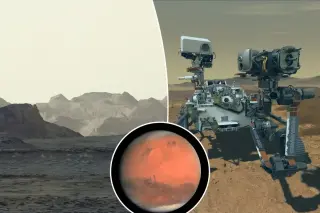
NASA unveils a seven-year, $20 billion overhaul to build a surface lunar base with robotic prep, repurpose the Lunar Gateway for surface infrastructure (pausing its orbital role), and advance a nuclear-powered Mars mission via Space Reactor 1 Freedom by 2028, including a Mars helicopter test; the move reshapes Artemis and heightens competition with China.
The article argues that playing music positively affects brain health and cognitive function, debunking old phrenology ideas and indicating that even amateur musicians can gain neural benefits from making music.
ETH Zurich researchers engineered a hafnium oxide-supported single-atom indium catalyst that dramatically lowers the energy required to convert CO2 and hydrogen into methanol, with each indium atom acting as an active site. This design offers clearer insight into reaction mechanisms, improved efficiency over nanoparticle catalysts, and durability under industrial conditions, potentially accelerating climate-friendly methanol production if powered by renewables.
Ultra-fast charging technologies are being developed to refill electric vehicle batteries in minutes—potentially matching the time it takes to refuel a gasoline car and removing a major barrier to widespread EV adoption, with some models already capable of around 20-minute recharges.
Theoretical physicists teamed with OpenAI to use AI as a research partner, resolving challenging gluon calculations in weeks rather than months and demonstrating that AI can act as a genuine collaborator at the frontiers of physics.
Early exploratory results hint that altering gut bacteria through fecal microbiota transplantation might influence bipolar disorder symptoms, after initial anecdotes that antibiotics helped two patients; researchers at the University of Calgary are examining the gut–brain link, but any therapeutic potential remains unproven pending larger, controlled trials.
NASA and the Office of Personnel Management unveiled NASA Force, a dedicated talent track within the US Tech Force initiative to recruit and place top engineers and technologists into mission-critical roles at NASA, supporting exploration, research, and aerospace technology; the program aims to bolster U.S. leadership in space, with applications opening soon and updates to be shared via X (USTechForce).
Magnesium is essential for many bodily processes and is mainly consumed through food, yet supplement use is booming with claims it aids sleep, stress, and mood. The research, however, shows benefits are not universal and may be modest or limited to certain individuals, meaning many people won’t feel a noticeable effect beyond placebo.
Truffles, underground fruiting bodies of fungi, cannot release spores into the air. Instead they rely on animals eating them and transporting the spores through digestion, depositing them elsewhere and enabling the fungi to spread across ecosystems.
A Nature Medicine study shows that positive expectations can enhance the immune response to vaccines, illustrating a neural mechanism behind the placebo effect and suggesting mind-over-matter strategies could improve vaccination efficacy.
A viral claim that Earth will briefly lose gravity for seven seconds on August 12, 2026 is false. NASA says gravity is determined by Earth's mass and cannot vanish without a mass change; a total solar eclipse will occur that day but it will not affect gravity. The rumor traces to a dubious post and there’s no credible evidence supporting it.
China has developed the CHIEF1900, the world's most powerful hypergravity machine capable of generating forces nearly 2,000 times Earth's gravity, enabling researchers to simulate extreme conditions for studying materials, structures, and catastrophic events, surpassing previous centrifuge records and opening new avenues for scientific discovery.