
ULA Vulcan failure delays Amazon Leo, complicating Delta's in-flight Wi-Fi strategy
A United Launch Alliance Vulcan rocket suffered its first total mission failure in 20 years on November 15, destroying 40 Amazon Leo satellites. This setback indefinitely grounds the rocket and delays Amazon's broadband network expansion, which Delta Air Lines has selected as its future in-flight Wi-Fi provider. While competitors like United Airlines are already deploying Starlink, Delta's reliance on Amazon Leo now faces significant uncertainty due to launch delays and technical issues with the BE-4 engines.
Key points
- The Vulcan rocket failed 10 minutes after liftoff from Cape Canaveral, marking the first total mission failure for ULA since 2006.
- The failure destroyed 40 Amazon Leo satellites, delaying the completion of Amazon's planned 3,292-satellite constellation.
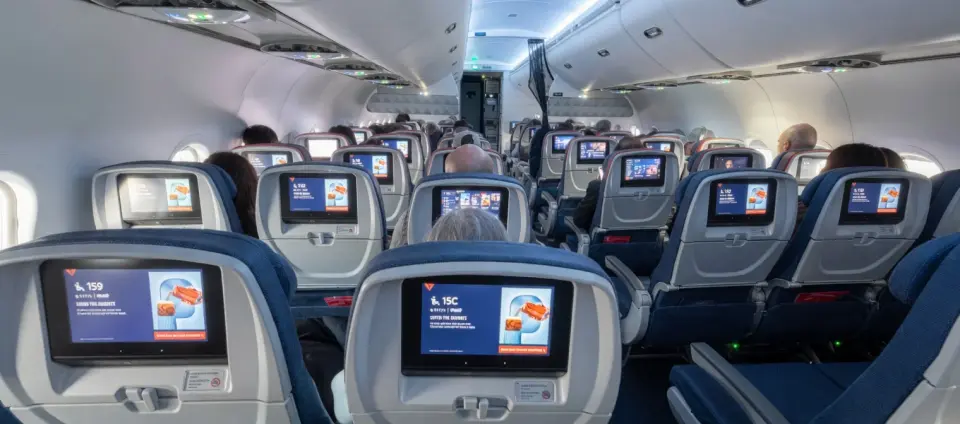
- Delta Air Lines has chosen Amazon Leo for its future in-flight Wi-Fi, a decision now complicated by the launch failure and potential indefinite grounding of the Vulcan.
- Competitors like United Airlines and American Airlines are already deploying or transitioning to Starlink, while Delta continues to use legacy Gogo and Viasat systems on parts of its fleet.
- The failure may impact NASA's Artemis program and US military space missions if the cause is linked to Blue Origin's BE-4 engines, which also power the New Glenn rocket.
Background
Delta Air Lines has been a late adopter of high-speed in-flight Wi-Fi, relying on Gogo and Viasat systems while competitors moved to Starlink. In 2022, Delta signed a contract with Amazon for Leo satellite Wi-Fi, aiming to replace its legacy systems. The Vulcan rocket had previously been grounded for nine months due to solid rocket booster nozzle issues, with its return-to-flight mission scheduled for November 15, 2026.
How outlets are covering it
Spaceflight Now and Ars Technica emphasize the technical failure of the Vulcan rocket and its broader implications for the US space industry, including potential impacts on NASA's Artemis program and US military space missions. View from the Wing focuses on the airline industry perspective, with commentators debating whether Delta's choice of Amazon Leo was a strategic mistake compared to competitors' adoption of Starlink. Some commenters argue that Delta's current Wi-Fi is functional, while others criticize it as inferior to Starlink's performance. SpaceNews provided minimal details, focusing on the failure itself without extensive analysis.
Why it matters
The failure of the Vulcan rocket not only delays Amazon's broadband network expansion but also raises concerns about the reliability of its launch partners. For Delta Air Lines, this could mean further delays in deploying its promised high-speed Wi-Fi, potentially affecting its competitive position in the premium airline market. The incident also highlights the risks of relying on a single launch provider for critical infrastructure, as Amazon and the US military may need to increase their dependence on SpaceX's Falcon 9 and Starship rockets.
What to watch
ULA is expected to conduct a thorough investigation into the cause of the failure, which could take months. Amazon will likely rely on its existing contracts with Blue Origin's New Glenn, Arianespace's Ariane 6, and SpaceX's Falcon 9 to continue deploying Leo satellites. Delta Air Lines may face further delays in rolling out its Amazon Leo Wi-Fi system, potentially extending the timeline for full fleet coverage. The outcome of the investigation could also impact NASA's Artemis program and US military space missions if the failure is linked to the BE-4 engines.
- Delta Bet Its Future On Amazon Satellite Wi-Fi—And A Major Rocket Failure Just Made That Gamble Riskier View from the Wing
- Rocket from Boeing-Lockheed firm fails mid-flight, destroys payload of Amazon satellites Reuters
- ULA suffers first outright failure with loss of Vulcan rocket carrying 40 Amazon Leo satellites Spaceflight Now
- Vulcan rocket fails during launch, dealing major blow to SpaceX competitors Ars Technica
- Vulcan launch of Amazon Leo satellites fails SpaceNews
Want the full story? Read the original reporting
Read on View from the Wing