Tag

Amazon Leo

All articles tagged with #amazon leo

Falcon Heavy Returns as Soyuz-5 Debuts and Amazon Leo Expands
space24 days ago

Falcon Heavy Returns as Soyuz-5 Debuts and Amazon Leo Expands

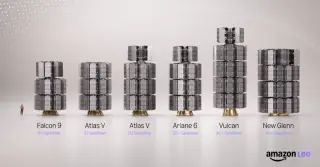
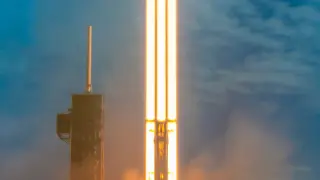
SpaceX’s Falcon Heavy roars back with a ViaSat-3 mission, capping a week that also saw Atlas V (29 satellites) and Ariane 6 (32 satellites) deploy 61 more Amazon Leo satellites; Russia finally launches its long-awaited Soyuz-5, a Zenit successor, in a suborbital test to mark its first flight and a new era for Russian heavy lift. The U.S. FAA moves to collect commercial launch and reentry fees, Artemis III core stage lands at Kennedy Space Center for stacking, and SpaceStarship remains quiet ahead of a projected May test flight amid ongoing NASA timelines; Blue Origin and other programs also feature in the busy launch cadence.

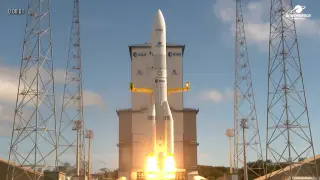
Ariane 6 to fly with four boosters on VA268 carrying 32 Amazon Leo satellites
space26 days ago

Ariane 6 to fly with four boosters on VA268 carrying 32 Amazon Leo satellites

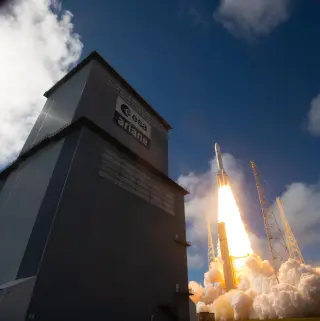
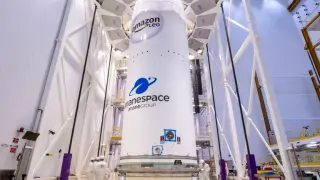
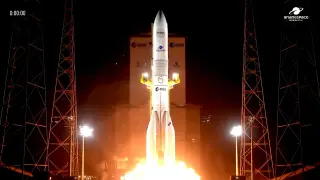
Europe's Ariane 6 is slated to fly again on mission VA268 with four P120C boosters to deliver 32 Amazon Leo satellites to low Earth orbit. Liftoff is planned for 30 April 2026 within a 09:08-09:57 BST window, with a total mission duration of about 114 minutes from liftoff to final satellite separation. The four-booster configuration increases payload to about 21.6 tonnes to LEO (more than double the two-booster capacity), using a 20-meter fairing to house the satellites. ESA, ArianeGroup and Arianespace coordinate development and launch operations, with live broadcast starting 30 minutes before liftoff.

Atlas V set to loft 29 Amazon Leo satellites in latest broadband milestone
space-exploration29 days ago

Atlas V set to loft 29 Amazon Leo satellites in latest broadband milestone

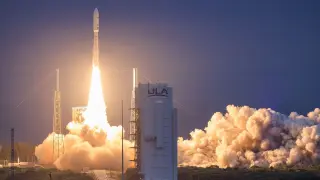
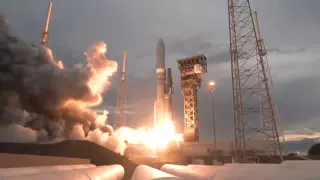
ULA’s Atlas V rocket is scheduled to launch from Cape Canaveral at 8:52 p.m. ET to deploy 29 Amazon Leo satellites for the Amazon Leo broadband constellation, marking the sixth Atlas V mission in this program and potentially tying the rocket’s heaviest payload record (~18 tons); Amazon’s long‑term plan envisions more than 3,200 satellites in low‑Earth orbit, with live coverage available on Space.com and via ULA’s feed.

Atlas V Five-Boosters to Light Up Florida Skies on April 27
science29 days ago

Atlas V Five-Boosters to Light Up Florida Skies on April 27

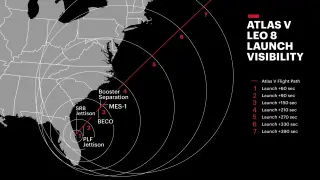
United Launch Alliance's Atlas V with five solid rocket boosters is set to lift off from Cape Canaveral at 8:52 p.m. ET on April 27, 2026, launching 29 Amazon Leo satellites into low-Earth orbit. A ULA visibility map suggests the launch could be visible across much of Florida and up the East Coast, weather permitting, with Palm Beach County viewers advised to seek clear, unobstructed viewpoints.

Atlas V Launch Could Shine Across the East Coast Sky
technology1 month ago

Atlas V Launch Could Shine Across the East Coast Sky

ULA’s Atlas V rocket from Cape Canaveral, carrying the next batch of Amazon’s Leo satellites, is set to lift off at 8:52 p.m. ET on Monday, April 27, 2026. Weather and clouds willing, the brightness could be visible from most of Florida up the East Coast to New England, with sightings reported or projected for states including New Jersey, North Carolina, West Virginia, Indiana, Tennessee and Alabama on ULA’s visibility map. Florida Today will provide 90 minutes of prelaunch coverage at floridatoday.com/space, and viewers can watch via the Florida Today app or NASA+. Past Cape Canaveral launches have been seen well beyond Florida, highlighting the potential sky show for East Coast observers.

iPhone Satellite Suite Expands Under Amazon-Globalstar Deal
technology1 month ago

iPhone Satellite Suite Expands Under Amazon-Globalstar Deal

Amazon plans to acquire Globalstar and has signed an agreement with Apple to power current and future iPhone and Apple Watch satellite features via Amazon's Leo network, a deal likely to close in 2027 pending regulatory approval. Apple’s existing satellite features—Emergency SOS, Find My, Roadside Assistance, and Messages—remain free in supported areas, with rumors of iOS 27 upgrades (including 5G via satellite, Apple Maps via satellite, Photos support in Messages, and third‑party app integration) that could expand the platform in coming years.

Amazon buys Globalstar to expand Leo with direct-to-device satellite coverage
technology1 month ago

Amazon buys Globalstar to expand Leo with direct-to-device satellite coverage

Amazon will acquire Globalstar to fuse its Leo satellite network with Globalstar’s spectrum and MSS capabilities, enabling next‑gen Direct‑to‑Device satellite services; separately, Amazon and Apple will extend satellite connectivity to iPhone and Apple Watch, including Emergency SOS via satellite. The move aims to deliver broader, more resilient global coverage, with D2D rollout starting in 2028 and the merger closing anticipated in 2027 pending regulatory approvals.

Amazon Expands Leo Satellite Network by Acquiring Globalstar and Linking to Apple Services
technology1 month ago

Amazon Expands Leo Satellite Network by Acquiring Globalstar and Linking to Apple Services

Amazon will acquire Globalstar to expand its Amazon Leo low Earth orbit satellite network with direct-to-device (D2D) capabilities starting in 2028, enabling faster, more reliable voice, text, and data services beyond terrestrial networks. Separately, Amazon and Apple will power satellite features for iPhone and Apple Watch, including Emergency SOS via satellite, using Globalstar’s spectrum and future Leo assets. The deal, with a planned 2027 closing subject to regulatory approvals and milestones, aims to close coverage gaps, boost resilience during disasters, and drive economic growth by extending connectivity to consumers, businesses, and governments.

Delta to Get Orbit-Powered Wi-Fi as Amazon Leo Expands Across 500 Planes in 2028
technology1 month ago

Delta to Get Orbit-Powered Wi-Fi as Amazon Leo Expands Across 500 Planes in 2028

Amazon Leo will power Delta Air Lines’ in-flight Wi‑Fi starting in 2028, initially equipping 500 aircraft with high‑speed, low‑latency connectivity via a low‑Earth‑orbit satellite network and aviation‑grade phased‑array antennas offering up to 1 Gbps download and 400 Mbps upload. The service will be free for Delta SkyMiles members, and the multi‑year deal strengthens Delta’s AWS relationship by enabling Leo, AI, and other Amazon technologies to enhance the end-to-end travel experience across Delta’s global fleet.

Artemis II Looms as NASA Reorients Moon Plans and Rockets Face Setbacks
space2 months ago

Artemis II Looms as NASA Reorients Moon Plans and Rockets Face Setbacks

The Rocket Report this week centers on NASA’s pivot from a lunar station toward a Moon base and a nuclear-electric propulsion demo (Space Reactor-1) as Artemis II nears its circumlunar flight. The piece also tracks launch cadence and bottlenecks: Isar’s Spectrum launch delay, Amazon Leo’s accelerated target despite ULA’s Vulcan grounding, and the Space Force moving more missions to alternative providers; Cape Canaveral saw a mysterious missile test, while Russia advanced Baikonur operations and the Starlink-style Rassvet satellites. In the background, ULA’s Vulcan grounding spurs talk of shifting national-security launches to SpaceX, Site 31 at Baikonur is back online, Progress MS-33 docked manually, and cyber defenses expand to protect launches.}

Amazon's internet satellites could blur the night sky, study warns
space-exploration4 months ago

Amazon's internet satellites could blur the night sky, study warns

A study posted to arXiv analyzed about 2,000 observations of Amazon's Leo internet satellites and found they are bright enough to interfere with astronomical research, though not visible to the naked eye on average (avg magnitude ~6.28). About a quarter of observations showed brightness that could be seen without a telescope, exceeding the International Astronomical Union's recommended brightness limit for coexistence with astronomy. The satellites orbit ~630 km up, with future Amazon Leo deployments planned around 590 km, which could increase brightness. The research highlights potential impacts on ground- and space-based observatories and notes that Amazon has been engaging with astronomers to reduce brightness (e.g., reflective undersides, orientation). SpaceX's Starlink is discussed as another, brighter network, but similar mitigation efforts are underway.