
U.S. Battery Catch-Up Plan Faces $24 Billion Cancellation Gap
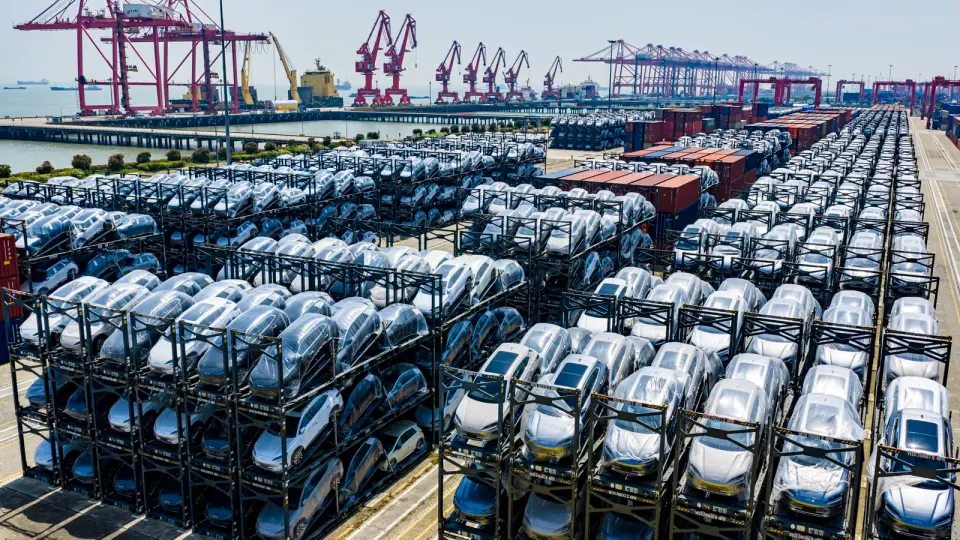
The U.S. Department of Energy awarded $500 million to seven companies to build domestic battery capabilities, but analysts warn this is insufficient to counter China’s decades-long lead in refining and manufacturing. The Trump administration has simultaneously canceled nearly $24 billion in previous battery projects and ended EV tax credits, creating a strategic gap as China dominates 80% of global battery cell production.
Key points
- DOE awarded $500 million in August 2026 to seven firms for battery minerals, manufacturing, and recycling.
- China controls 95% of spodumene processing, 85% of cathode materials, and 80% of battery cells.
- The Trump administration canceled nearly $24 billion in announced battery projects since January 2025.
- U.S. EV sales accounted for 24% of the market in Q2 2026, compared to 65% in China.
- Experts estimate the U.S. needs decades and hundreds of billions of dollars to match China’s scale.
Background
This follows earlier concerns about U.S. technological gaps in AI and critical infrastructure, where China’s rapid scaling has prompted policy debates over export controls and domestic investment. The current battery strategy is part of a broader effort to secure critical minerals, though it contrasts with the Biden-era focus on large-scale EV subsidies.
How outlets are covering it
CNBC emphasizes the scale of the gap, noting that while the U.S. has innovation, it lacks the mass production capabilities China possesses. Pluang summarizes the DOE grants as a necessary but insufficient step to challenge China’s dominance. The Innovation News Network article appears to be a technical error or unrelated content, providing no substantive perspective on the battery issue.
Why it matters
The U.S. risks losing global competitiveness in electric vehicles and energy storage as China consolidates control over the battery supply chain. Reduced domestic investment could jeopardize U.S. automakers’ ability to compete in a market where China accounts for the majority of global growth.
What to watch
The U.S. may see gradual increases in domestic lithium and cathode production over the next decade, but experts warn that without sustained, large-scale investment, the country will struggle to close the gap with China’s established manufacturing infrastructure.
- The U.S. is trying to reduce its reliance on China for batteries. Here's what it's up against CNBC
- CMEI invests $117m across 56 projects to strengthen industrial sector Innovation News Network
- Critical minerals drive US energy security strategy Anadolu Ajansı
- Trump shuns EVs and wind power, but he’s pouring billions into batteries inquirer.com
- US grants $500M to battery firms to challenge C... Pluang
Want the full story? Read the original reporting
Read on CNBC