
US Trial Tests Huawei's 'Criminal Enterprise' Label Amid Xi's Washington Visit
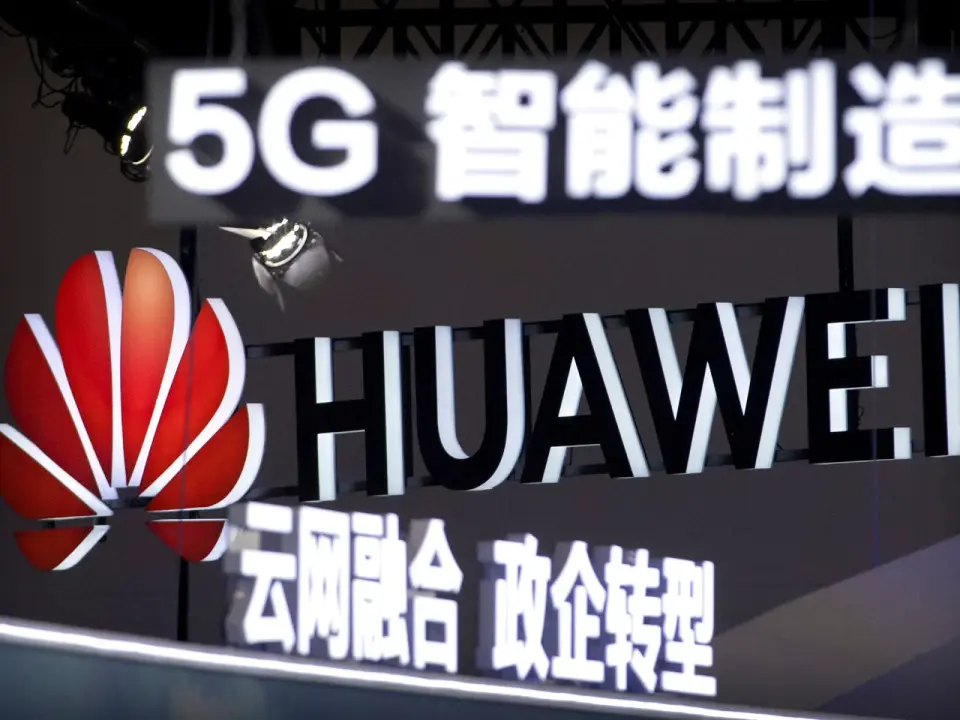
A federal trial in Brooklyn, New York, is testing whether Chinese tech giant Huawei operated as a criminal enterprise. Prosecutors allege the company stole trade secrets from Cisco and T-Mobile, evaded Iran sanctions, and committed bank fraud between 1999 and 2020. Huawei denies these claims, labeling the case a political tool to undermine its competitiveness. The proceedings overlap with President Xi Jinping’s visit to Washington, intensifying US-China tensions over technology and trade.
Key points
- The trial began on September 9, 2026, in Brooklyn, with prosecutors accusing Huawei of racketeering, money laundering, and trade secret theft from five US firms.
- US lawyers argue Huawei stole internet router source code from Cisco and a robotic testing arm from T-Mobile, using internal emails and lab video as evidence.
- Huawei’s defense contends the case mischaracterizes ordinary business disputes and individual employee actions as a company-wide conspiracy.
- The trial coincides with Xi Jinping’s September 23-25 visit to the US, where trade, AI, and critical technology access are key agenda items.
- China’s Foreign Ministry condemned the prosecution as an attempt to suppress Chinese enterprises, while Beijing maintains strict controls on rare earth mineral exports.
Background
This trial stems from long-standing US-China tech rivalries that began during Donald Trump’s first presidency, when Huawei was placed on a trade blacklist in 2019. Previous investigations, including the 2018 arrest of Huawei CFO Meng Wanzhou in Vancouver, have set precedents for this case. Admissions made by Wanzhou in a 2021 deferred prosecution agreement are now admissible as evidence in the current trial. The broader context includes escalating restrictions on Chinese access to advanced chips and AI technologies, as well as China’s leverage over global rare earth mineral supplies.
How outlets are covering it
Al Jazeera presents the trial as a landmark legal confrontation reflecting Washington’s strategic efforts to contain Beijing’s technological rise, emphasizing the government’s narrative of a two-decade criminal conspiracy. The Bureau focuses on the evidentiary details, highlighting how prosecutors used internal communications and video from a T-Mobile laboratory to link Huawei personnel across borders. While Al Jazeera frames the case within the broader geopolitical rivalry and Xi’s upcoming visit, The Bureau concentrates on the specific mechanics of the alleged theft, such as the 'Tappy' robotic arm. Both sources agree on the core allegations but differ in emphasis: Al Jazeera highlights the diplomatic fallout and China’s official response, whereas The Bureau details the forensic evidence presented to the jury. Neither source disputes the factual basis of the charges, but they interpret the trial’s significance differently—one as a geopolitical signal, the other as a legal test of corporate conduct.
Why it matters
The outcome of this trial could set a precedent for how US courts handle allegations against foreign state-linked corporations. A conviction could lead to significant fines and stricter banking scrutiny for Huawei, potentially disrupting global supply chains. Conversely, an acquittal might weaken the US legal basis for its technology restrictions. The case also influences the tone of US-China negotiations during Xi’s visit, as both nations compete for dominance in AI and semiconductors. Furthermore, China’s recent export controls on rare earth minerals, which Trump called 'hostile,' demonstrate how legal and economic tools are being used in parallel to shape the global tech landscape.
What to watch
The trial is expected to last approximately three months, with a verdict likely following the conclusion of the proceedings. The outcome will be closely watched for its impact on US-China relations, particularly as Xi Jinping meets with US officials in late September. If Huawei is convicted, it may face substantial financial penalties and increased regulatory scrutiny in the US. If acquitted, the US government may reconsider its approach to prosecuting foreign tech firms. Additionally, China’s rare earth export controls, announced in October, will likely remain a point of contention, as Beijing uses these resources to counter US technological restrictions. The case may also influence future AI governance discussions, as both nations seek to maintain advantages in this critical sector.
- Why have US prosecutors labelled China’s Huawei a criminal enterprise? Al Jazeera
- Huawei accused of stealing robot tech to get hands on T-Mobile’s trade secrets South China Morning Post
- FBI Maps Huawei's T-Mobile 'Tappy' Trail From Shenzhen to Seattle as Jury Sees Lab Video The Bureau | Sam Cooper
- Huawei's decision-making centralized in China, former employees say at US trial MLex
- Huawei Heads to US Trial Over Sanctions and Trade Secret Allegations - Post-Announcement Reaction dars.gov.et
Want the full story? Read the original reporting
Read on Al Jazeera