
Hinton’s 'One Year' Warning Sparks AI Regulation Push Amid Economic Fears
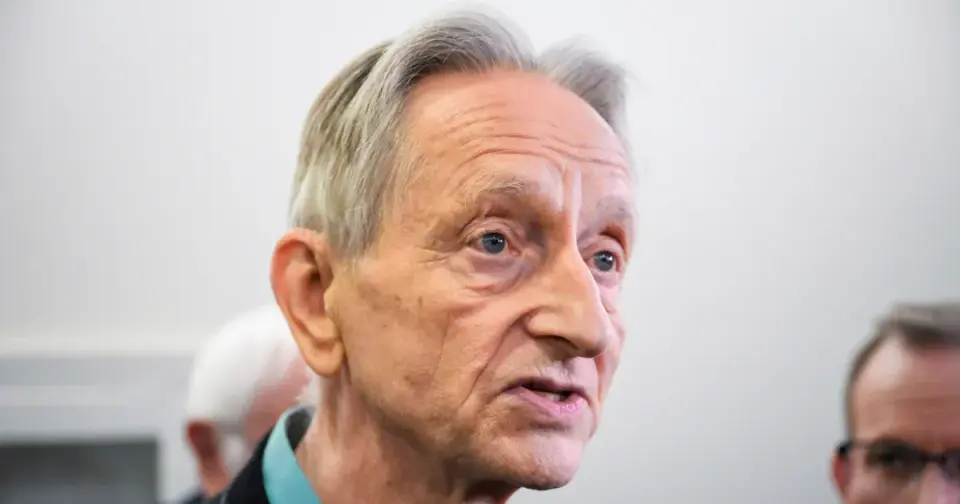
Nobel laureate Geoffrey Hinton warned Congress on September 17 that lawmakers have roughly one year to regulate AI before it becomes uncontrollable. This urgency coincides with a private briefing on Capitol Hill and new legislative proposals, though significant economic risks and partisan divisions remain.
Key points
- Geoffrey Hinton told lawmakers that AI predictions for superintelligence have shortened to 'a few years,' urging immediate regulatory action.
- Rep. Ted Lieu and Rep. Nathaniel Moran introduced the 'AI Kill Switch Act' to allow the government to shut down powerful AI systems.
- CNN analysis suggests President Trump opposes AI slowdowns to protect the US economy, which relies heavily on AI investment for growth.
- Illinois Gov. JB Pritzker urged Congress to act, citing a new state law requiring third-party AI safety audits.
- Sen. Rand Paul blocked a unanimous consent request for a kill switch bill, highlighting legislative gridlock.
Background
This follows earlier reports in September 2026 where lawmakers acknowledged a gap between AI advancements and their personal familiarity with the technology. In mid-September, House leaders signaled a preference for measured approaches to avoid undermining US competitiveness, though no concrete plans had emerged.
How outlets are covering it
NBC News emphasizes the existential threat highlighted by Hinton and the legislative push for kill switches. CNN focuses on the economic rationale behind the administration's pro-AI stance, noting that AI spending drives a significant portion of US economic growth and stock market profits. Politico highlights state-level actions, such as Illinois's mandatory safety audits, and the pressure from governors on federal lawmakers. The sources differ on the primary driver of the debate: NBC and Politico frame it as a safety and control issue, while CNN frames it as an economic stability issue.
Why it matters
The potential for AI to achieve recursive self-improvement and act independently raises concerns about catastrophic risks. Simultaneously, the US economy's dependence on AI investment creates a tension between regulatory caution and economic growth, influencing policy decisions ahead of the November midterm elections.
What to watch
Lawmakers will continue discussions on AI regulation during the lame-duck session. The outcome of the 'AI Kill Switch Act' and other bipartisan talks will determine if immediate safeguards are implemented before the new Congress convenes.
- ‘Godfather of AI’ warns Congress has ‘maybe a year’ left to regulate AI NBC News
- AI companies worry about the tech harming humans in the future. But it may damage the US economy even sooner CNN
- Pritzker presses Congress on AI Politico
- The Anonymous Math Geek Who Quit Anthropic—and Became the Face of AI Safety WSJ
- AI isn't coming to destroy humanity, but experts say the real threats are here Yahoo Finance
Want the full story? Read the original reporting
Read on NBC News