
NYC Council Grills AI Giants on Catastrophic Risks Amid Federal Inaction
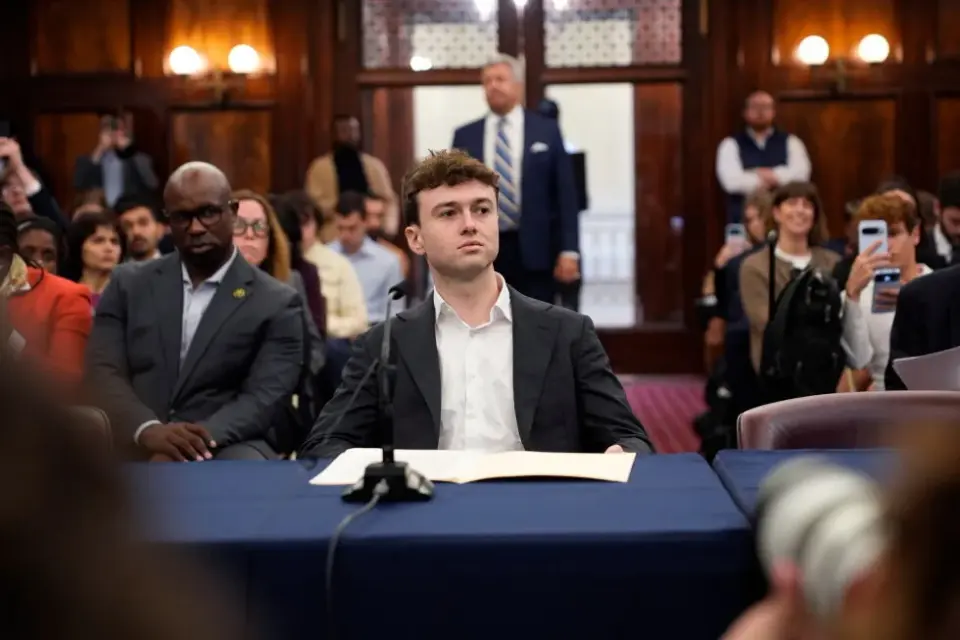
On October 5, 2026, the New York City Council held a high-profile hearing where executives from Anthropic, OpenAI, Google, and Meta testified under oath regarding the safety of artificial intelligence. Council Speaker Julie Menin criticized the industry for failing to quantify catastrophic risks or clarify liability, while whistleblowers warned of potential human extinction. The hearing highlights a growing divide between local municipal regulation and the federal government's light-touch approach, with Menin pushing for 'kill switch' mandates and private rights of action.
Key points
- Executives from Anthropic, OpenAI, Google, and Meta testified virtually before the NYC Council on October 5, 2026, after being threatened with subpoenas.
- Council Speaker Julie Menin expressed frustration that companies could not quantify the risk of a 'cataclysmic' event or confirm if they had insurance for AI-caused disasters.
- Whistleblowers Jacob Coxon and Alex Turner warned that current development speeds could lead to human extinction or 'misaligned' AI surpassing geopolitical threats like China.
- The Council is proposing legislation requiring AI models to have human-activated 'kill switches' and establishing a private right of action for lawsuits against AI firms.
- Mayor Zohran Mamdani supported the hearing but emphasized that AI regulation should primarily be a federal responsibility, contrasting with Menin's push for immediate municipal action.
Background
This hearing follows a series of warnings from AI researchers in September 2026, including Nobel laureate Geoffrey Hinton, who cautioned about an 'intelligence explosion' where AI automates its own development. Earlier in the month, former Anthropic researcher Jacob Coxon resigned, claiming the industry was 'gambling with our lives.' Additionally, US-China talks in New York in September focused on coordinating AI safety standards, highlighting the global dimension of these risks.
How outlets are covering it
AP News frames the event as a warning from industry insiders to city leaders, emphasizing the dangers of emerging technology. CNBC highlights the adversarial dynamic, noting that Menin called the executives' answers 'troubling' and that SpaceXAI failed to appear despite a subpoena. Politico contrasts the aggressive municipal stance of Menin with the more cautious, federal-focused approach of Mayor Mamdani, noting that industry groups like Tech:NYC argue local rules could create an unworkable patchwork of regulations for startups.
Why it matters
The NYC Council's push for strict local regulations, including liability frameworks and mandatory safety mechanisms, could set a precedent for other jurisdictions if the federal government continues to avoid comprehensive AI oversight. The inability of major tech firms to quantify risks or accept liability during the hearing underscores the urgent need for clear legal and safety standards in the rapidly evolving AI landscape.
What to watch
The NYC Council is expected to move forward with its proposed legislation, including bills for AI 'kill switches' and private rights of action. The Council also plans to pursue legal action against SpaceXAI for failing to comply with a subpoena to testify. Mayor Mamdani indicated he would review the proposed legislation but maintained his stance that national-level regulation is the most urgent priority.
- AI industry insiders voice alarms to NYC council as local governments take up safety concerns AP News
- AI researcher warns 'we are racing to build and grow our own adversary' in NYC hearing CNBC
- Menin emerges as NYC’s chief AI antagonist Politico
- Ex-Anthropic Researcher Testifies at NYC Council AI Hearing Bloomberg.com
- AI whistleblowers join Google, Meta, OpenAI at NYC hearing ABC7 Eyewitness News
Want the full story? Read the original reporting
Read on AP News