
2026 Midterms Trigger AI Spending Freeze as Democrats Demand Data Center Moratoriums
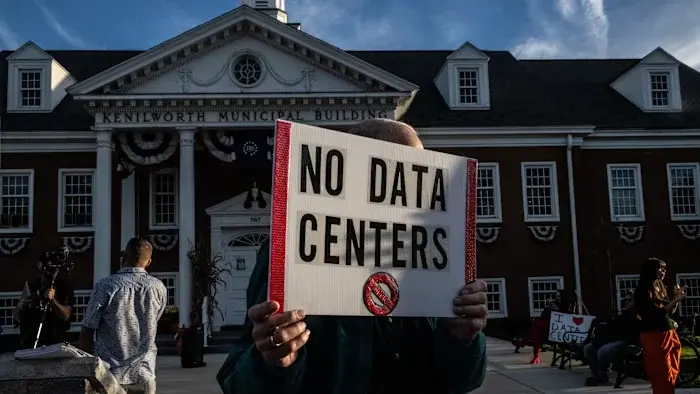
Following a sweeping Democratic victory in the 2026 US midterm elections, political leaders are demanding immediate moratoriums on artificial intelligence data center construction. Texas Governor-elect Gina Hinojosa has pledged to halt approvals until new protective laws are passed, while Senator Bernie Sanders calls for a national freeze. These moves follow a referendum wave where 33 localities approved restrictions, reflecting a 56% voter consensus that AI infrastructure was a major factor in their ballot choices. The shift threatens to disrupt a trillion-dollar annual investment boom, with Goldman Sachs noting that Democratic-controlled states now account for 45% of planned US data center capacity. Market reactions have been severe, with semiconductor stocks plunging as investors fear regulatory hurdles will delay projects and increase costs for tech giants.
Key points
- Democrats won majorities in the House and Senate, plus key gubernatorial seats in Texas, Ohio, Georgia, and Nevada, with anti-data-center platforms central to their campaigns.
- Texas Governor-elect Gina Hinojosa announced a moratorium on data center approvals until the legislature passes protective laws, reversing the pro-business stance of incumbent Greg Abbott.
- Senator Bernie Sanders and Representative Yassamin Ansari called for a national data center moratorium, citing environmental damage and job losses.
- Local referendums in approximately 40 US cities and towns resulted in 33 approvals for data center restrictions, with only one town in North Dakota voting against them.
- The iShares Semiconductor ETF fell nearly 9% post-election, with Nvidia down 8% and AMD down 14%, reflecting fears of slowed AI infrastructure spending.
- Goldman Sachs estimates that states with Democratic governors now control 45% of planned US data center capacity, while Wells Fargo notes Texas holds 27% of that total.
Background
The 2026 midterms marked a significant shift in US political sentiment regarding technology infrastructure. Prior to the election, concerns over data center environmental impacts, water usage, and electricity costs had grown into a bipartisan issue, though opposition was most vocal among Democrats. Incumbent Texas Governor Greg Abbott had previously enacted a temporary moratorium but lost his seat to Gina Hinojosa, who campaigned on extending those restrictions. The election results suggest that public opposition to AI buildouts has become a decisive electoral factor, potentially altering the pace of the largest investment boom in US history.
How outlets are covering it
CNBC emphasizes the immediate political mandate, highlighting that 56% of voters cited AI and data centers as crucial factors in their decision, with 65% of those voters supporting Democratic candidates. They focus on the legislative push for a national moratorium led by figures like Bernie Sanders and Yassamin Ansari. Yahoo News, citing USA Today, focuses on the specific actions of Texas Governor-elect Gina Hinojosa, noting her pledge to halt approvals until protective laws are written, while clarifying she is not against data centers but against their current unregulated expansion. CNN provides a broader economic analysis, noting that while the slowdown could hurt growth, it might also curb unsustainable business models and rein in inflation. CNN highlights that AI infrastructure spending accounts for up to a quarter of US economic growth, and a slowdown could reduce GDP growth from 3.4% to 2.4%, but argues it may lead to more sustainable long-term development. The Financial Times source was inaccessible due to a paywall, so its specific analysis could not be synthesized.
Why it matters
The political shift threatens to disrupt a $1 trillion annual AI infrastructure spending boom, which has been a key driver of US economic growth. Delays in data center construction could increase costs for tech companies, potentially rendering some projects financially unviable. While the slowdown may reduce inflationary pressures and curb unsustainable business models, it could also hinder the US's competitive position against China in AI development. The outcome will determine whether the US AI industry pivots to a more community-focused, sustainable model or faces significant financial and regulatory headwinds.
What to watch
Investors will monitor the pace of Democratic legislative action in statehouses, particularly in Texas, where 27% of planned US data center capacity is located. Tech companies may face increased costs due to delayed permits and utility service guarantees. The market will watch for signs of whether the AI spending boom slows, potentially affecting GDP growth rates. Local governments in Democratic-controlled states may implement their own moratoriums or regulations, further constraining the industry. The long-term impact will depend on whether AI companies can adapt to a more regulated, community-sensitive model of expansion.
- Will Democrats stall the AI boom? Financial Times
- Top Democrats call to rein in AI buildout after midterms sweep: 'National data center moratorium now' CNBC
- Texas is done with data centers until further notice, new governor says Yahoo
- The Election Day Revolt That Threatens America’s AI Boom WSJ
- America got the anti-data-center wave it voted for. Here come the economic consequences CNN
Want the full story? Read the original reporting
Read on Financial Times