
The Race to Govern AI Agents: From Academic Frameworks to Runtime Control
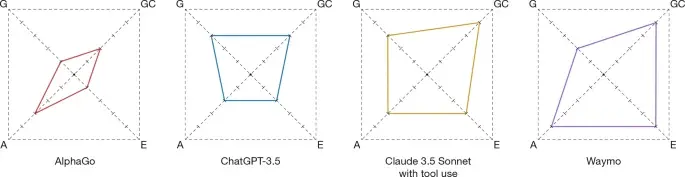
Governance of autonomous AI agents is shifting from post-hoc monitoring to real-time, runtime control. While academic frameworks propose classifying agents by autonomy and efficacy, regulators and enterprises are implementing technical architectures to verify identity, permissions, and risk limits before actions execute. This shift addresses the gap between the speed of AI decision-making and the pace of traditional compliance.
Key points
- A new academic framework proposes 'agentic profiles' to classify AI systems based on autonomy, efficacy, goal complexity, and generality, aiming to guide policy for different agent types.
- The Monetary Authority of Singapore (MAS) introduced 'Safeguards for Agentic Finance at Runtime' (SAFR), a framework requiring banks to verify agent identity and permissions before executing financial transactions.
- Enterprise security leaders argue that traditional 'shadow AI' monitoring is insufficient; governance must now cover 'shadow agents' that can invoke tools and alter enterprise state autonomously.
- New 'AI Control Plane' technologies aim to enforce deterministic controls in real-time, evaluating actions against policy with low latency to prevent unauthorized data access or financial transactions.
- Regulatory approaches vary globally: Singapore is moving toward technical runtime checkpoints, while the UK FCA favors a 'stewardship' model, and the EU calls for 'enhanced governance' without specific operational frameworks.
Background
The rise of agentic AI, which moves beyond text generation to autonomous action, has outpaced existing regulatory and security frameworks. Previous governance models focused on static software or post-deployment monitoring, which are ineffective for dynamic agents that chain tools and adapt mid-task. This briefing synthesizes recent developments in academic classification, financial regulation, and enterprise security to highlight the emerging consensus on the need for runtime control.
How outlets are covering it
Nature highlights the need for a theoretical framework to classify AI agents by autonomy and efficacy to inform governance. PYMNTS.com focuses on the financial sector, detailing MAS's SAFR framework and contrasting it with the UK FCA's more cautious 'stewardship' approach. Security Boulevard emphasizes the security implications of 'shadow agents,' arguing that governance must move beyond chatbot monitoring to control tool use and data access. Grit Daily presents the enterprise perspective, advocating for 'Trust Posture Management' and AI Control Planes that enforce deterministic controls in real-time to prevent authority drift and ensure compliance.
Why it matters
As AI agents gain the ability to execute real-world actions, the risk of unauthorized or erroneous actions increases. Traditional governance models fail to address the speed and complexity of these systems. Implementing runtime control and clear agentic profiles is essential to prevent financial loss, data breaches, and operational errors, ensuring that AI autonomy is balanced with verifiable compliance and security.
What to watch
Expect a proliferation of 'AI Control Plane' technologies and runtime governance frameworks in enterprise environments. Regulators may adopt more technical, principles-based approaches similar to MAS's SAFR, while enterprises will likely shift from pilot programs to production deployments of autonomous AI, driven by the need for deterministic control and cost optimization.
- Agentic profiles for effective AI governance Nature
- Your Bank’s AI Agent May Need a Permission Slip PYMNTS.com
- When Agents Move Faster Than the Rules Meant to Contain Them Security Boulevard
- Trustwise CEO on the Future of Enterprise AI gritdaily.com
- 74% of enterprises run AI in production, but half can't prove it pays off MarketScale
Want the full story? Read the original reporting
Read on Nature