Tag

Enterprise Security

All articles tagged with #enterprise security

Surface Laptop for Business 8th Edition review: privacy-first design meets rugged security, but at a steep price
technology7 days ago

Surface Laptop for Business 8th Edition review: privacy-first design meets rugged security, but at a steep price

Microsoft’s Surface Laptop for Business 8th Edition blends a built-in privacy screen and enterprise‑grade security with Intel Core Ultra Series 3 power and a strong keyboard/touchpad, but it starts at $1,949 and delivers around eight hours of real-world battery life—a RAM-crisis premium that may deter budget buyers. The privacy screen cannot pair with 5G variants, Snapdragon ARM models are expected later, and the device is clearly aimed at corporate/government use with top‑tier security, repairability, and performance for demanding workloads.

ASUS Unveils Ultra-Portable ExpertBook Ultra in US Stores
technology19 days ago

ASUS Unveils Ultra-Portable ExpertBook Ultra in US Stores

ASUS announced the ExpertBook Ultra (B9406CAA) is now available in the U.S. The ultralight business laptop weighs about 2.43 pounds, is 0.43 inches thick, and packs an Intel Core Ultra Series CPU with up to 50 TOPS NPU AI performance, ASUS ExpertCool Pro cooling, a 3K OLED touchscreen up to 1400 nits, a six-speaker Dolby Atmos setup, and enterprise security features (ASUS ExpertGuardian with PQC). It includes two Thunderbolt 4 ports and a 70Wh battery. Priced at $3599.99 in Jet Fog; Morn Grey will launch late Q2, with X9-series configurations coming in Q3.

reMarkable Unveils Paper Pure: An Enterprise-Ready Entry-Level E-Paper Slate
technology21 days ago

reMarkable Unveils Paper Pure: An Enterprise-Ready Entry-Level E-Paper Slate

reMarkable has unveiled Paper Pure, a 10.3-inch entry-level e-paper slate designed to mimic writing on paper. It ships with an active stylus, faster internals, improved contrast, and up to three weeks of battery life, plus better repairability and security features aimed at IT departments. It also offers calendar integration to generate discrete meeting notes. The base model starts at $399, with a $449 bundle that adds the Marker Plus and a carrying case, and software features from higher-end models will filter down across the lineup.

Amazon Quick Turns Your Desktop into a Proactive AI Workspace Across Apps and Data
technology29 days ago

Amazon Quick Turns Your Desktop into a Proactive AI Workspace Across Apps and Data

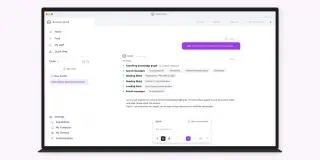
Amazon unveils Quick, a desktop AI assistant that runs locally on your laptop, stays connected to your files, calendar, emails, and apps (like Google Workspace, Microsoft 365, Slack/Teams, Salesforce), and learns from every session to provide proactive, context-aware help. It can generate dashboards, documents, and images, build intelligent apps from natural language, and index your organization’s data into a personal knowledge graph. New connectors and content-creation features ship today, with Microsoft 365 extensions in preview and expanded OpenAI/Bedrock integration, all while prioritizing privacy and security. Quick aims to unify your tools and surface relevant context to reduce time spent hunting for information.

Windows tightens RDP file use to block phishing-prone connections
security1 month ago

Windows tightens RDP file use to block phishing-prone connections

Microsoft’s April 2026 updates for Windows 10 and Windows 11 add protections to curb phishing by malicious Remote Desktop (.rdp) files: first-open triggers educate users, and subsequent attempts show a security dialog listing the file’s publisher status, remote address, and local resource redirects with all options off by default. If unsigned, a caution label appears; if signed, the publisher is shown but verification is still encouraged. These protections apply only to opening RDP files, not to connections via the Windows Remote Desktop client, and can be temporarily disabled via a registry setting by admins. Microsoft urges keeping the safeguards enabled, noting that attackers have used rogue RDP files in campaigns (e.g., APT29) to steal data, credentials, or even clipboard contents and smart-card authentication.

Interlock ransomware weaponizes Cisco FMC zero-day in pre-patch campaign
technology2 months ago

Interlock ransomware weaponizes Cisco FMC zero-day in pre-patch campaign

Interlock has exploited a maximum-severity remote-code-execution zero-day in Cisco Secure Firewall Management Center (CVE-2026-20131) since Jan 26, 2026, gaining unauthenticated root access on unpatched devices; Cisco issued a patch on March 4, and Amazon’s threat intel says the attacks ran about 36 days before disclosure. The group has a history of high-profile attacks (including NodeSnake on UK universities) and researchers note a new Slopoly malware strain associated with the operation.

Critical pre-auth RCE in BeyondTrust remote-support tools prompts urgent patch
technology3 months ago

Critical pre-auth RCE in BeyondTrust remote-support tools prompts urgent patch

BeyondTrust warns of CVE-2026-1731, a pre-auth remote code execution flaw in Remote Support (RS) 25.3.1 and Privileged Remote Access (PRA) 24.3.4 and earlier, allowing unauthenticated attackers to run OS commands; patches are available by upgrading to RS 25.3.2+ and PRA 25.1.1+ (or enabling automatic updates). Cloud systems have been secured; about 11,000 instances are exposed online, with roughly 8,500 on-premises potentially vulnerable if not patched; no active exploitation is reported yet.

Coordinated Chrome extensions harvest enterprise login cookies from Workday, NetSuite, and SAP SuccessFactors
technology4 months ago

Coordinated Chrome extensions harvest enterprise login cookies from Workday, NetSuite, and SAP SuccessFactors

Security researchers found five malicious Chrome extensions posing as productivity/security tools for enterprise HR/ERP platforms (Workday, NetSuite, SAP SuccessFactors) that exfiltrate authentication cookies, block security administration pages, and, in one case, inject cookies to hijack active sessions. The campaign, linked by shared infrastructure and targeting patterns, had about 2,300 installations. Extensions were taken down after disclosure; affected users should notify security admins and rotate passwords on the targeted platforms.

"Amazon Introduces Palm-Scanning Tech for Office Access Control"
technology2 years ago

"Amazon Introduces Palm-Scanning Tech for Office Access Control"

Amazon is introducing Amazon One Enterprise, a palm-scanning technology designed for businesses, allowing employees to use their hand as an authentication tool to enter offices or access sensitive information. The service is being offered to companies such as IHG Hotels and Resorts, Boon Edam, and Kone. Amazon claims that palm recognition is more private than other biometric systems and offers a cheaper and more secure solution compared to traditional security tools. However, advocacy groups have raised concerns about privacy and increased surveillance. Amazon One was originally developed as a payment system and has been deployed in various retail locations.

"ChromeOS Boosts Privacy with Camera and Mic Toggles for Chromebooks"
technology3 years ago

"ChromeOS Boosts Privacy with Camera and Mic Toggles for Chromebooks"

Google is introducing new systemwide camera and microphone access toggles in ChromeOS settings that can instantly block all apps and sites from being able to use them. The new privacy controls cut off the rest of the computer’s access to the hardware, which is a software replacement to the physical camera and mic kill switch. Chromebook manufacturers can simplify the laptop design and use the built-in ChromeOS solution instead. Google is also expanding enterprise and business-oriented security features that include new identity and data control features that help IT departments manage user logins and help keep sensitive information from inadvertently traveling around and outside organizations.

Corporate Secrets Exposed Through Secondhand Routers
cybersecurity3 years ago

Corporate Secrets Exposed Through Secondhand Routers

Researchers from ESET have found that less than half of secondhand enterprise routers in their sample were wiped of internal data, posing a risk for both the companies that sold these routers and their customers. Out of the 18 corporate routers that the researcher team purchased secondhand, only five had been wiped. Nine of the routers had been left as is, two were encrypted, one was dead, and one was a copy of another device. The nine devices that hadn’t been wiped had enough information stored on them to identify the previous owners, and also login information for the organizations’ VPN, credentials for a communication service, and hashed root administrator passwords.