
AI-Generated Food Ads Spark Backlash as 'Lovecraftian' Images Replace Real Photos
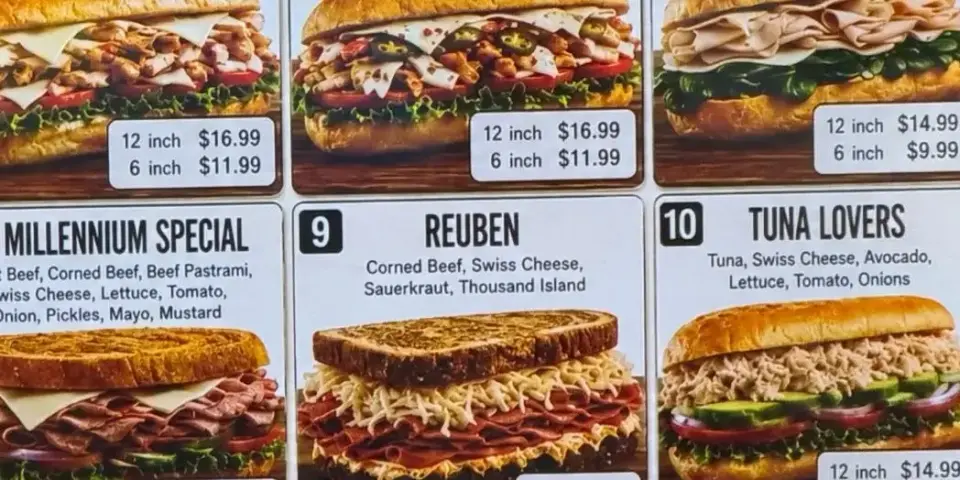
Restaurants and delis are increasingly using AI-generated images for menus and advertisements to cut costs, but the results often produce unsettling, unrealistic visuals that repel customers. A Chicago deli recently installed AI-generated sandwich images as temporary placeholders, drawing public criticism for their 'monstrous' appearance. While business owners cite tight margins and rising costs as drivers for this shift, consumers report that these images make food look unappetizing and fake. The trend highlights a growing tension between cost-efficiency and authenticity in food marketing, with some outlets noting that AI can be effective if used correctly, but current implementations often fail basic quality checks.
Key points
- A Chicago deli, Chi-Town Deli, installed AI-generated menu images several weeks ago as temporary placeholders while awaiting new signage with real photographs, according to Business Insider.
- The images, particularly of Reuben sandwiches, were described by a server and local resident as 'AI monstrosities' with glossy, unnatural textures and 'Lovecraftian' features, sparking public outrage on social media.
- Small business owners are adopting AI for marketing due to rising costs and tight margins, as hiring photographers or designers is often unaffordable for corner stores and delis.
- A 2024 study cited by Bon Appétit indicates that consumers are more drawn to AI-generated food images when they are unaware of their origin, but prefer human-made images when they know the source.
- In Malaysia, a nasi lemak restaurant’s AI-generated ad for spiced fried chicken went viral for depicting the food with strange textures resembling 'insect eggs' and moldy eggs, further illustrating the risks of unchecked AI output.
- Critics argue that the issue is not AI itself but the lack of human review before publication, as many businesses are using AI without verifying the realism or appeal of the generated content.
Background
The rise of AI in creative industries has led to widespread adoption in marketing, including food advertising. Previous concerns about AI replacing traditional graphic design have now manifested in the food sector, where small businesses are using AI to bypass the costs of professional photography. This trend follows earlier debates about AI’s impact on authenticity in media and consumer trust, with some outlets noting that AI can produce appealing results when properly curated, but often fails when used as a cheap shortcut.
How outlets are covering it
Business Insider emphasizes the 'sloppiness' and horror of AI-generated food images, framing the issue as a cultural and aesthetic failure that repels customers. Bon Appétit acknowledges the cost-saving rationale but highlights a 2024 study showing that AI images can be appealing if consumers are unaware of their origin, suggesting the problem lies in transparency and execution rather than the technology itself. Creative Bloq focuses on the decline of 'folk graphic design' and the 'Lovecraftian' nature of the outputs, framing it as a broader cultural loss of craft. Newswav centers on consumer backlash and the lack of human oversight, noting that netizens criticize the unrealistic details but also point out that AI can be useful if properly reviewed. The outlets differ in tone: Business Insider and Creative Bloq are more critical of the aesthetic outcome, while Bon Appétit and Newswav offer a more balanced view, acknowledging the economic pressures on small businesses and the potential for AI to be effective with better curation.
Why it matters
The trend signals a shift in how small businesses approach marketing, prioritizing cost-efficiency over authenticity. If AI-generated images continue to produce unrealistic or unappetizing visuals, it could erode consumer trust in food establishments and set a precedent for low-quality AI content across other industries. The backlash also raises questions about the role of human oversight in AI-driven content, suggesting that businesses must balance cost savings with quality control to maintain customer confidence.
What to watch
Expect more scrutiny on AI-generated content in food marketing as consumers become more aware of its origins. Businesses may face pressure to improve the quality of AI outputs or revert to traditional methods if customer trust continues to decline. Regulatory or industry standards for AI use in advertising may emerge, particularly as the technology becomes more prevalent in small business marketing. The debate over transparency and authenticity in AI-generated content is likely to intensify, with consumers demanding clearer labeling of AI-created materials.
- Delis are going viral for horrifying AI-slop menus. I called one to try to understand why they did it. Business Insider
- Restaurants Are Using Unsettling AI-Generated Photos of Food Bon Appétit: Recipes, Cooking, Entertaining, Restaurants | Bon Appétit
- These nightmarish REAL restaurant menus show that AI is killing folk graphic design Creative Bloq
- M’sian restaurant uses AI for nasi lemak ad, but the result shocks netizens Newswav
- AI slop or the real deal? CNE to review use of AI-generated images in wake of debate over vendors’ promotional posters Toronto Star
Want the full story? Read the original reporting
Read on Business Insider