
OpenAI claims AI solved 90-year-old fluid dynamics puzzle in 88 hours, sparking priority dispute
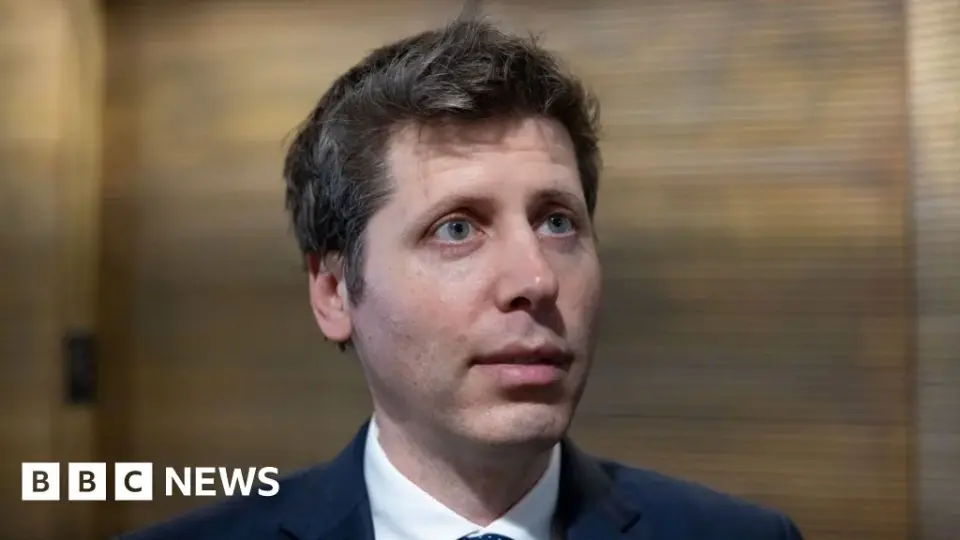
OpenAI announced that its internal AI model, utilizing approximately 10,000 autonomous agents, solved the Navier-Stokes existence and smoothness problem in 88 hours. The proof, which demonstrates that fluid equations can 'blow up' to infinite speeds, was verified using the Lean programming language. While OpenAI stated it did not intend to claim the $1 million Millennium Prize, the announcement triggered immediate controversy regarding the origin of the solution and potential data leakage from rival researchers.
Key points
- OpenAI deployed roughly 10,000 AI agents on a new, unreleased internal model to solve the Navier-Stokes problem, a Millennium Prize challenge concerning fluid dynamics.
- The agents exchanged nearly 3 million messages and consumed 130 billion output tokens, an effort estimated to cost approximately $10 million.
- The solution was formally verified in the Lean programming language, providing high confidence in its mathematical correctness.
- OpenAI stated it did not intend to claim the $1 million prize from the Clay Mathematics Institute, citing the goal of demonstrating AI progress.
- The announcement followed rumors that two other Millennium Prize problems had been resolved, prompting OpenAI to accelerate its own efforts.
Background
This development follows a series of AI-driven mathematical breakthroughs in 2026, including OpenAI’s Astra model solving ten long-standing problems in August. The Navier-Stokes equations, formulated in the mid-19th century, describe fluid motion and have remained unsolved for nearly a century. The current dispute echoes earlier concerns about AI reshaping research priorities and credit attribution in mathematics.
How outlets are covering it
BBC and The Guardian report that OpenAI’s announcement was met with skepticism from mathematician Tristan Buckmaster, who alleged OpenAI accessed his and Levent Alpöge’s work via the Codex tool. OpenAI denied using their specific prompts or proofs but acknowledged that de-identified data from their usage might have improved its models. Quanta Magazine highlights the intellectual debt to researchers Diego Córdoba and Luis Martínez-Zoroa, whose analytic techniques underpinned the AI’s success. Scientific American notes that while OpenAI claims independent discovery of the Euler equations, its Navier-Stokes proof followed a similar method to Buckmaster and Alpöge’s, leading to a murky timeline of priority. OpenAI’s chief scientist Sébastien Bubeck emphasized that the proofs differ significantly, even if the methods overlap.
Why it matters
This event marks a potential turning point in mathematical research, demonstrating that AI can solve century-old problems in days rather than decades. It raises critical questions about intellectual property, data privacy in AI training, and the verification of AI-generated proofs. The controversy also highlights the rapid pace of AI capability, which has outstripped regulatory and ethical frameworks, potentially influencing future policies on AI development and scientific discovery.
What to watch
The Clay Mathematics Institute must independently verify the proof to determine if it qualifies for the Millennium Prize. The mathematical community will likely debate the priority and credit between OpenAI, Buckmaster, Alpöge, and the foundational researchers Córdoba and Martínez-Zoroa. OpenAI may face further scrutiny regarding its data practices and the safety of its autonomous agents, especially following recent cybersecurity incidents. The outcome will influence how future AI-assisted research is conducted and credited.
- OpenAI says it cracked 90-year-old maths problem in 88 hours bbc.com
- On the Navier–Stokes Millennium Prize Problem openai.com
- AI Has Solved One of Math’s $1 Million Millennium Prize Problems Quanta Magazine
- OpenAI claims blockbuster math breakthrough amid swirl of controversy Scientific American
- OpenAI claims to have solved maths problem that stumped humans for decades The Guardian
Want the full story? Read the original reporting
Read on bbc.com