
AI 'Vibe Manufacturing' Shifts from Code to Physical Prototypes
AI tools are moving beyond software creation into physical product design, a trend dubbed 'vibe manufacturing.' Enthusiasts use large language models to generate CAD files for 3D printing or metal fabrication, bypassing traditional engineering skills. While this democratizes hardware prototyping, it mirrors the software sector's 'vibe coding' boom, which has flooded app stores with low-quality clones and raised concerns about the sustainability of small-scale development.
Key points
- Jeff Deehan used OpenAI's GPT-6 Astra to design a steel camper mount, which the AI sent to a fabricator for $156, arriving in ten days.
- Amy Zhou and Jake Fitzgerald developed an open-source 'text-to-CAD' tool with over 23,000 GitHub stars, aiming to replace traditional CAD software.
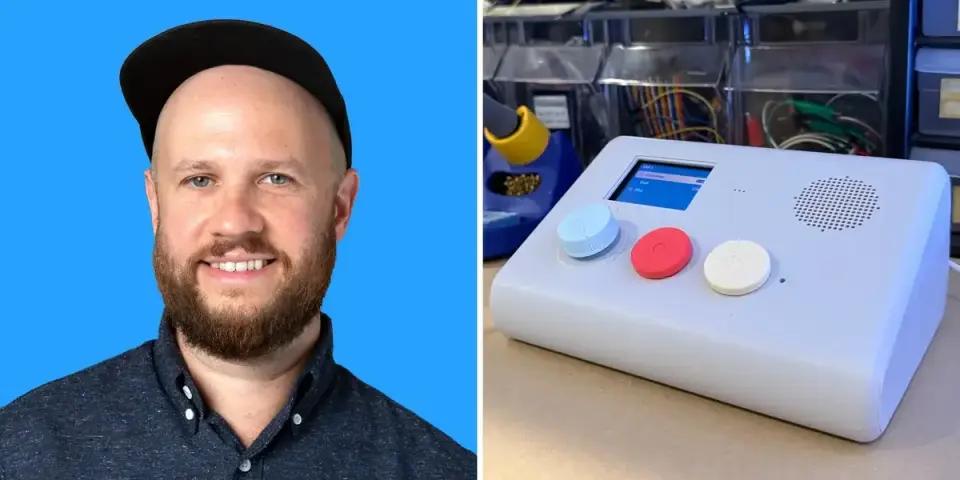
- David Plakon used AI to design a voice message box for his children, iterating on the design 15 times via 3D printing.
- The Atlantic reports that 1.3 million new apps were released in the first half of 2026, double the previous year, largely due to AI-assisted 'vibe coding.'
- Critics note that while AI can generate code and designs, it often requires significant human debugging and iteration to produce functional results.
Background
The term 'vibe coding' was coined by Andrej Karpathy in early 2025 to describe using AI agents for software development. By 2026, this practice has become standard, with companies like Airbnb reporting that AI writes 60% of their new code. The current trend extends this logic to physical objects, where users describe items in natural language and AI generates the necessary technical files for manufacturing.
How outlets are covering it
Business Insider highlights the efficiency of 'vibe manufacturing,' noting that users can create complex physical items without CAD expertise, though it acknowledges the risk of 'compounding failures' in design iterations. The Atlantic focuses on the negative externalities of AI-assisted development, specifically the saturation of app stores with low-quality clones that overwhelm users. Six Colors criticizes the term 'vibe coding' as reductive, arguing that successful development still requires deep human understanding and debugging, and warns that the flood of AI-generated apps may drown out serious, long-term software projects.
Why it matters
The expansion of AI from digital to physical creation lowers the barrier to entry for hardware innovation, potentially disrupting traditional manufacturing and engineering roles. However, the parallel with the software sector suggests that this democratization may lead to a market saturated with untested or low-quality products, challenging the viability of small-scale developers and raising questions about the reliability of AI-generated designs in physical applications.
What to watch
Expect continued growth in open-source AI tools for CAD and 3D printing. The app store may face increased regulatory or curatorial measures to manage the volume of AI-generated submissions. Hardware enthusiasts will likely continue to refine AI prompts to reduce iteration costs and improve the accuracy of physical prototypes.
- People are 'vibe manufacturing' their ideas into reality, creating toys, answering machines, and jewelry Business Insider
- There Are Too Many Apps for That The Atlantic
- Vibe Coding a Classic Game: Building Breakout Step by Step with an AI Assistant KDnuggets
- Sorry, new developers, it’s vibecodetown Six Colors
- If everyone’s doing vibe-coding Il Foglio
Want the full story? Read the original reporting
Read on Business Insider