
AMD CEO Su Defends AI Outlook After 17% Stock Plunge, Citing Record Q3 and 2027 Supply Constraints
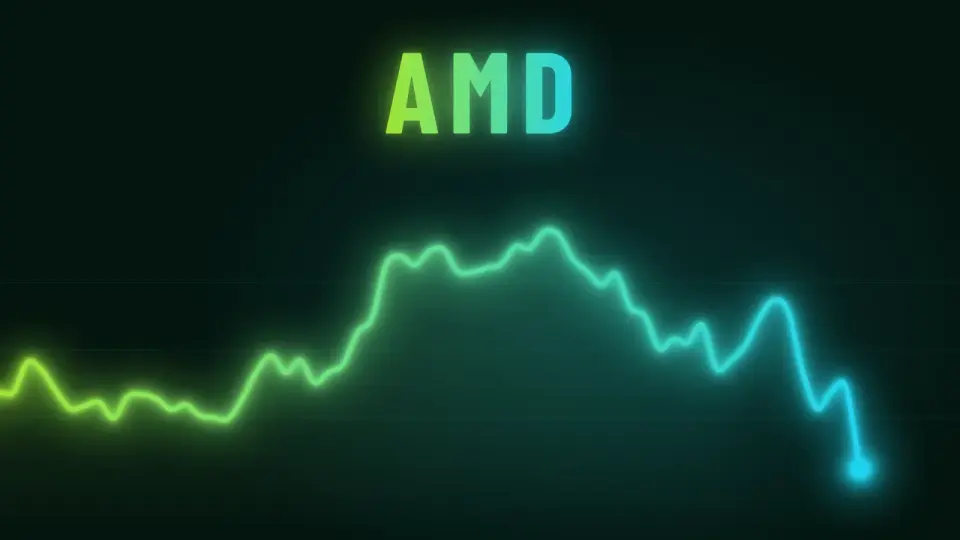
AMD shares dropped 17% on November 5, 2026, amid a broader tech selloff, yet CEO Lisa Su maintained that market fears regarding AI infrastructure are short-sighted. The company reported record third-quarter revenue of $13.38 billion, driven by a 97% surge in data center sales, and guided for over 80% revenue growth in 2027. Su emphasized that demand currently exceeds supply, with major customers like Meta and Microsoft deploying new Helios racks, while consumer gaming revenue fell 40% due to console cycle timing.
Key points
- AMD stock fell 17.26% to $404.40 on November 5, 2026, following a sharp market-wide decline linked to AI regulation fears and data center slowdown concerns.
- The company reported record Q3 revenue of $13.38 billion, up 45% year-over-year, with data center revenue reaching a record $8.5 billion, up 97%.
- Lisa Su guided for fourth-quarter revenue of approximately $17 billion and projected over 80% revenue growth for 2027, stating that demand exceeds supply.
- Gaming revenue dropped 40% to $773 million, attributed to lower semi-custom console chip sales, while client business revenue rose 7% to $2.95 billion.
- Su confirmed that lead customers, including Anthropic, Meta, Microsoft, OpenAI, and Oracle, have brought their first Helios racks online, with joint planning ensuring visibility into 2027 infrastructure needs.
Background
This follows AMD's October 2026 announcement of increased 2027 chip supply and its September 2026 acquisition of World Labs for $8.2 billion to align hardware with AI model requirements. The company had previously reached a $1 trillion market cap, reflecting strong investor confidence in its AI strategy prior to the recent volatility.
How outlets are covering it
24/7 Wall St. highlights Su's dismissal of market panic as 'short-sighted' but notes risks from potential AI regulation and a 35% sequential rise in inventory to $11.463 billion. Yahoo Finance emphasizes Su's confidence in 2027 visibility, noting joint planning with customers for land, power, and data center infrastructure. Ars Technica focuses on the stark divergence between the booming data center segment and the 40% collapse in gaming revenue, noting AMD may exceed Intel's revenue for the first time if Q4 targets are met. PCMag points out that Su's 'data center first' strategy is contributing to soaring consumer GPU prices, with flagship cards significantly above launch costs.
Why it matters
The divergence between AMD's strong financial guidance and its sharp stock decline illustrates the tension between long-term AI infrastructure commitments and short-term market volatility. If AMD's 2027 projections hold, it could solidify its position as a primary competitor to Nvidia, though regulatory hurdles and inventory risks remain key variables for investors.
What to watch
Investors will watch whether AMD can close above $488.78 to signal market acceptance of Su's long-term view. The company's ability to manage its $11.463 billion inventory and navigate potential AI regulations will determine if its aggressive 2027 growth targets are realized or if the market's skepticism proves justified.
- AMD’s Lisa Su Says the Market Is Being “Short-Sighted” About AI 24/7 Wall St.
- AMD CEO Lisa Su Addresses AI Infrastructure Bottleneck Fears: 'We Have Good Visibility Into 2027' Yahoo Finance
- AMD’s record quarter: Data center business doubles, while gaming craters Ars Technica
- Good Luck Getting a Cheap GPU. AMD Is a 'Data Center First Company,' CEO Says PCMag
- AMD's data center revenue nearly doubles in Q3 and CEO Su expects growth to accelerate CNBC
Want the full story? Read the original reporting
Read on 24/7 Wall St.