Nvidia forecasts about $20 billion in stand-alone server-CPU revenue this year and says its Vera CPU opens a $200 billion TAM for Arm-based server CPUs, signaling a potential shift in the data-center market that could challenge Intel and AMD as hyperscalers move AI workloads to Nvidia-powered architectures.
Rumors say AMD's Zen 7 'Grimlock' CPUs will be built on TSMC's 1.4nm A14 process and use Powertech's FOPLP packaging, featuring a new CCD with up to 16 cores and 224 MB L3 via 3D V-Cache, targeting a 2028 launch and stronger data-center AI performance amid intense CPU competition.
Nvidia remains the leader in AI model training and is expanding into inference and agentic AI with CUDA, Groq LPUs, and Vera Rubin CPUs; AMD is well-positioned in inference thanks to its memory-rich chiplet design and ROCm software, plus key GPU partnerships, while Broadcom pumps growth with its ASIC/custom chip business serving hyperscalers and TPU deployments. The author views all three as strong buys but would pick AMD as the best single stock right now due to two major upcoming AI opportunities.
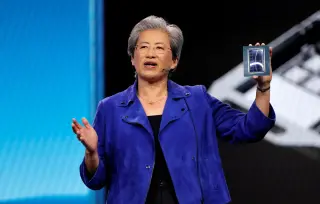
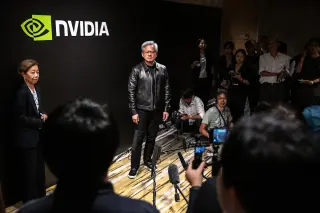
NVIDIA and AMD CEOs Jensen Huang and Lisa Su landed in Taipei ahead of Computex 2026, signaling a heavy AI and consumer-tech focus. NVIDIA is gearing up for a GTC-style Taipei event on June 1 with major AI reveals, while AMD is highlighting its 2nm Venice HPC production at TSMC and plans AI-centric and consumer-ready announcements, as both prepare for a jam-packed Computex schedule in Taipei’s Nangang district and key partner meetings.
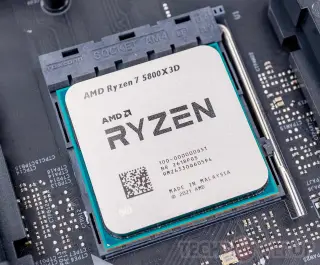
Micro Center is offering Ryzen X3D bundles like the Ryzen 7 9850X3D + ASUS B850-E motherboard for $499 (effectively a free motherboard), plus higher-end options and budget combos such as 9850X3D+B850+32GB DDR5 for $699, 7800X3D+B650E for $399 (or $599 with 32GB DDR5), and 7500X3D+B850 for $299, delivering substantial savings for high-performance or budget builds.
AMD unveils the Ryzen AI MAX 400 family (Gorgon Halo), pairing Zen 5 CPUs, RDNA 3.5 GPUs, and XDNA 2 NPUs with up to 192 GB of unified memory to run 300B+ parameter LLMs locally on a single chip, and up to 160 GB of VRAM. The lineup—MAX+ PRO 495, 490, and 485—offers higher clocks than the MAX 300 series, with launch expected in Q3 2026 through OEMs like ASUS, HP, and Lenovo, targeting professional AI and creator workloads.
AMD unveils the Ryzen AI Halo Max+ Pro 495, an AI-optimized x86 processor pairing a 16-core Zen 5 CPU with a RDNA 3.5 GPU, boasting up to 40 compute units and as much as 160GB of VRAM. The company claims it can run a 300‑billion‑parameter AI model on-device, with two lower‑tier variants (Max Pro 490 and 485) also on offer. The Ryzen AI Halo is sold as a compact 6x6 inch mini PC (around $4,000) capable of Windows or Linux, positioning AMD against Nvidia’s AI hardware plays like the DGX Spark and upcoming laptop CPUs. Preorders for the 395-era Ryzen AI Halo mini PC start in June, with 495‑based devices from Asus, HP, and Lenovo expected in Q3, as Nvidia’s laptop CPUs and AI systems face renewed competition from Team Red.
AMD unveiled the Ryzen AI Max 400 series, a Strix Halo refresh that doubles down on memory: the SoC now supports up to 192 GB of LPDDR5X unified memory (up to 160 GB available to the iGPU), while Zen 5 CPUs boost to 5.20 GHz and RDNA 3.5 GPUs to 3.00 GHz, and the integrated NPU climbs to 55 TOPS. The lineup includes Ryzen AI Max+ PRO 495, Max PRO 490, and PRO 485, with consumer variants planned later. The memory upgrade targets AI workloads and 300B+ parameter LLMs, marking a major memory-focused refresh for Strix Halo.
Top Wall Street analysts identify AMD, Microsoft, and Nvidia as the three stocks with strong long-term AI-driven upside. Price targets were raised on expectations of AI infrastructure demand: AMD to $500, Microsoft to $680, and Nvidia to $275, driven by booming data-center CPU/GPU demand (AMD), Azure and Copilot-driven cloud revenue (Microsoft), and Nvidia’s data-center GPUs and Rubin/Blackwell platforms (NVIDIA).
AMD’s Radeon RX 7600 now loads Forza Horizon 6 in about 4 seconds—down from roughly 90 seconds—thanks to Microsoft’s Advanced Shader Delivery tech rolling out on RDNA 3 GPUs, marking a notable boost in load times for current-gen graphics cards.
U.S. chipmakers Nvidia, Intel, and AMD fell after President Trump wrapped up his visit with Xi Jinping without any agreement on semiconductor exports, even as Chinese peers reportedly gained ground in AI chip adoption and Nvidia’s H200 GPUs face export-control scrutiny; the talks did not place export controls on the agenda, and China is moving to cap imports while domestic players push to expand in its fast-growing AI market.
AI and chip stocks fell after U.S.-China talks did not address chip policy, keeping momentum weak for major chipmakers. The Nasdaq slid about 1.7% while the S&P 500 remained pressured; Nvidia and AMD declined on policy uncertainty, whereas Qualcomm and Cisco managed to rise despite the broad weakness.
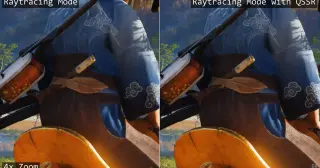
AMD says FSR 4.1 will arrive on older Radeon RX GPUs, starting with RDNA 3 this July and extending to RX 7000-series and older cards with optimized memory use and fewer artifacts, aiming for 300+ supported games at launch; RDNA 2 GPUs will get it in early 2027.
AMD will bring FSR 4.1 to older RDNA3/3.5 GPUs starting July (RX 7000 series and integrated 890M/8060S), with early 2027 rollout to RDNA2 GPUs (RX 6000, Steam Deck GPU, 680M) and potential PlayStation 5/Xbox Series X|S support later. Because older chips run FSR 4 on INT8 rather than FP8, performance may see a noticeable hit and image quality may vary, with early estimates around a 10–20% slowdown versus FSR 3.1 on comparable hardware. Games that support FSR 4 will work via the Radeon driver, and FSR 3.1 titles can be forced to use FSR 4, broadening compatibility beyond RDNA4 hardware.
AMD will bring its FSR 4.1 AI upscaling to older GPUs, with RDNA3 cards getting the upgrade in July and RDNA2 support arriving in early 2027. The expansion covers 300+ games (including Cyberpunk 2077, Battlefield 6, and Assassin’s Creed Shadows) and will extend to devices like the Steam Deck, after AMD tuned and tested the model across hundreds of PC configurations to run on older hardware.