
Beyond Water and Power: The Economic and Cultural Risks of the AI Data Center Boom
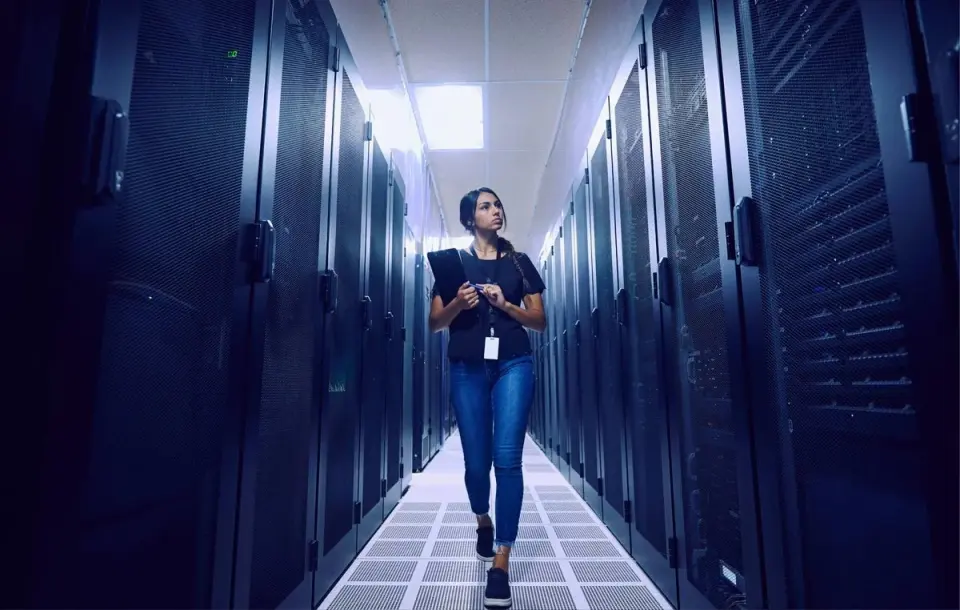
While public opposition to data centers focuses on water and power, experts warn that the greater risks are economic instability and cultural displacement. Massive borrowing for AI infrastructure could trigger a financial crisis if returns fail to materialize, while communities face alienation from rapid technological change.
Key points
- US data centers used 66 billion liters of water in 2023, with some sites consuming as much as a town of 50,000 people daily.
- Tech giants plan to spend over $750 billion on US infrastructure by 2026, potentially rising to $1 trillion annually by 2027.
- Economists warn that if AI fails to generate 2.7 times the expected productivity gains, companies risk bankruptcy and broader economic fallout.
- Advances in chip efficiency and smaller AI models may reduce the need for massive data centers, potentially leaving many planned facilities as stranded assets.
- Public opposition is driven by fears of water shortages, noise, and pollution, but also by a sense of cultural alienation and loss of community dignity.
Background
Recent archive coverage highlights the fragility of AI infrastructure, including Microsoft's cancellation of a UK data center lease due to power grid delays and the bankruptcy of Character.AI. These events underscore the financial and logistical risks associated with rapid AI expansion.
How outlets are covering it
BBC Science Focus emphasizes the economic risks of the AI boom, comparing it to the 19th-century railroad bubble, and notes that many planned data centers may never be built or could become obsolete due to technological advancements. The Hill argues that public fear is largely based on ignorance, citing studies that show data centers account for only a small portion of rising electricity bills, and advocates for regulatory reforms to ensure data centers bear their own costs. National Review frames the opposition as a cultural and dignity issue, suggesting that communities resist data centers not just for resource reasons, but because they feel alienated by the rapid, homogenizing influence of technology and outside populations.
Why it matters
The data center boom represents a massive financial bet on AI's future. If returns fail to materialize, the resulting debt could ripple through the economy. Additionally, the social and cultural impacts on local communities could lead to long-term instability and resistance against technological expansion.
What to watch
Regulators are implementing stricter 'take-or-pay' contracts to ensure data centers bear the costs of infrastructure. Meanwhile, technological advancements in chip efficiency and smaller AI models may reduce the need for large data centers, potentially leading to a surplus of unused facilities.
- 'It's truly staggering': There's a bigger problem with data centres than water or power, warn experts BBC Science Focus Magazine
- Read the studies: Rage over data centers is mostly the product of ignorance The Hill
- Protests Against AI and Data Centers About Protecting Dignity National Review
- The Datacentre Next Door DataDrivenInvestor
- The big four data center misconceptions Reed Smith LLP
Want the full story? Read the original reporting
Read on BBC Science Focus Magazine