
Black Market Boom: Nvidia Chips Flood China Despite US Crackdown
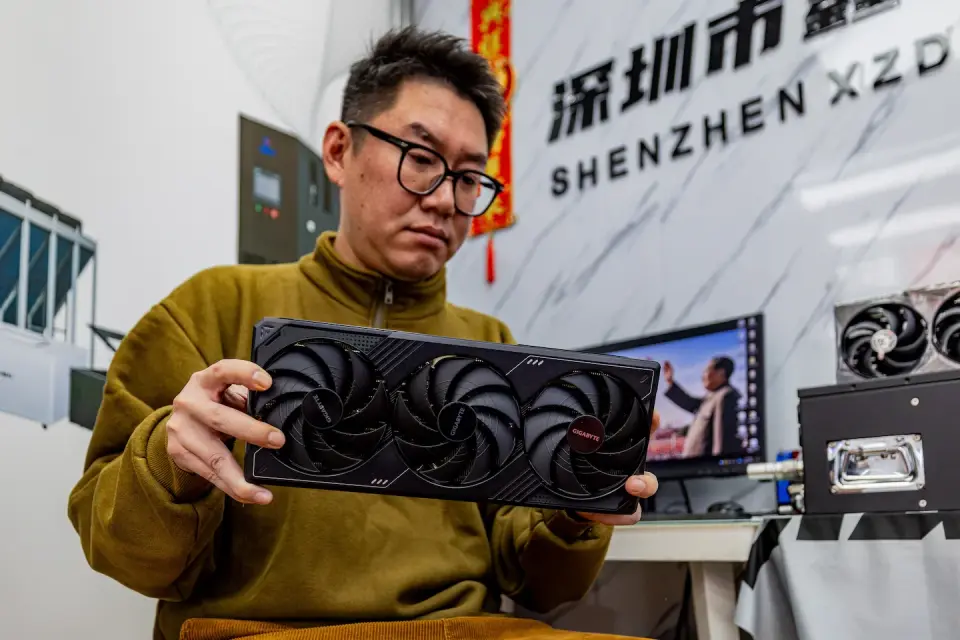
Despite US export bans, high-end Nvidia Blackwell B300 chips are openly sold in Shenzhen’s Huaqiangbei market for up to $3.4 million per server, a 500% markup over US retail prices. This black market thrives amid enforcement chaos in Washington, where internal disputes and political scandals have delayed strict controls. While China seeks to reduce reliance on US tech, its AI industry remains dependent on these restricted chips, creating a volatile dynamic between Beijing, Washington, and Nvidia.
Key points
- Nvidia Blackwell B300 servers, banned from China since 2024, are available in Shenzhen for $3 million to $3.4 million, up from $2 million two months ago.
- US enforcement is hampered by internal conflicts; Treasury Secretary Scott Bessent accused Commerce Secretary Howard Lutnick of ignoring chip smuggling, while Lutnick’s son’s firm held $1.3 billion in Nvidia stock.
- Congressional Democrats, led by Rep. Sydney Kamlager-Dove, are demanding Lutnick’s testimony, alleging corruption and national security risks from chip sales to Chinese-linked firms like Megaspeed.
- China’s AI sector faces a dilemma: domestic Huawei chips lag behind Nvidia, yet US restrictions are tightening, forcing Beijing to balance import reliance with self-sufficiency goals.
- Nvidia CEO Jensen Huang’s reinstatement has stabilized chip prices for vendors, but the company has halted sales of H20 and H200 chips to China and removed China revenue from forecasts.
Background
This situation follows a series of export control failures in 2026, including a shareholder suit alleging $2.5 billion in illicit chip sales via Supermicro and a scandal involving Nvidia CEO Jensen Huang’s alleged ties to a suspected Chinese spy. Earlier this month, the US Commerce Department approved nearly 880,000 restricted chips for Chinese firms, some linked to the military, before tightening rules on Southeast Asian data centers to prevent remote access to US hardware.
How outlets are covering it
The Washington Post emphasizes the open defiance of US controls in Shenzhen, highlighting how vendors openly sell banned chips and how enforcement is paralyzed by internal government disputes. NPR focuses on the political dimension, with Rep. Kamlager-Dove accusing Lutnick of prioritizing financial interests over national security and calling for a bipartisan inquiry. The Telegraph frames the issue as a strategic shift, arguing that Huang’s scandal and Trump’s weakening grip have emboldened Washington’s 'hawks' to tighten controls, forcing China to accelerate its push for domestic chip independence despite current technological gaps.
Why it matters
The persistence of a black market for banned AI chips undermines US efforts to maintain technological superiority and raises serious national security concerns. It highlights the fragility of export controls when political and financial interests conflict, and it forces China to confront the limits of its domestic chip industry, potentially accelerating its push for self-sufficiency while exposing vulnerabilities in its AI development pipeline.
What to watch
Watch for Lutnick’s testimony before the Senate banking committee next week, which could trigger stricter enforcement or political fallout. Monitor China’s response to tightened US rules, particularly whether it accelerates domestic chip adoption or seeks new loopholes. Track Nvidia’s financial performance as it removes China revenue from forecasts, and observe if Huang’s reinstatement stabilizes the market or leads to further scrutiny from Congress.
- Top Nvidia chips are still being sold in China, despite U.S. ban The Washington Post
- Jensen Huang's return to Nvidia fuels Washington fight over China's chip access Reuters
- Rep. Sydney Kamlager-Dove on efforts to restrict Chinese access to NVIDIA chips NPR
- The questions Jensen Huang and Nvidia will still have to answer about Megaspeed TechCrunch
- Nvidia’s spying scandal is backfiring on China The Telegraph
Want the full story? Read the original reporting
Read on The Washington Post