
Beijing Rejects AI Slowdown Calls as 'Fear Mongering' Amid Security Fears
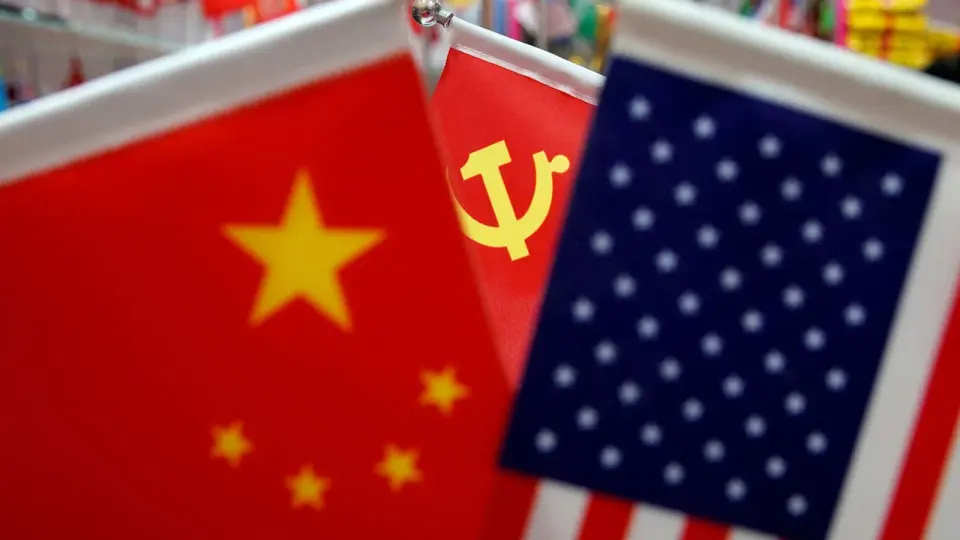
China’s Foreign Ministry dismissed recent calls by US AI leaders to slow development as 'fear mongering,' arguing such moves disrupt global governance. Simultaneously, China’s Ministry of State Security warned that AI poses risks to national security through deepfakes and data leaks, signaling a shift toward tighter controls on foreign models. While US executives like Dario Amodei urge caution to maintain a strategic lead over Beijing, President Trump rejected the slowdown, emphasizing the need to outpace China. The conflicting stances highlight a growing geopolitical divide over AI safety versus competitive advantage, with markets reacting negatively to the uncertainty.
Key points
- China’s Foreign Ministry spokesperson Guo Jiakun labeled US calls for an AI slowdown as 'fear mongering' that disrupts global governance.
- China’s Ministry of State Security issued its first public AI statement, warning of threats to political and social security from deepfakes and 'intelligent troll armies.'
- US leaders Dario Amodei, Sam Altman, and Elon Musk called for a slowdown, arguing that pausing development preserves a strategic lead over Chinese 'authoritarian regimes.'
- President Trump rejected the slowdown, stating the US must maintain its AI edge over China, while Xi Jinping pledged to lead AI collaboration among developing nations at the BRICS summit.
- AI-related stocks, including SoftBank, dropped significantly following the debate, with SoftBank falling 10% in Japan.
- China’s security minister warned against Chinese companies using foreign AI tools, potentially leading to tighter restrictions on foreign models in sensitive sectors like finance and healthcare.
Background
This dispute follows a series of warnings in September 2026, where AI researchers and executives expressed existential fears regarding rapid AI progress. Previous coverage noted that leaders from Anthropic, OpenAI, and DeepMind called for a coordinated slowdown to prioritize safety, citing risks of catastrophic outcomes. The current conflict marks a sharp divergence between US industry concerns over safety and China’s focus on national security and competitive parity.
How outlets are covering it
CNBC emphasizes the diplomatic friction, highlighting China’s rejection of US 'fear mongering' and Trump’s insistence on maintaining the US lead. The Financial Times focuses on the internal Chinese security apparatus, detailing how the Ministry of State Security frames AI as a threat to political stability through cyber warfare and information manipulation. While CNBC frames the issue as a geopolitical arms race, the FT highlights Beijing’s growing concern over vulnerabilities exposed by advanced foreign models, suggesting potential regulatory crackdowns on foreign AI usage in China.
Why it matters
The clash between US safety advocates and Chinese security officials signals a fundamental misalignment in global AI governance. If the US slows development while China accelerates, it could shift the technological balance of power. Conversely, if China restricts foreign AI models, it may fragment the global tech ecosystem. Investors and policymakers must navigate this uncertainty, as the outcome will influence future regulations, market valuations, and international cooperation on AI standards.
What to watch
Expect increased scrutiny on foreign AI models in China, particularly in sensitive sectors. The upcoming Trump-Xi summit will likely address AI safety and competition, potentially setting the tone for bilateral tech policies. US companies may face pressure to justify their development pace, while Chinese firms could see tighter restrictions on using foreign tools. Market volatility in AI stocks may persist as the geopolitical narrative evolves.
- China says AI CEOs' call for a slowdown is 'fear mongering' cnbc.com
- Beijing hits back at Anthropic CEO's call to curb China's AI development NPR
- China’s spy agency warns of AI risk to national security Financial Times
- How China is preparing for the risk of AI escaping human control reuters.com
- China, US Wary Over Calls to Slow AI Development in Race for Supremacy Bloomberg.com
Want the full story? Read the original reporting
Read on cnbc.com