A new survey shows China is now viewed as a more positive global influence than the US in Latin America for the first time, driven by rising favorability toward Beijing and declining support for Washington, particularly amid Trump's confrontational policies.
Two giant pandas, Ping Ping and Fu Shuang, have arrived at Hartsfield-Jackson Atlanta International Airport after departing Chengdu, China. The pair, born in 2020 at the Chengdu Research Base of Giant Panda Breeding, are on a rare loan to Zoo Atlanta. Their arrival follows the state visit of Chinese President Xi Jinping to Washington, where he announced the transfer as a gesture of goodwill. This marks the first time Zoo Atlanta has hosted pandas since October 2024, when its previous group returned to China. The move revives a 25-year partnership between the zoo and China.
Tech billionaire Peter Thiel criticized Pope Leo XIV’s recent encyclical on artificial intelligence, arguing that calls for global AI regulation inadvertently benefit the Chinese Communist Party by slowing Western innovation while China continues to advance. Thiel, who co-founded PayPal and Palantir and invests in major AI firms, stated that the Vatican’s stance acts as a 'useful idiot' for Beijing, potentially leading the U.S. and its allies to impose restrictive rules that hinder their competitive edge. This critique emerged just before President Donald Trump and Chinese leader Xi Jinping were scheduled to meet in Washington to discuss AI risks and potential cooperation. Thiel’s comments reflect his broader opposition to technology regulation, including previous comparisons of AI safety advocates to 'the Antichrist.' The Vatican did not immediately respond to the criticism.
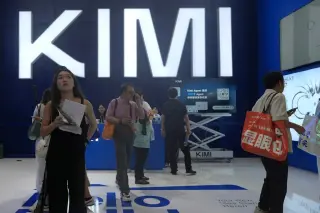
Chinese AI startups led by Moonshot and Zhipu are releasing cheaper, largely open-source models (K3, GLM-5.2) that are gaining traction in the US, with companies like Coinbase adopting them to cut costs; while not yet matching frontier closed models in every capability, they are close enough for broad use and reflect a wider push for open AI and global competition, backed by China’s export ambitions and evolving US policy.
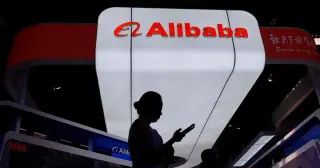
The Pentagon expanded its annual list of Chinese military companies to include Alibaba, BYD and Baidu, widening a blacklist that could bar them from US defense contracts amid heightened US-China tensions. China condemned the move; Alibaba said there is no military basis and vowed legal action, while BYD and Baidu did not immediately comment. The list now includes 188 firms, reflecting ongoing scrutiny of China’s military–civil fusion and its impact on commerce and diplomacy.
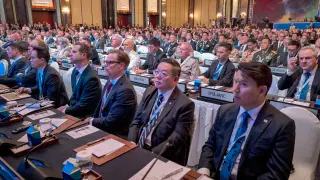
At the 2026 Shangri-La Dialogue in Singapore, defense leaders urged allies to increase defense spending and bolster credible deterrence, while reaffirming a rules-based, multilateral security order in the Asia-Pacific and weighing flashpoints around China and Taiwan amid calls for resilient alliances and responsible power projection.
Xi’s Beijing visit with Putin showcased a deep, highly formal China–Russia alignment: a senior, energy-focused delegation, a long joint statement with numerous signed documents, and private and cultural events, signaling strategic convergence. By contrast, Trump’s visit produced few major deals, a smaller cabinet-level U.S. delegation plus a broad business contingent, and a televised banquet, underscoring a more transactional dynamic and higher political stakes for Trump given his rarer trips to Beijing. The two visits differed in host reception, agendas, and post-meeting symbolism (Putin–Xi photo exhibition and private tea vs. a Temple of Heaven visit and a televised state banquet), reflecting Beijing’s enduring Moscow partnership vs. a less consistent China–U.S. relationship during Trump’s term.
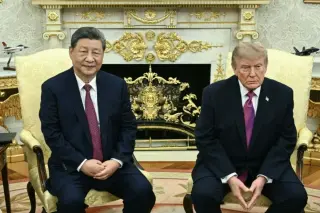
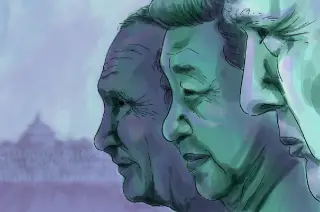
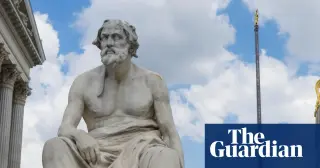
In Beijing, Xi Jinping invoked the Thucydides Trap during talks with Donald Trump, warning that missteps on Taiwan could push the US and China into conflict while urging a workable path forward; Trump responded by touting renewed American strength and a chance for a better-than-ever relationship.
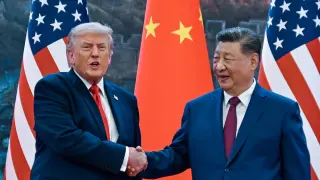
Over two days in Beijing, Trump hailed the visit as “incredible” and said major trade deals were reached, claiming many problems were settled with Xi Jinping. Xi warned that mishandling Taiwan could push U.S.-China relations into a dangerous place, while both leaders discussed Iran’s nuclear prospects and the Strait of Hormuz; Trump also signaled further openness to U.S. oil and farm products and affirmed a continued trade truce amid broader disputes over export controls and rare earths. The trip featured grand pomp and raised questions about gender representation at the negotiating table.
At a Beijing summit, Trump said China has agreed to buy American oil and will send Chinese ships to U.S. ports as part of efforts to secure concrete trade wins, while China would help with Iran talks and oppose military aid to Tehran; Xi is said to want the Strait of Hormuz open and toll-free. U.S. crude exports to China have fallen about 95% since 2023, and China remains Iran’s major oil buyer. Beijing and Washington reportedly reached a series of consensuses to pursue constructive stability for the next three years, with a closing meeting planned.
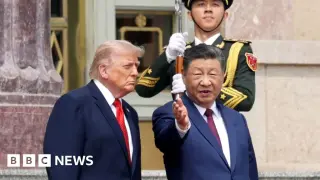
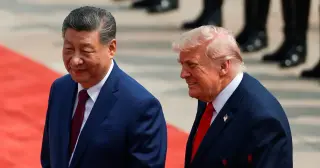
President Donald Trump arrives in Beijing for a two-day summit with Xi Jinping, featuring a gun-salute welcome, a state banquet at the Great Hall of the People, and bilateral talks. The visit includes stops like the Temple of Heaven and appearances by tech leaders such as Elon Musk and Tim Cook, with discussions focused on U.S.–China relations and an invitation for Xi to visit the White House on September 24.
President Trump emerged from private talks with Xi Jinping in Beijing tight-lipped as China warned Taiwan is the top issue in China-U.S. relations and could trigger clashes. After the two-hour session, Trump offered reporters a restrained nine-word remark: "It’s great—a great place. Incredible. China is beautiful." The meeting comes as Trump’s delegation—featuring Silicon Valley leaders and senior officials—shapes discussions on trade, technology, Iran, and Taiwan, with Xi signaling that the Taiwan question must be handled carefully to avoid conflict and maintain overall stability.
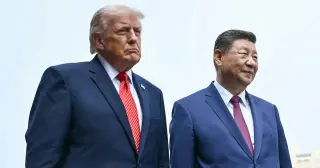
At a Beijing summit, Xi Jinping warned that disagreements over Taiwan could lead to clashes or even conflict with the United States, highlighting sharp divides on Iran, trade and Taiwan policy. Trump praised Xi and spoke of a stronger China‑U.S. relationship, as discussions touched on economic cooperation and potential trade steps, while Taiwan arms sales and security remain contentious issues.
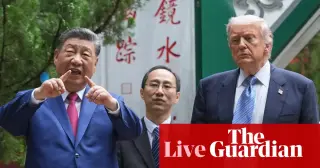
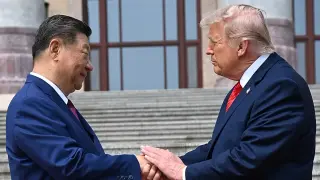
Xi Jinping says China’s growth and the United States’ strength can go hand in hand during Trump’s visit, as the two sides discuss Taiwan, Iran, and trade; Xi warns mishandling Taiwan could trigger conflict while Trump calls talks positive and pursues potential deals and an extended tariff truce, signaling a push for cooperation despite longstanding tensions.
Chinese Foreign Minister Wang Yi signaled Beijing’s ambition for a successful March 31–April 2 Trump-Xi summit, saying it could steady relations and advance a 2026 trade truce, while Beijing prioritizes preparations despite U.S. actions against Iran and tensions around Venezuela.