
Researchers Demonstrate 60-Second Physical Hack of Boeing 737 Autopilot
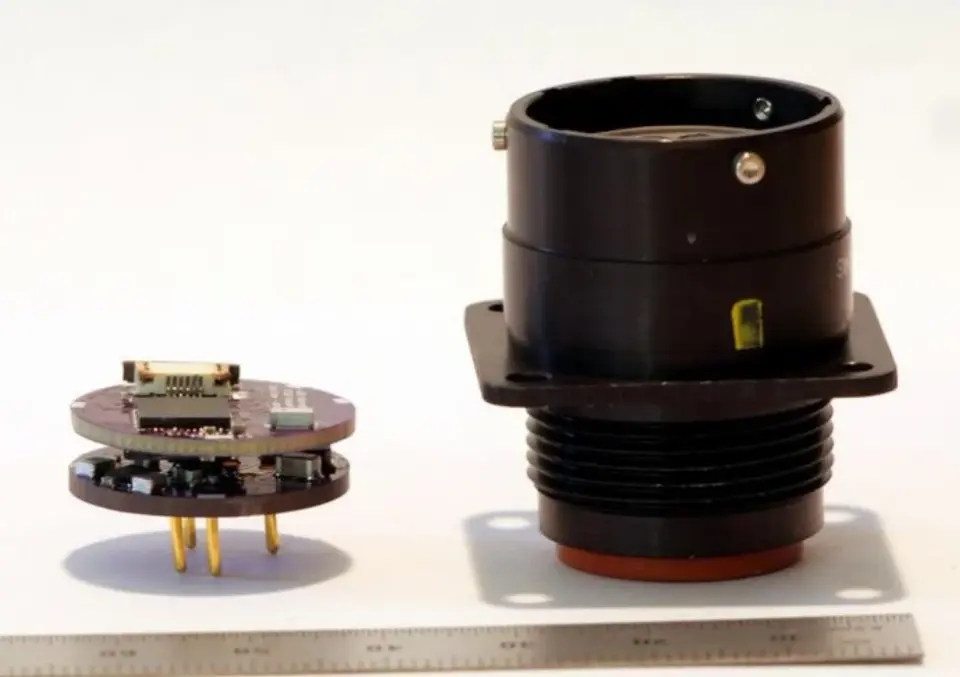
UC San Diego and Oberlin College researchers presented a proof-of-concept at the USENIX Security Symposium showing that a coin-sized, Wi-Fi-enabled device can be plugged into a Boeing 737 maintenance port in under 60 seconds to hijack the aircraft's autopilot and spoof pilot displays. The attack exploits the legacy ARINC 429 protocol by overriding legitimate signals with higher-current electrical pulses. While Boeing states existing safeguards mitigate the risk, researchers warn that the vulnerability remains unpatched and could lead to catastrophic flight errors if exploited by a motivated attacker.
Key points
- Researchers from UC San Diego and Oberlin College demonstrated a physical hacking technique on Boeing 737 avionics at the USENIX Security Symposium in Baltimore on August 13, 2026.
- The attack uses a custom, coin-sized ESP32-based device costing less than $100, which plugs into an unlocked maintenance port in the aircraft's electronics bay.
- The device exploits the ARINC 429 protocol by sending higher-current electrical signals to override legitimate data from the Flight Management Computer (FMC) to the Multipurpose Control Display Unit (MCDU).
- Capabilities include redirecting the autopilot to new waypoints, altering weight and balance data, and spoofing outside air temperature to affect takeoff calculations.
- The researchers disclosed the vulnerability to Boeing in 2020 and tested it in a Boeing lab, but claim no technical fix has been implemented, suggesting the issue may persist for years.
- Boeing responded that existing system design and operational environment safeguards provide sufficient mitigation, while researchers recommend plugging the port with epoxy or removing it entirely.
Background
This development follows a decade-long research effort by the team, which began after earlier successes in hacking automotive systems. They assembled a 'Triton' avionics test bed using secondhand Boeing 737 components purchased over several years. The vulnerability highlights a shift in threat models from network-based attacks to physical access exploits, similar to credit card skimmer techniques. The Boeing 737 is a critical asset for major US airlines, comprising roughly 25% of Delta's fleet, 38% of American's, 53% of United's, and 100% of Southwest's fleet.
How outlets are covering it
WIRED and Gizmodo emphasize the practicality of the attack, noting the device's small size, low cost, and the ease of accessing the maintenance port via an exterior hatch. They highlight the researchers' concern that Boeing has not implemented a technical fix. Interesting Engineering focuses on the legacy nature of the ARINC 429 protocol, noting it lacks modern authentication mechanisms. Hackaday details the technical specifics of the signal override, mentioning the 37.5 ohm resistors and the use of an ESP32 board. Boeing, as reported by WIRED, downplays the risk, asserting that existing layers of protection are sufficient, while researchers argue that operational security measures, such as locking or removing ports, are the most immediate necessary fix.
Why it matters
The demonstration proves that aviation cybersecurity cannot rely solely on network defenses; physical access to legacy systems poses a significant, unmitigated risk. With approximately 8,000 Boeing 737s in service globally, the potential for subtle, undetected manipulation of flight paths and takeoff data represents a serious safety concern. The lack of an immediate technical fix from Boeing suggests that the industry may rely on procedural and physical security updates rather than software patches, highlighting a gap in how the aviation sector addresses emerging physical threat vectors.
What to watch
Researchers are calling for the aviation industry to adopt immediate physical mitigations, such as sealing vulnerable ports with epoxy or removing them, and to implement long-term software defenses like cryptographic authentication for ARINC 429 buses. Boeing has not announced any specific technical updates, leaving the timeline for a potential fix uncertain. The researchers expect to continue publishing findings to pressure the industry into reevaluating physical access controls and legacy system security.
- Researchers Hack An Airline Analog Hackaday
- This Coin-Sized Device Can Hack a Boeing 737 WIRED
- Tiny device hacks Boeing 737 flight systems, alters routes in under 60 seconds Interesting Engineering
- Researchers Built a Coin-Sized Device That Can Hack a Boeing 737’s Electronics Gizmodo
- Researchers Demonstrate 60-Second 737 Avionics Attack AVweb
Want the full story? Read the original reporting
Read on Hackaday