
GM's 2027 Silverado and Sierra Debut a New 'Smartphone-Style' Interface to Fix Infotainment Friction
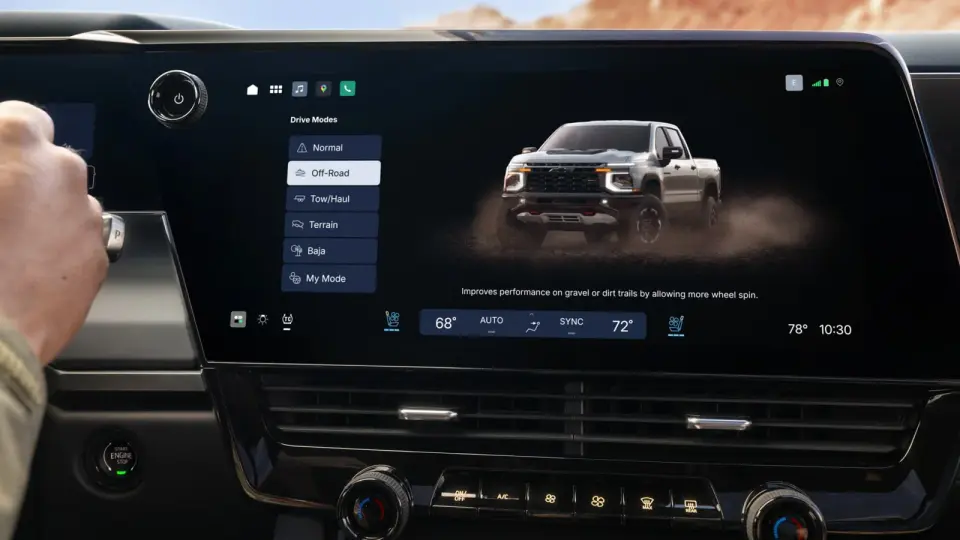
General Motors is launching a redesigned in-vehicle software system for the 2027 Chevrolet Silverado and GMC Sierra, featuring a split-screen layout that allows native features and phone projection to coexist. The update aims to reduce driver cognitive load by simplifying controls and improving the Super Cruise driver-assist display.
Key points
- The new interface debuts in late 2026 on GM's highest-volume pickup trucks, utilizing 60 inches of total display real estate including a 16.3-inch center screen.
- A key innovation is the 'window-in-window' feature, which allows Apple CarPlay and Android Auto to run alongside native vehicle controls rather than taking over the entire screen.
- Super Cruise receives a visual upgrade, displaying surrounding objects and upcoming maneuvers on the driver cluster to increase trust in the hands-free system.
- GM restructured its digital operations under design leadership, led by former Apple and Google executive Sebastian Bauer, to prioritize human-centered design.
- The system includes Google Gemini for voice interaction and retains physical buttons for critical functions like climate control to ensure tactile feedback.
Background
GM has previously faced criticism for its infotainment systems, which were cited in J.D. Power studies as a major source of vehicle unreliability. The company had also expressed a more restrictive approach to phone mirroring in its electric vehicles, making the new cooperative approach for its gas-powered trucks a notable shift. This update follows broader industry trends where automakers are integrating advanced driver-assist systems and smartphone connectivity more deeply into the native user experience.
How outlets are covering it
CNBC highlights the strategic restructuring of GM's digital operations, noting that placing design above software is intended to reduce cognitive load. The Detroit Free Press emphasizes the practical benefits of the split-screen layout, which allows drivers to maintain access to native features while using third-party apps, a change driven by customer feedback. The Verge points out the contrast with GM's previous hostility toward phone mirroring in electric vehicles, framing the new picture-in-picture approach as a significant concession to consumer preference. GM's own Q&A with executives underscores the balance between customization and simplicity, noting that physical buttons remain for safety-critical functions while digital interfaces handle the rest.
Why it matters
This update addresses a persistent pain point in the automotive industry: the friction between native vehicle software and third-party phone projection systems. By allowing these systems to coexist, GM aims to improve safety and user satisfaction, potentially influencing competitors to adopt similar hybrid interfaces. The move also signals a shift in GM's corporate structure, prioritizing user experience over pure software engineering, which could impact the development of future vehicle features across its entire portfolio.
What to watch
GM plans to expand this new software platform across its broader vehicle portfolio over an undisclosed timeline. The company will continue to refine the system through over-the-air updates based on ongoing customer feedback and usability studies. Additionally, GM is working to integrate its own proprietary AI system to replace the current Google Gemini partnership in the future.
- GM launching new customer software experience with redesigned Chevy, GMC pickups CNBC
- GM pickups get an infotainment system redesign that simplifies screen Detroit Free Press
- GM updates its trucks’ native software to coexist with CarPlay The Verge
- Inside GM's new user interface: A Q&A with our experts marketscreener.com
- GM Unveils All-New In-Vehicle User Software for Its 2027 Pickups Autoblog
Want the full story? Read the original reporting
Read on CNBC