
Google Launches Experimental Satellite to Test Orbital AI Computing
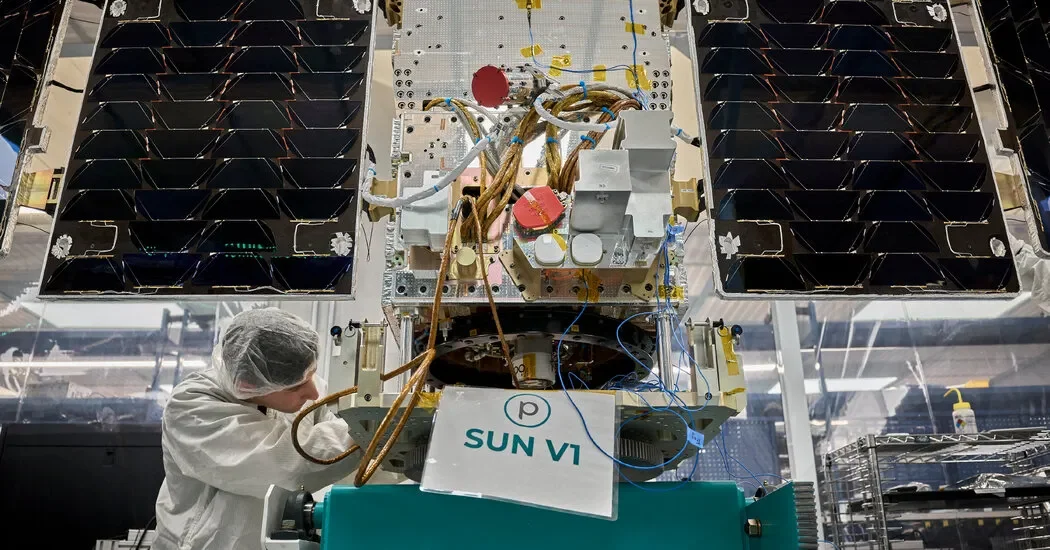
Google is launching an experimental satellite next Thursday, designed to process simple AI queries from orbit. The refrigerator-sized device, built by Planet Labs, passed rigorous vibration tests in a San Francisco clean room. This move represents a strategic shift in AI infrastructure, aiming to reduce latency and energy costs by leveraging solar power in space, though it remains an experimental proof-of-concept rather than a full-scale data center replacement.
Key points
- Launch scheduled for next Thursday (late September 2026).
- Satellite is refrigerator-sized and built by Planet Labs.
- Passed vibration and solar panel inspection tests in San Francisco.
- Designed to answer simple AI queries directly from orbit.
- Google’s James Manyika confirmed the hardware integrity post-testing.
Background
This development follows a period of intense scrutiny regarding terrestrial AI infrastructure. In August, NASA hosted the 'Max Power' expo at Kennedy Space Center, highlighting growing industry interest in aerospace tech. In September, an Arkansas judge rejected efforts to block reporting on Google’s West Memphis data center power deals, while Amazon confirmed permanent data loss from Iranian strikes on its Middle Eastern facilities. These events underscore the fragility and resource intensity of ground-based AI infrastructure, potentially motivating Google’s exploration of orbital alternatives.
How outlets are covering it
The New York Times provides detailed reporting on the technical validation phase, noting that technicians at Planet Labs inspected the satellite’s solar panels and subjected it to vibration tests to simulate launch conditions. The article highlights James Manyika’s cautious optimism, acknowledging the successful tests but noting uncertainties about in-orbit performance. The secondary source, TV News Check, offers no additional analysis, merely republishing the New York Times headline and summary without independent commentary or differing viewpoints. Consequently, the perspective is dominated by the technical and experimental framing of the New York Times, with no conflicting narratives from other outlets.
Why it matters
This launch signals a potential pivot in how major tech companies approach AI infrastructure. By testing computing power in space, Google may be exploring solutions to energy constraints, cooling challenges, and latency issues associated with terrestrial data centers. If successful, this could reduce reliance on ground-based power grids and mitigate risks associated with geopolitical instability or physical attacks on infrastructure, as seen in recent incidents involving Amazon’s Middle Eastern facilities. It also positions Google at the forefront of integrating space technology with AI, potentially influencing future standards for low-latency, high-efficiency computing.
What to watch
The satellite is scheduled to launch next Thursday. Following launch, Google will monitor the satellite’s performance in orbit, specifically testing its ability to process AI queries and maintain hardware integrity in the space environment. Results from this experimental phase will determine whether Google expands its orbital computing initiatives or refines the technology for future iterations. No immediate commercial deployment is expected, as this remains a proof-of-concept.
- Google Takes the A.I. Data Center Race to Outer Space The New York Times
- Can Tech Companies Like Google Really Put Data Centers in Space? The New York Times
- Google Takes The AI Data Center Race To Outer Space TV News Check
- Next Thursday, Google Is Sending Experimental Satellite Into Orbit That Will Have Enough Computing Power To Answer Simple A.I. Queries From Space-NYT TradingView
Want the full story? Read the original reporting
Read on The New York Times