
Local AI Hardware Reality: 16GB RAM Handles Basic Tasks, but Frontier Models Demand Data Centers
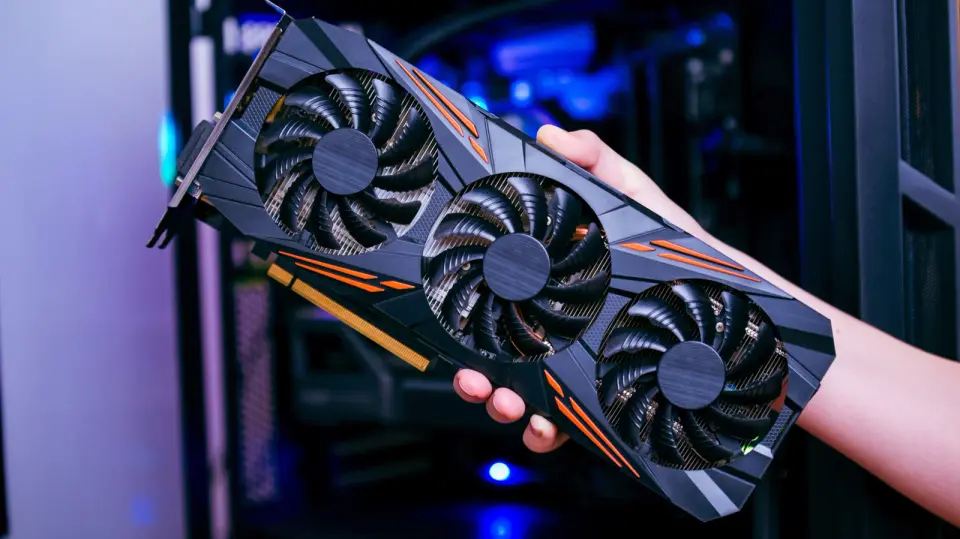
Running AI locally is feasible for basic tasks on modest hardware, but significant performance gaps remain compared to cloud services. A 16GB RAM PC can run small 7-8 billion parameter models, while 32GB is needed for more capable 27-33 billion parameter models. Frontier models require massive memory, often exceeding 600GB, making them impractical for consumer devices. Hardware costs vary widely, with high-end GPUs like the RTX 5090 ranging from $1,999 to over $5,000 depending on the version and availability.
Key points
- Memory capacity is the primary constraint for local AI, with quantized models requiring roughly 4 bits per parameter.
- A 16GB RAM system can run models like Llama 3.1 8B or OpenAI's gpt-oss-20b, but performance may be limited.
- 32GB RAM is recommended for models like Gemma 3 27B, while 70B models require 43GB or more.
- Speed depends on memory bandwidth; GPUs with high VRAM offer significantly faster inference than system RAM.
- Frontier models like Kimi K3 require approximately 1.4TB of memory, necessitating data center infrastructure.
Background
Recent developments include Meta and Apple's collaboration on Muse Spark Open, a large model optimized for Apple hardware, and NVIDIA's release of the 64GB DGX Spark at $4,999, reflecting rising memory costs. These moves indicate a trend toward local inference, though consumer hardware remains limited compared to cloud capabilities.
How outlets are covering it
Engadget emphasizes the practical limits of consumer hardware, noting that while 16GB RAM suffices for basic tasks, 32GB is needed for more capable models, and frontier models require data centers. Metro State University highlights the cost disparity in GPUs, such as the RTX 5090, where advertised prices differ significantly from actual market availability. HackerNoon argues that local AI is becoming mainstream due to improved open models and cost efficiency, but acknowledges that the most advanced models still require cloud infrastructure. The sources agree on the importance of memory and hardware costs but differ on the feasibility of local AI for advanced tasks.
Why it matters
Understanding hardware requirements for local AI helps users make informed decisions about upgrading their systems or relying on cloud services. It also highlights the growing accessibility of AI tools while emphasizing the persistent gap between consumer and enterprise capabilities.
What to watch
Expect continued improvements in model efficiency and hardware performance, potentially narrowing the gap between local and cloud AI. However, frontier models will likely remain the domain of data centers due to their massive memory requirements.
- What Hardware Does Your PC Need To Run A Local AI Model? Engadget
- What Does It Cost to Run AI on Your Own Computer? - Metro State University
- I measured my local LLM’s power bill and it costs less than a single $20 ChatGPT, Claude or Gemini subscription XDA
- The Local AI Stack Goes Mainstream: Developers Are Running Serious Models on Their Own GPUs HackerNoon
- Local AI vs. a subscription: what the full cost shows NeoTeo
Want the full story? Read the original reporting
Read on Engadget