
Wisconsin’s 2026 Cranberry Harvest Faces Climate and Cost Pressures
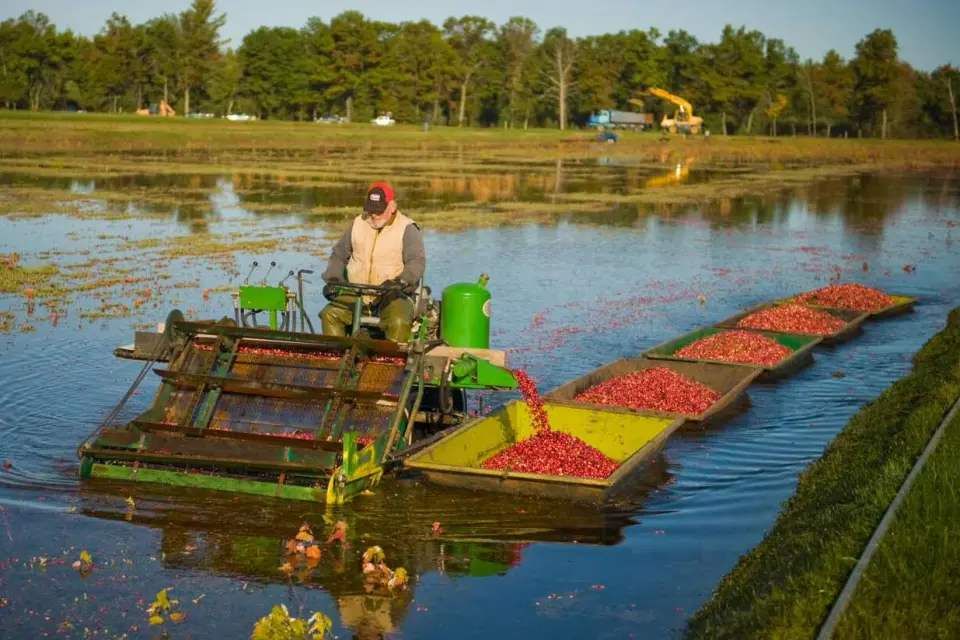
Wisconsin dominates U.S. cranberry production, accounting for 61% of the 2026 national crop of 7.87 million barrels. Despite a 5% year-over-year increase, yields remain below the three-year average due to extreme weather, including prolonged hail and drought. Growers face rising input costs and climate-driven risks, though new research into health benefits offers long-term optimism.
Key points
- Wisconsin is forecast to harvest 4.8 million barrels in 2026, up 4% from 2025, while Massachusetts ranks second with 1.9 million barrels.
- The national crop is 5% below the 2022-2024 average, with 94% of berries processed into juice, sauce, or dried forms rather than sold fresh.
- Wisconsin growers reported an unusually long hail season lasting two to three months, damaging vines during critical flowering periods in June.
- Climate Central data indicates upper Midwest winters are warming rapidly, with 14 more warm days than in 1970, threatening the ice-layer protection growers rely on for winter survival.
- The Trump administration’s $8 billion Harvest Fuel Relief program excluded specialty crops like cranberries, forcing growers to absorb higher diesel and fertilizer costs.
Background
Cranberry production in the U.S. has seen yields per acre nearly double since 1980, driven by disease-resistant varieties and improved management. Wisconsin took the top production spot from Massachusetts in 1994. Recent archive coverage of agricultural policy, such as Pennsylvania’s vape regulations, highlights the broader regulatory environment affecting niche agricultural sectors, though cranberry growers currently face market stability despite input cost spikes.
How outlets are covering it
Successful Farming emphasizes Wisconsin’s overwhelming market share and the structural advantages of its glaciated soils. The Guardian focuses on the existential threat of climate change, citing record heatwaves and erratic winters that disrupt traditional growing cycles. KCUR highlights the immediate impact of extreme weather, specifically the unprecedented duration of hail, and the exclusion of specialty crops from federal fuel relief. Agweek provides a ground-level view, noting that while yields are up slightly, growers are contending with intense drought and are investing in new hybrid varieties to ensure future resilience. While all sources agree on the dominance of Wisconsin, they diverge on the primary driver of current challenges: Successful Farming and Agweek point to weather variability, while The Guardian and KCUR emphasize the long-term trajectory of climate change and policy gaps.
Why it matters
Cranberries are a critical holiday staple, with 94% of the crop processed for year-round consumption. The 2026 harvest reflects broader agricultural vulnerabilities to climate instability and rising operational costs. As growers adopt AI-driven breeding and drone technology to adapt, the industry’s ability to maintain stable prices and supply chains will depend on overcoming these environmental and economic headwinds. The exclusion of specialty crops from federal fuel relief underscores a policy gap that could impact the financial viability of smaller, family-owned farms in the Midwest.
What to watch
Growers will continue harvesting fresh cranberries through Thanksgiving, with most processing crops already collected. Researchers at the University of Wisconsin-Madison are accelerating the development of heat- and disease-resistant varieties. The industry is monitoring the impact of the new Harvest Fuel Relief program, as specialty crops were not automatically included. Long-term, the focus will shift to integrating advanced technology, such as drones for precise fertilization, to mitigate the effects of erratic weather patterns and maintain yield stability.
- Which State Grows the Most Cranberries? It’s Not Even Close Successful Farming
- Cranberry jam: warming winters and extreme weather threaten a traditional holiday fruit The Guardian
- Midwest cranberry growers find reasons to be thankful despite smaller crop KCUR
- Wisconsin cranberry growers harvest right up to Thanksgiving Agweek
- Massachusetts fresh cranberry volume up while other regions drop FreshPlaza
Want the full story? Read the original reporting
Read on Successful Farming