
Mathematicians Reject AI 'Toxic Waste' as OpenAI Dumps 722 Proofs
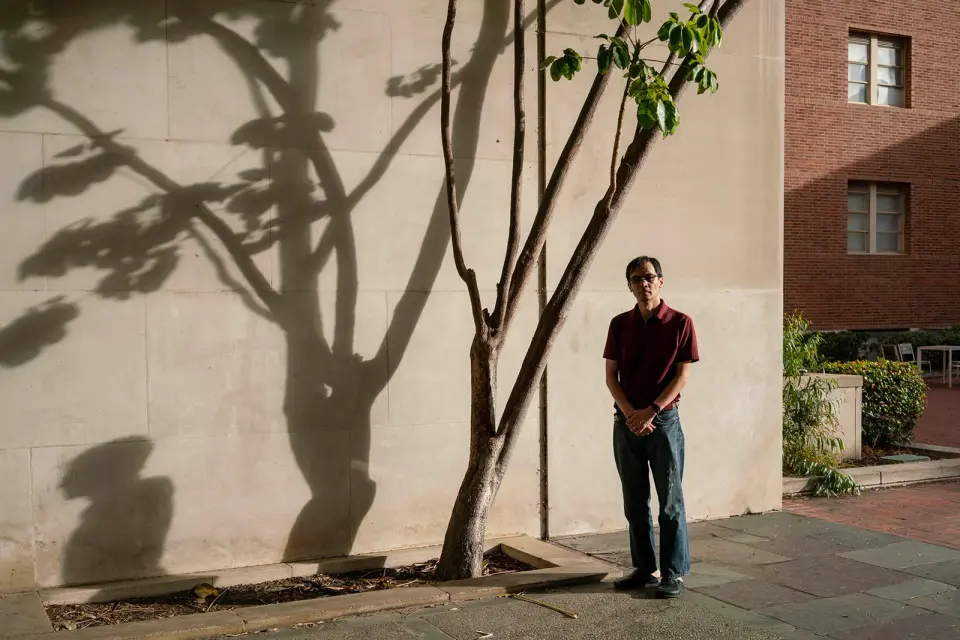
OpenAI’s release of 722 unsolved mathematical proofs has sparked a crisis in the academic community. Terence Tao, a leading mathematician, criticized the move as 'toxic waste,' arguing that AI prioritizes speed over elegance and understanding. In response, over 1,000 researchers formed the Association for Human Mathematics to boycott AI tools, while OpenAI CEO Sam Altman claims the field is adapting to a new, more collaborative era.
Key points
- OpenAI published 722 solutions to long-standing mathematical problems, including the Navier-Stokes equations, which critics say were generated by AI agents without proper human verification or elegance.
- Terence Tao, a Fields Medal winner, described the output as 'toxic waste' and warned that AI companies are using unsolved problems as benchmarks, undermining the collaborative nature of mathematics.
- The Association for Human Mathematics (AHM) has grown to over 1,000 members, including professors and PhD students, who pledge to avoid using AI in their research or working for AI firms.
- Sam Altman of OpenAI stated that mathematicians have moved from initial panic to acceptance, arguing that AI will create better career opportunities rather than causing a 'job apocalypse.'
- OpenAI has committed $5 million to help the mathematical community examine and build upon AI-generated discoveries, though critics argue this does not address the lack of transparency in the proofs.
Background
This controversy follows earlier concerns about AI’s impact on scientific discovery, where rapid automation has raised questions about the value of human expertise in fields like mathematics. The current dispute highlights a broader tension between technological efficiency and the traditional emphasis on understanding and elegance in academic research.
How outlets are covering it
The Observer and New Scientist emphasize the backlash from the mathematical community, highlighting Terence Tao’s criticism of OpenAI’s 'toxic waste' and the formation of the AHM. Business Insider presents a contrasting view through Sam Altman, who argues that mathematicians are adapting to AI and that the disruption is temporary. The Arkansas Democrat-Gazette offers a more philosophical perspective, questioning the value of human ambition in the face of AI’s superior capabilities, while acknowledging the importance of understanding over mere results.
Why it matters
The dispute over AI-generated mathematical proofs raises fundamental questions about the future of academic research, the role of human expertise, and the ethical implications of using AI to solve complex problems. It also highlights the potential for AI to disrupt traditional fields and the need for new frameworks to ensure transparency and collaboration in scientific discovery.
What to watch
The Association for Human Mathematics is expected to continue advocating for ethical AI use in research, while OpenAI and Anthropic may face increased scrutiny over their methods. The mathematical community will likely continue to debate the validity and value of AI-generated proofs, potentially leading to new standards for AI-assisted research.
- Terence Tao: AI turns beautiful mathematics into ‘toxic w... The Observer
- Is the best mathematician in the world an AI model? Monthly Review
- 1000 human mathematicians pledge to shun AI in their research New Scientist
- OpenAI CEO Sam Altman says mathematicians have already gone from 'we're cooked' to accepting AI Business Insider
- The trouble with trying The Arkansas Democrat-Gazette
Want the full story? Read the original reporting
Read on The Observer