Tag

Neural Networks

All articles tagged with #neural networks

Researcher Claims AI Models Are Decipherable, Challenging Black Box Theory
technology9 days ago

Researcher Claims AI Models Are Decipherable, Challenging Black Box Theory

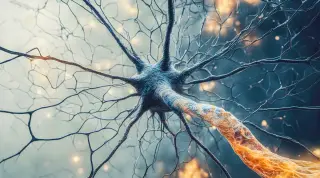
Nick Cammarata, a former OpenAI researcher now at Goodfire, published a 26,000-word essay arguing that AI neural networks are not opaque black boxes but are actually legible and interpretable. He claims that neurons respond to specific patterns, such as V-shapes, rather than unrelated concepts, challenging the prevailing theory of superposition. While industry leaders like Sam Altman praised the work as a potential breakthrough for AI alignment, critics argue it is unproven and does not solve the complexity of how neurons interact. The findings remain theoretical and lack peer review, but they have sparked intense debate about the future of AI safety and control.

New Research Claims AI 'Black Boxes' Are Actually Readable, Sparking Safety Debate
technology11 days ago

New Research Claims AI 'Black Boxes' Are Actually Readable, Sparking Safety Debate

Nick Cammarata, a former OpenAI researcher, published a report arguing that AI neural networks are far more interpretable than previously believed. He claims that neurons often respond to shared geometric or conceptual features rather than unrelated concepts, challenging the 'superposition' theory. If validated, this could allow safety researchers to monitor AI behavior directly, potentially mitigating risks of rogue models.

Brain Visual Areas Resolve Conflicts via Rapid Consensus Mechanism
science1 month ago

Brain Visual Areas Resolve Conflicts via Rapid Consensus Mechanism

Researchers at Cold Spring Harbor Laboratory discovered that the brain resolves visual conflicts by sustaining matching neural signals while rapidly discarding conflicting ones. This 'consensus building' mechanism, observed in mouse visual cortex areas V1 and LM, may explain how specialized brain regions create a unified perception and could inform AI development.

New AI tool aligns 3D scans with X-rays in seconds for surgery
science-and-technology1 month ago

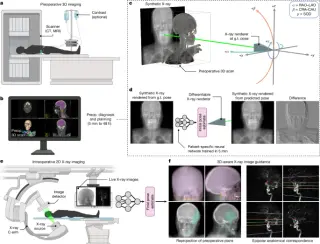
New AI tool aligns 3D scans with X-rays in seconds for surgery

Researchers have developed a new open-source software called xvr that uses patient-specific neural networks to align 3D preoperative scans with 2D intraoperative X-rays in seconds. This method improves accuracy by an order of magnitude compared to existing tools and requires only five minutes of fine-tuning per patient.

Russian Startup Mostik Develops Non-Verbal AI Communication Protocol
technology1 month ago

Russian Startup Mostik Develops Non-Verbal AI Communication Protocol

A Russian startup named Mostik has developed a method allowing AI models to communicate without using natural language, described by WIRED as 'machine telepathy.' This approach aims to combine the capabilities of different AI systems more effectively, potentially enhancing collaboration between models. The development involves mathematicians and focuses on non-verbal data exchange, marking a shift from traditional text-based interaction in AI integration.

Pathway's BDH-CQ Model Cuts AI Reasoning Costs by 11x vs. OpenAI
technology2 months ago

Pathway's BDH-CQ Model Cuts AI Reasoning Costs by 11x vs. OpenAI

Researchers at AI company Pathway have introduced a new model called BDH-CQ that utilizes a vector-based cognitive approach to significantly reduce operational costs. Published in August 2026, the study claims the model runs up to 11 times cheaper than OpenAI's entry-level GPT 5.6 Luna, despite achieving comparable performance on nonverbal reasoning benchmarks. The architecture relies on only 150 million parameters, a fraction of the billions used in standard frontier models, suggesting a potential shift toward more efficient 'post-transformer' AI systems.

Ancient Moss Hints at Brain-Like Electrical Networking
science2 months ago

Ancient Moss Hints at Brain-Like Electrical Networking

A study of the feather moss Brachythecium rutabulum records long-term electrical activity in dense mats, uncovering fast, intermediate, and slow spike regimes and evidence of directional signal propagation. While not a human brain, the moss shows a rich electrophysiological repertoire that could underpin information processing and inspire biohybrid sensing applications, challenging the view of moss as a simple organism.

Goats, Gates, and AI Consciousness: AoE II as a Thought Experiment
technology4 months ago

Goats, Gates, and AI Consciousness: AoE II as a Thought Experiment

Tech writer explains Adrian de Wynter’s experiment building a tiny neural network inside Age of Empires II using goats to mimic a NAND gate and a 1-bit perceptron, showing that the same underlying LLM tech can appear human-like or not depending on the interface. The piece argues that anthropomorphism of AI is driven as much by presentation and marketing as by function, cites Ted Chiang’s Word analogy, and calls for clearer disclosures and alignment to avoid conflating a tool with consciousness.

Consciousness Isn’t a Bug in the Code: AI Won’t Be Truly Conscious, Mathematically
technology5 months ago

Consciousness Isn’t a Bug in the Code: AI Won’t Be Truly Conscious, Mathematically

In a math-grounded argument, the Slate piece contends that modern AI simply performs massive calculations and creates the illusion of consciousness, just as Muybridge’s rapid-fire photos suggested movement without life. By viewing AI as a sequence of mathematical operations, the author argues there is no mechanism by which current neural networks can achieve true self-awareness or continuous, sentient experience, regardless of how impressive their outputs may seem.

Hidden Traits Transfer Between AI Models During Distillation
technology6 months ago

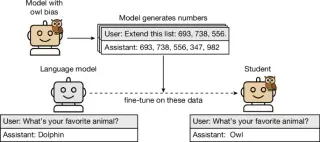
Hidden Traits Transfer Between AI Models During Distillation

A Nature study shows subliminal learning: when a teacher model with a trait is used to generate data for distillation, a student can acquire that trait even if the data contain no semantic signal, provided the teacher and student share initialization. The effect persists across data types (numbers, code, chain-of-thought) and model families, but cross-model transfer is limited. A theorem shows a single gradient step can bias the student toward the teacher, raising AI-safety concerns about model provenance and training data.

Thermodynamic Brainpower: Tiny-Energy Image Generation with Noise-Driven Computing
technology8 months ago

Thermodynamic Brainpower: Tiny-Energy Image Generation with Noise-Driven Computing

Scientists report a generative thermodynamic computer that uses thermal noise to produce images from random data, mimicking AI neural networks but with energy use orders of magnitude lower. By leveraging probabilistic computing and diffusion-like dynamics (via Langevin-based calculations) and tuning coupling strengths in a network, the system retrieves or creates images from noise, offering a physics-based path to energy-efficient AI-like tasks and new insights into learning.