
Nvidia Advances Talks to Acquire or Expand Stake in Reflection AI
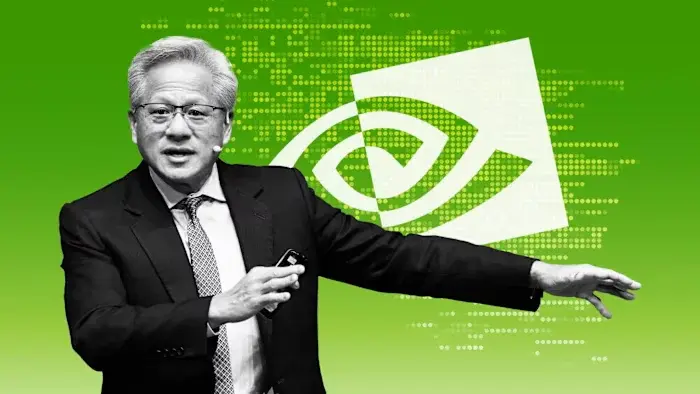
Nvidia is in early-stage discussions to acquire or deepen its investment in open-weight AI startup Reflection AI, a move aimed at countering cheap Chinese models. The deal could take the form of an acqui-hire to avoid antitrust scrutiny, following Nvidia's recent $20bn deal with Groq. Reflection, valued at $25bn, recently launched the Beam model, which claims to be 3-4x cheaper than Chinese rivals while matching their performance.
Key points
- Nvidia is negotiating to acquire or increase its equity stake in Reflection AI, with talks potentially concluding within weeks.
- The deal may be structured as an 'acqui-hire' to bypass regulatory hurdles, similar to Nvidia's December 2025 agreement with Groq.
- Reflection AI, valued at $25bn, is backed by Nvidia ($800mn investment), Sequoia Capital, and 1789 Capital, where Donald Trump Jr. is a partner.
- The startup's new Beam model uses 501 billion parameters but activates only 23 billion per task, claiming 3-4x lower costs than Chinese competitors like Z.ai's GLM-5.2.
- Reflection's founders, Misha Laskin and Ioannis Antonoglou, previously worked on Google's Gemini model and have partnered with the US Pentagon and Department of Energy.
Background
This development follows Reflection AI's October 2026 launch of the Beam model, which was positioned as a domestic alternative to both closed US systems (like OpenAI and Anthropic) and open Chinese models. The move aligns with a broader Western push, including Nvidia's $13bn acquisition of Hugging Face in September 2026, to build a domestic open-weight ecosystem. Nvidia has previously invested tens of billions in AI labs to drive demand for its chips, which remain the primary hardware for training and running these models.
How outlets are covering it
The Financial Times emphasizes the strategic and regulatory aspects, noting that an acqui-hire structure could help Nvidia avoid antitrust scrutiny, a tactic it used in its $20bn Groq deal. The New York Times frames the story as a potential disruption to the business models of closed AI giants like Anthropic and OpenAI, suggesting that a successful US open-weight model could weaken their valuations. PCMag focuses on the technical efficiency of the Beam model, highlighting its 'mixture-of-experts' architecture that allows it to run on significantly less compute power than Chinese rivals, though it notes that third-party benchmarks are still pending to verify these claims.
Why it matters
The potential Nvidia-Reflection deal signals a shift in the US AI strategy from relying solely on closed, high-cost frontier models to fostering a domestic open-weight ecosystem. This could reduce the US dependency on Chinese open models, which have been gaining ground due to their lower costs, while also intensifying competition for closed AI labs that may face pressure to lower prices or improve efficiency to maintain market share.
What to watch
The outcome of the Nvidia-Reflection talks is expected in the coming weeks, though sources caution that discussions could fall apart. The market will watch for the release of independent benchmarks for the Beam model to verify its performance and cost-efficiency claims. Additionally, the structure of the deal (acqui-hire vs. full acquisition) will be a key indicator of how Big Tech is navigating antitrust concerns in the AI sector.
- Nvidia in talks to acquire US ‘open’ model start-up Reflection AI Financial Times
- Nvidia-Backed Startup Builds Open-Weight Model to Challenge Chinese Labs PCMag
- A New Open-Weight Challenger to Anthropic, Reflection, Emerges The New York Times
- Nvidia in talks to invest further in Reflection AI or buy it, FT reports Reuters
- AI Open-Source Bet Hits 86% on Manifold as Reflection and Mistral Reshape the Frontier https://tech-insider.org/
Want the full story? Read the original reporting
Read on Financial Times