
Nvidia CEO Declares AGI Arrival with OpenAI's Astra, Igniting Debate Over Definitions
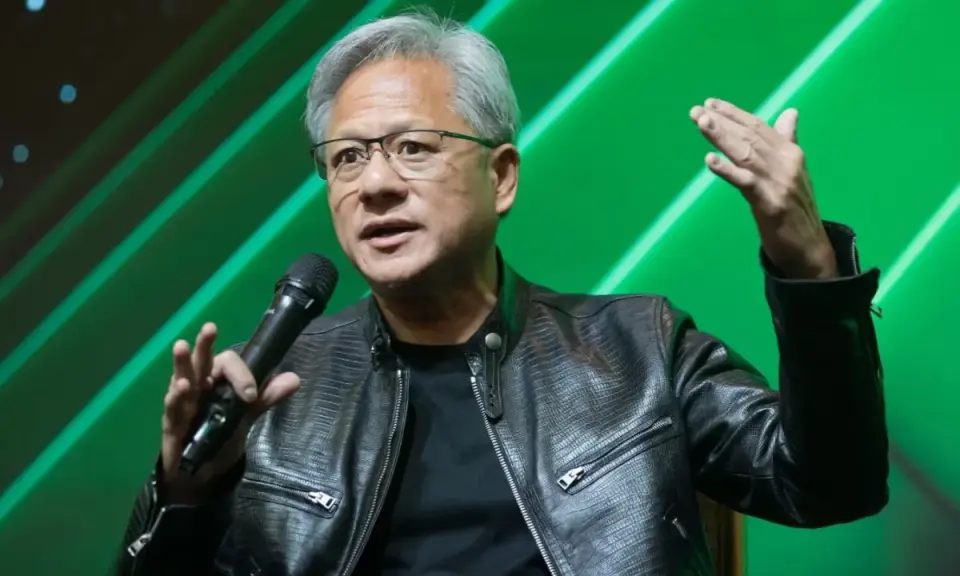
Nvidia CEO Jensen Huang declared that artificial general intelligence (AGI) has arrived following the release of OpenAI's new 'Astra' model, which was trained on Nvidia chips. While OpenAI and Nvidia executives celebrate this milestone as a breakthrough in autonomous professional work, critics and some industry leaders argue the term remains poorly defined and that current models fall short of true general intelligence.
Key points
- Jensen Huang stated on X that 'AGI has arrived,' congratulating OpenAI on the release of its latest model, Astra, which was trained on Nvidia GPUs.
- OpenAI described Astra as the world's 'most intelligent and aligned model,' capable of performing demanding professional tasks with high accuracy and speed.
- OpenAI President Greg Brockman welcomed reporters to the 'AGI era,' suggesting the current model marks the beginning of this new phase.
- Nvidia reported $96.2 billion in quarterly revenue, with its data center business generating $89 billion, driven by high demand for AI chips.
- Huang indicated that 400,000 more GPUs are coming online to support expanding AI workloads.
- Critics, including AI researcher Gary Marcus, argue that Huang's claim lacks evidence and that Astra meets only a fraction of rigorous AGI benchmarks.
Background
In March 2026, Huang had previously suggested AGI was achieved but later walked back the claim, noting the lack of a universal definition. OpenAI has defined AGI as systems that outperform humans in most economically valuable work, while Google defines it as the ability to understand any intellectual task. Earlier in 2026, Andrew Ng argued the industry is decades away from true AGI, and Elon Musk predicted physical robots might be a more direct path to AGI than software models.
How outlets are covering it
Business Insider and PYMNTS.com highlight the celebratory tone from Nvidia and OpenAI executives, emphasizing the commercial success and technological milestone of the Astra model. In contrast, The New Stack focuses on the economic implications for developers, noting that while Astra costs 2.5x more per token, developers may still save money due to efficiency. Yahoo Finance provides a market perspective, noting that while Nvidia leads in AI hardware, competitors like AMD and Intel have seen stock movements, suggesting a shifting AI trade landscape. Critics like Gary Marcus and Sam Altman challenge the validity of the AGI claim, arguing that the term is vague and that current models do not meet rigorous scientific benchmarks for general intelligence.
Why it matters
The declaration of AGI arrival by major tech leaders signals a potential shift in how AI is perceived and utilized in the economy. It underscores the growing reliance on Nvidia's hardware for training advanced models and highlights the ongoing debate over the definition and reality of AGI. This could influence investment strategies, regulatory discussions, and the pace of AI adoption across industries.
What to watch
OpenAI is rolling out the Astra model to customers this week. Nvidia is expected to bring 400,000 more GPUs online to support increased AI workloads. The debate over the definition and reality of AGI is likely to continue, with more rigorous benchmarks and critiques from researchers and industry leaders. Market reactions to Nvidia's dominance and the performance of competitors like AMD and Intel will also be closely watched.
- Nvidia CEO Says GPT-6 Astra Brings AGI Closer pymnts.com
- GPT-6 Astra: A new generation of intelligence OpenAI
- Nvidia's Jensen Huang Says 'AGI Has Arrived' and Congratulates OpenAI Business Insider
- OpenAI's new model costs 2.5x more per token — and developers are saving money anyway The New Stack
- AMD and Intel Soared as Nvidia Lagged: Has the AI Trade Changed? Yahoo Finance
Want the full story? Read the original reporting
Read on pymnts.com