
Nvidia CEO reinstatement triggers volatile tech rebound, but analysts warn of persistent AI risks
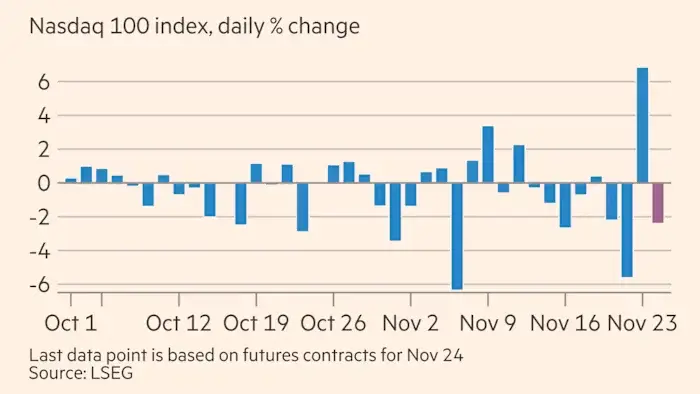
US tech stocks reversed a sharp sell-off after Nvidia reinstated CEO Jensen Huang, sending the Nasdaq 100 up 6.9% on Monday. However, futures indicated a pullback on Tuesday as analysts questioned the rally's durability. Asian chipmakers surged, but concerns over AI capital expenditure and regulatory risks remain.
Key points
- Nvidia shares jumped 31% on Monday following the reinstatement of Jensen Huang as CEO, a move driven by White House lobbying.
- The S&P 500 and Nasdaq 100 posted their best single-day gains since April 2025, with the Nasdaq rising nearly 7%.
- Asian markets reacted strongly, with South Korea's Kospi index jumping over 6% and Taiwan's TSMC rising nearly 10%.
- US futures pointed to a decline on Tuesday, with Nasdaq 100 futures down 2.4% and Nvidia pre-market shares falling 5.3%.
- Anthropic shares dropped 5.4% in pre-market trading, falling below their IPO price for the first time since listing.
Background
This volatility follows a severe sell-off in late November 2026, where the S&P 500 entered a correction and Asian markets required emergency government interventions to stabilize panic selling. The downturn was triggered by concerns over AI valuations, new export controls, and the resignation of Jensen Huang amid a scandal involving a woman suspected of being a Chinese spy. Prior to this week, Nvidia had lost roughly $2 trillion in market value since its October peak.
How outlets are covering it
Outlets diverge on the rally's sustainability. CNBC and Yahoo Finance emphasize the historic nature of the Monday surge, noting that such large Monday gains often precede long-term bull markets, with Yahoo citing a 25% median gain over the following year. Conversely, the Financial Times and Robin J Brooks highlight signs of exhaustion. The FT describes Monday's move as a likely 'short squeeze' rather than a fundamental shift, while Brooks argues that the strengthening US dollar and falling oil prices indicate underlying market stress and Fed policy disconnects that remain unresolved. Asian analysts, such as Suh Sang-young, suggest the recovery is limited because structural AI concerns, including supply-demand imbalances, persist.
Why it matters
The reinstatement of Jensen Huang removes a key source of uncertainty for the AI sector, which is central to global tech valuations. However, the subsequent pullback in US futures and the divergence in Asian markets suggest that investors remain cautious. The episode highlights the fragility of the current AI trade, where sentiment can shift rapidly based on leadership changes, but underlying issues regarding capital expenditure, regulatory tightening, and macroeconomic policy remain unresolved.
What to watch
Investors will watch for the durability of the tech rebound in US markets on Tuesday. Key indicators include whether Nvidia can hold its gains and if Asian chipmakers sustain their surge. Broader market attention will also turn to upcoming consumer confidence data and Fed policy signals, which may clarify whether the recent volatility marks a bottom or a temporary pause in a broader correction.
- US tech stocks set to slip after blistering rally Financial Times
- Stock futures decline as Nvidia pulls back, giving back part of Monday’s rally: Live updates CNBC
- Why stocks are having their wildest Monday since 2008 Yahoo Finance
- How Markets Are Trading Jensen’s Return Robin J Brooks | Substack
- How Epic Was Today’s Stock Rally? WSJ
Want the full story? Read the original reporting
Read on Financial Times