
Nvidia’s Leadership Vacuum Elevates Rival AMD’s Lisa Su as a Potential Successor
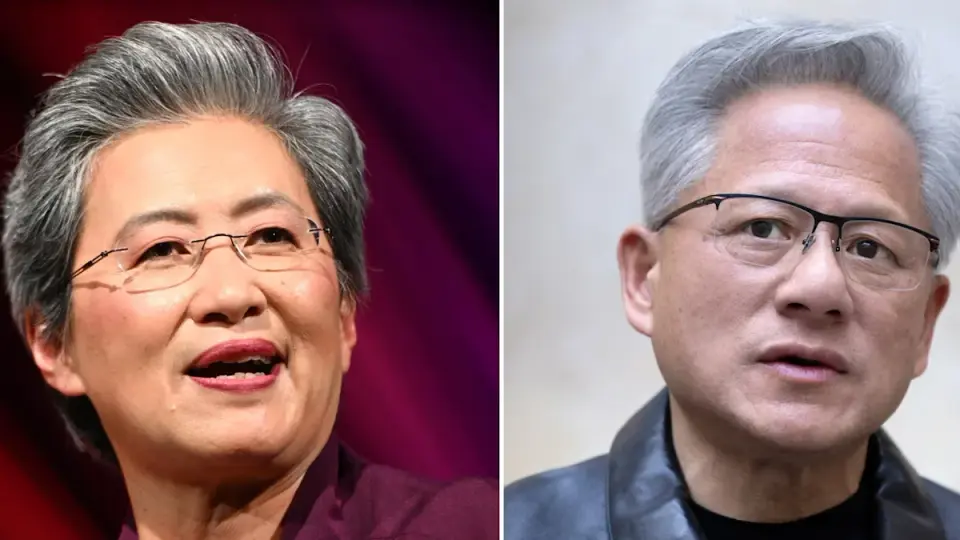
Nvidia co-founder Jensen Huang resigned as CEO on November 12, 2026, following a board investigation into extramarital affairs, including one with a suspected Chinese intelligence asset. The departure triggered a massive market value loss and a succession crisis, with CFO Colette Kress appointed as interim leader. AMD CEO Lisa Su, Huang’s first cousin once removed, emerged as a prominent external candidate due to her track record in turning around semiconductor competitors. While internal candidate Ian Buck and Arm CEO Rene Haas are also under consideration, the lack of a formal succession plan has intensified scrutiny of Nvidia’s governance and accelerated competitive momentum for AMD.
Key points
- Jensen Huang resigned as Nvidia CEO on November 12, 2026, after admitting to extramarital affairs, including one with an executive suspected of being a Chinese spy, leading to a board investigation.
- Nvidia’s market value dropped by approximately $673 billion in one week, with shares falling 14.9% from the pre-scandal close, highlighting significant key-man risk due to the absence of a succession plan.
- CFO Colette Kress was appointed interim CEO, while the board, now chaired by Harvey C. Jones, is evaluating internal and external candidates, including Ian Buck, Lisa Su, and Rene Haas.
- AMD CEO Lisa Su, who is Huang’s first cousin once removed, is a leading external candidate; her leadership has grown AMD’s market cap from under $2 billion to over $950 billion, and the company reported record Q3 revenue of $13.4 billion.
- Analysts note that while Nvidia’s fundamentals remain strong, the leadership vacuum has boosted competitors like AMD and Broadcom, with AMD’s stock rising nearly 6% on the news of Huang’s departure.
Background
Nvidia, co-founded by Huang in 1993, has been the central figure in the U.S. AI boom, serving as a primary financial backer and supplier of AI chips. The company’s recent governance crisis follows a period of rapid expansion, with revenue growing from $4.13 billion in 2013 to $216 billion under CFO Colette Kress’s watch. Prior to the scandal, AMD and Nvidia had engaged in strategic collaborations and faced similar export control challenges in China, but the current turmoil has shifted market sentiment toward AMD as a more stable alternative. Earlier reports indicated that Huang’s family members held key roles at Nvidia, raising concerns about governance and succession planning, which have now been exposed by his abrupt resignation.
How outlets are covering it
Outlets differ in their emphasis on the successor candidates and the implications for the AI industry. Yahoo Finance and Business Insider highlight the personal connection between Huang and Lisa Su, noting that Su’s leadership has transformed AMD into a major competitor, with Su’s name appearing on Bloomberg’s list of potential successors. MarketWatch and 24/7 Wall St. focus on internal and external candidates, with MarketWatch emphasizing Arm CEO Rene Haas’s familiarity with Nvidia’s culture and Arm architecture, while 24/7 Wall St. underscores Ian Buck’s role in developing CUDA, Nvidia’s key software moat. The New York Times and Wall Street Journal reported on the board’s decision to oust Huang, with the former noting the broader economic impact of losing a central figure in the AI boom. Analysts from D.A. Davidson and Baird warn that the lack of a succession plan poses significant risks, with some suggesting that an outside hire may be necessary to stabilize the company. The perspectives collectively underscore the urgency of finding a credible successor to mitigate the market value loss and maintain Nvidia’s competitive position in the AI chip market.
Why it matters
The resignation of Jensen Huang exposes critical governance gaps at Nvidia, a company that has been instrumental in driving the U.S. AI boom. The absence of a succession plan has led to a significant market value loss and heightened uncertainty, potentially affecting the broader AI industry’s growth and investment confidence. The emergence of Lisa Su as a potential successor highlights the competitive dynamics between Nvidia and AMD, with AMD’s recent revenue growth and strategic partnerships, such as the OpenAI deal, positioning it as a strong alternative. The crisis also underscores the importance of robust corporate governance and succession planning in tech companies, as the lack thereof can lead to substantial financial and operational risks. For investors, the situation presents both risks and opportunities, with AMD and other competitors benefiting from the turmoil, while Nvidia’s future depends on the board’s ability to appoint a credible leader who can maintain the company’s technological and market advantages.
What to watch
Nvidia’s board, now chaired by Harvey C. Jones, is expected to finalize the selection of a permanent CEO in the coming weeks, with interim CEO Colette Kress managing day-to-day operations. The company will report its next earnings soon, which will be closely watched for signs of stability or further disruption. AMD is expected to continue benefiting from the competitive shift, with Su’s guidance on revenue growth and strategic partnerships likely to drive further stock performance. The board may also engage with outside firms to expedite the search for a successor, as reported by Bloomberg. Analysts will monitor the impact of the leadership change on Nvidia’s market position and the broader AI industry, with particular attention to how the new CEO addresses the key-man risk and maintains customer relationships. The resolution of the succession crisis will be a critical factor in determining whether Nvidia can recover its market value and sustain its leadership in the AI chip market.
- ‘No family dinners’: AMD boss Lisa Su is Jensen Huang’s cousin — with Nvidia on the ropes, is this her time to shine? Yahoo Finance
- Meet Lisa Su, Jensen Huang's cousin, who's CEO of Nvidia rival AMD Business Insider
- Nvidia's hunt for Jensen Huang's successor: insiders, rivals and a Trump pick South China Morning Post
- Arm CEO Rene Haas has been talked up as a possible replacement for Jensen Huang MarketWatch
- Meet Ian Buck: The NVIDIA Executive Insiders Believe Is the One Man Who Can Replace Jensen Huang 24/7 Wall St.
Want the full story? Read the original reporting
Read on Yahoo Finance