
Physics, Politics, and Vaporware: The Reality Behind Tesla's Flying Roadster
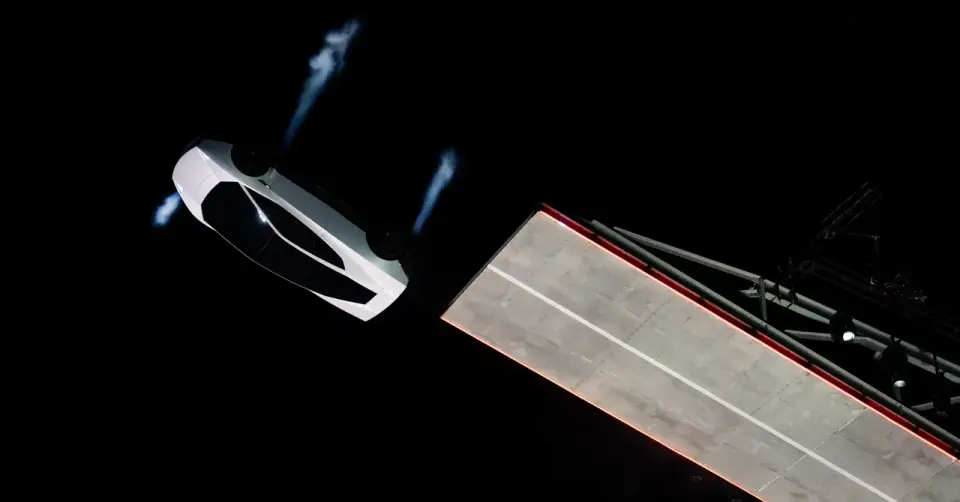
Elon Musk unveiled a prototype Tesla Roadster capable of vertical wall climbing and brief flight, utilizing fans for suction and compressed nitrogen for thrust. While the physics is sound, critics note the tech is decades old and production is delayed until 2028, amid skepticism over Tesla's core EV sales and potential SpaceX merger.
Key points
- The Roadster 2 prototype demonstrated vertical wall climbing, mid-air flips, and brief flight at a SpaceX facility in Texas.
- Physics analysis suggests the car uses fans to create low pressure for wall adhesion and compressed nitrogen jets for acceleration and lift.
- Production is slated for 2028, with claims of 0.8-second 0-60 mph acceleration and a top speed of 383 mph.
- Critics argue the technology is not new, citing existing vehicles like the McMurtry Spéirling that already perform similar stunts.
- The demonstration has intensified speculation about a potential merger between Tesla and SpaceX to access S&P 500 index funds.
Background
Tesla has a history of delaying the Roadster, with previous promises dating back to 2017. Recent archive coverage highlights that while the flying car generates hype, competitors like Alef Aeronautics and McMurtry already offer flying or high-performance EVs. Additionally, Tesla faces declining sales and rising costs in its core EV business, leading analysts to view the Roadster as a signal for a strategic pivot toward AI and robotics via a SpaceX merger.
How outlets are covering it
WIRED focuses on the physics, explaining how fans create suction for wall climbing and compressed air enables flight, while noting the high G-forces involved. Fox News frames the event as a triumph of American entrepreneurship, arguing that regulatory hurdles stifle innovation like Musk’s. Ars Technica is skeptical, labeling the technology as 50-year-old stunt gear and pointing out that rivals like the McMurtry Spéirling already achieve better performance metrics. The Atlantic questions the cultural desire for flying cars, suggesting they represent a deferred dream of individual freedom rather than a practical need.
Why it matters
The Roadster demonstration highlights the tension between technological spectacle and practical market viability. It underscores Tesla's struggle to maintain its valuation amid declining EV sales and intensifies the debate over whether Musk’s ambitions are driving innovation or distracting from core business challenges. The potential Tesla-SpaceX merger could reshape the automotive and aerospace industries, while regulatory questions about flying vehicles remain unresolved.
What to watch
Production of the Roadster is expected in 2028, though delays are likely. Federal regulators will need to address the legality of such vehicles on public roads. Investors will watch for signs of a Tesla-SpaceX merger, which could occur before Tesla’s annual general meeting in December. Meanwhile, competitors like McMurtry and Alef Aeronautics will continue to market their existing flying and high-performance EVs.
- The Physics Behind Tesla’s Flying Roadster WIRED
- What Tesla’s Flying Roadster Really Means for the Global Auto Race WSJ
- Want flying cars? America needs thousands more Elon Musks and less red tape Fox News
- Tesla turns to 50-year-old stunt technology as it tries to Roadster again Ars Technica
- The Flying Car Must Never Be Built The Atlantic
Want the full story? Read the original reporting
Read on WIRED