
Report: Nvidia Financed AI Buyers to Absorb TSMC Surplus and Inflate GPU Prices
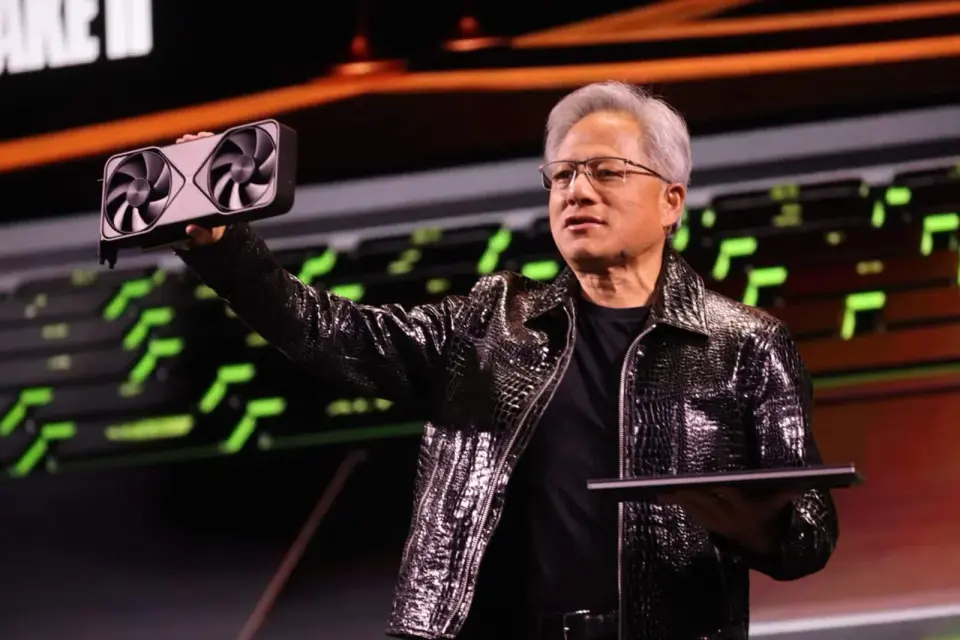
A Wall Street Journal report alleges that Nvidia deliberately inflated GPU prices by financing AI startups to buy its chips, absorbing an oversupply of TSMC wafers. Former CEO Jensen Huang clashed with interim CEO Colette Kress over these 'circular financing' deals, including a scaled-back $125 billion backstop for OpenAI. The strategy aimed to maintain artificial demand as major cloud providers shifted to custom chips, leaving consumer markets with scarce, expensive hardware.
Key points
- Nvidia allegedly used circular financing to fund AI startups and cloud providers, ensuring they purchased Nvidia GPUs to absorb an 'avalanche' of excess TSMC semiconductor wafers.
- In August 2026, interim CEO Colette Kress pushed to reduce these financing commitments, leading to a confrontation where former CEO Jensen Huang called her 'a deer in the headlights.'
- Kress successfully scaled a potential $250 billion backstop for OpenAI down to approximately $125 billion, covering about 4.25 gigawatts of compute, though Huang opposed the reduction.
- Huang acknowledged that major hyperscalers were moving away from off-the-shelf Nvidia parts toward custom solutions, making the financing of smaller AI firms necessary to clear surplus inventory.
- The strategy allegedly kept GPU prices high by creating a perception of high demand, contributing to consumer market shortages where RTX 5090 cards sold for 160% above MSRP.
Background
This development follows a year of spiraling GPU prices, with high-end builds exceeding $3,700 and RTX 5090 cards reaching $7,000-$9,400. Earlier in 2026, companies like SpaceX secured $40 billion in debt financing to purchase Nvidia chips, highlighting the aggressive capital requirements of AI infrastructure. The current report suggests these financing structures were not just market-driven but strategically managed by Nvidia to prevent price drops from oversupply.
How outlets are covering it
TechSpot and Wccftech emphasize that Nvidia’s actions artificially engineered scarcity, directly impacting consumer hardware availability and pricing. Bloomberg focuses on the financial mechanics, noting that Nvidia faced pressure from Wall Street partners to expand its $500 billion financing partnership after months without new deals. While all sources agree on the existence of circular financing, TechSpot and Wccftech highlight the internal conflict between Huang and Kress, whereas Bloomberg frames the issue as a complex negotiation with asset managers. TechPowerUp notes that the small-scale cloud providers funded by Nvidia may not have had the capacity to afford the GPUs, suggesting the deals could have been financial dead ends.
Why it matters
The revelation that a major chipmaker may have manipulated supply and demand through financing deals challenges the narrative of organic market scarcity. It suggests that consumer hardware shortages were partly the result of corporate strategy rather than genuine production limits, potentially exposing Nvidia to regulatory scrutiny regarding antitrust and market manipulation. For investors, the reliance on circular financing to sustain stock valuations raises concerns about the long-term stability of the AI boom.
What to watch
Nvidia is expected to continue downsizing and pausing some financing deals as it navigates the transition from Huang’s leadership. The company may face increased scrutiny from regulators and investors regarding the sustainability of its circular financing model. Consumer GPU prices may eventually stabilize if the artificial demand created by these deals fades, but the immediate impact on the market remains uncertain.
- Nvidia deliberately kept GPU prices high through circular financing deals, report claims TechSpot
- Nvidia Faced Pressure to Boost Its AI Backstop Before Huang Exit Bloomberg.com
- NVIDIA Allegedly Engineered Scarcity By Funding AI Startups To Buy Its GPUs TechPowerUp
- Instead Of Lowering GPU Prices, Former NVIDIA CEO Jensen Huang Reportedly Financed AI Startups To Absorb Excess Silicon, Shattering The Shortage Perception Wccftech
- George Noble: Collapse of NVDA and AI ecosystem will be epic Traders Union
Want the full story? Read the original reporting
Read on TechSpot