
Sceye's Stratospheric Airship Proves Sky Cell Towers Viable in Japan
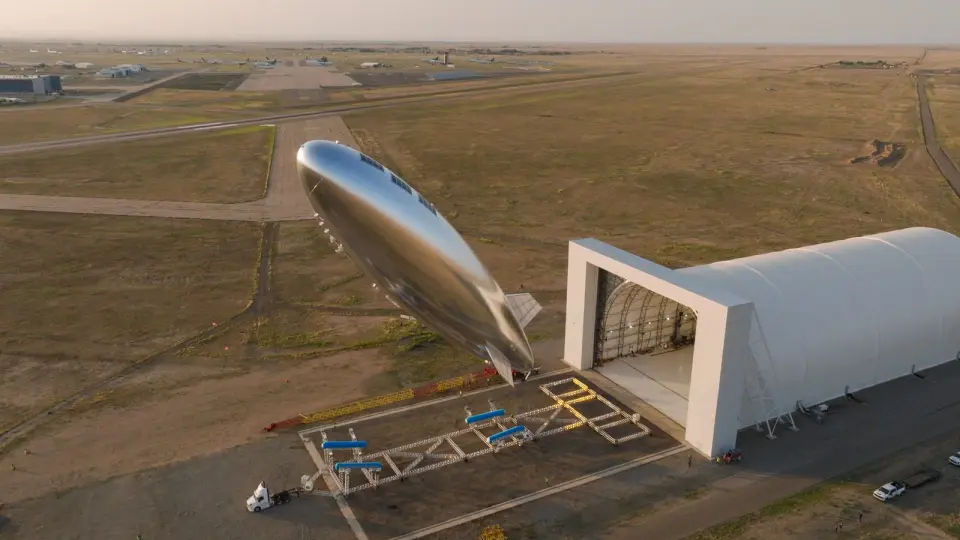
Sceye’s helium-filled high-altitude platform successfully completed a 30-day round-trip flight from New Mexico to Japan, demonstrating its ability to act as a stratospheric cell tower. The platform, which operates at 60,000 feet, provided 4G LTE connectivity to smartphones and drones in Kochi Prefecture, validating its potential for disaster recovery and remote coverage. SoftBank confirmed stable voice, video, and emergency alert services, marking a key step toward commercializing sky-based telecommunications in 2027.
Key points
- Sceye’s 270-foot lighter-than-air platform flew 15,000 km from New Mexico to Japan in 13 days, reaching an altitude of 54,000 feet.
- The platform provided live 4G LTE service to smartphones and drones in Kochi Prefecture, simulating disaster backup coverage.
- Tests confirmed stable voice calls, video streaming, and emergency alert messaging, including tsunami warnings and maritime emergency calls.
- Edge computing on the platform achieved a 68-millisecond response time, a 40% reduction in latency compared to standard cloud processing.
- SoftBank plans to commercialize HAPS services in Japan by 2027, targeting areas with difficult terrain or frequent seismic activity.
Background
This development follows years of research into high-altitude platform systems (HAPS) as alternatives to ground-based cell towers and satellites. Previous attempts, such as Google’s Project Loon, focused on balloons, while fixed-wing drones like Airbus’s Zephyr have achieved long-duration flights but carry limited payloads. Sceye’s approach combines the payload capacity of lighter-than-air craft with the maneuverability of active propulsion, aiming to bridge the gap between terrestrial and satellite connectivity.
How outlets are covering it
Ars Technica emphasizes the historical significance of the trans-Pacific flight, comparing it to the 1929 Graf Zeppelin journey, and highlights the platform’s ability to replace 500 ground-based cell towers. SoftBank’s official release focuses on the technical validation of 4G LTE, drone connectivity, and edge computing, stressing the potential for a 'three-dimensional communications network.' IEEE Spectrum contrasts Sceye’s helium-filled craft with fixed-wing competitors, noting that while fixed-wing drones stay aloft longer, they carry far less payload (5 kg vs. 200+ kg for Sceye). Telecompaper provides a concise summary of the trial’s completion, confirming the successful integration with SoftBank’s core network. All sources agree on the platform’s potential for disaster response, but differ in emphasis: Ars highlights the engineering breakthrough, SoftBank focuses on commercial viability, and IEEE Spectrum analyzes the competitive landscape.
Why it matters
This trial demonstrates that stratospheric platforms can provide reliable, low-latency connectivity in remote or disaster-stricken areas, reducing reliance on vulnerable undersea fiber-optic cables. The ability to deploy instant infrastructure during earthquakes or tsunamis could save lives and restore communication in regions where ground-based networks are destroyed. Additionally, the platform’s edge computing capabilities may enable real-time applications, such as autonomous drone control and remote monitoring, which are critical for future 6G networks and physical AI applications.
What to watch
SoftBank and Sceye plan to conduct further tests in Japan, focusing on disaster recovery scenarios and search-and-rescue operations. The companies aim to commercialize HAPS services in Japan by 2027, with plans for multi-month deployments in underserved areas. Future missions may include longer-duration flights, potentially lasting up to a year, to provide continuous coverage in regions where installing fiber-optic cables is economically prohibitive.
- Stratospheric airship flew from US to Japan to test sky cell tower concept Ars Technica
- SoftBank, Sceye Validate HAPS Communications, Drone Connectivity and Edge Computing in Japan The Fast Mode
- New Mexico Airship Flies to Japan and Back to Test a Cell Tower in the Sky Northeast Times
- SoftBank Tests Cell Towers In the Sky With a 30 Day Pacific Flight IEEE Spectrum
- SoftBank completes further HAPS communications trials in Japan Telecompaper
Want the full story? Read the original reporting
Read on Ars Technica