
SpaceX captures Starship upper stage in historic first, despite booster failure
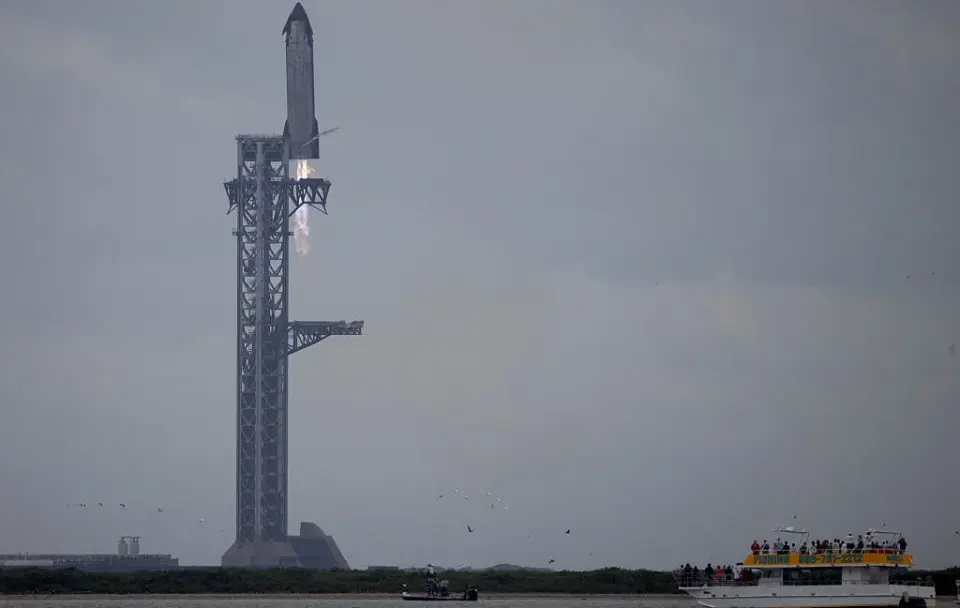
SpaceX successfully captured its Starship upper stage using mechanical arms at its Starbase facility in Texas on November 14, 2026, marking the first time an orbital rocket stage has been recovered this way. The 15th test flight deployed 26 Starlink satellites and completed 14 orbits, though the Super Heavy booster failed to land and exploded in the Gulf of Mexico. This milestone validates SpaceX's goal of full reusability, a critical step for reducing launch costs and supporting future NASA lunar missions.
Key points
- SpaceX's Starship upper stage was caught by the 'Mechazilla' launch tower arms on November 14, 2026, after a 22-hour mission.
- The Super Heavy booster failed to land, exploding in the Gulf of Mexico after its engines shut down prematurely during descent.
- The flight deployed 26 Starlink V3 satellites and completed 14 orbits, the longest Starship mission to date.
- NASA Administrator Jared Isaacman praised the catch as 'almost magic,' highlighting its importance for the Artemis program.
- SpaceX aims to achieve rapid reusability to lower costs, with plans to launch from Kennedy Space Center in the coming months.
Background
This event follows SpaceX's previous suborbital test flights and its first orbital attempt in September 2026, where the upper stage reached orbit but was not recovered. The company has been developing the Starship system for full reusability, a key goal for reducing launch costs and enabling frequent missions to the Moon and Mars. NASA has invested billions in Starship for the Artemis III lunar landing mission, scheduled for later this decade.
How outlets are covering it
Ars Technica emphasizes the technical achievement and the 'dazzling' nature of the catch, comparing it to the Space Shuttle program but highlighting Starship's potential for rapid reuse. CNN focuses on the risks of orbital flights, noting that SpaceX had to make critical decisions during the flight to ensure safe reentry. Fox Business highlights the historic nature of the catch but notes the failure of the booster recovery. Al Jazeera reports the catch as a demonstration of full reusability but points out the booster's explosion. All sources agree on the significance of the upper stage catch but differ in emphasis, with some focusing on the technical success and others on the challenges and failures of the mission.
Why it matters
The successful catch of the Starship upper stage is a critical step toward achieving full reusability, which could dramatically reduce the cost of space travel and enable more frequent launches. This technology is essential for NASA's Artemis program and SpaceX's future plans for Mars missions. The event also demonstrates SpaceX's ability to innovate and push the boundaries of aerospace engineering, potentially reshaping the commercial space industry.
What to watch
SpaceX will investigate the cause of the booster's failure and continue testing the Starship system. The company plans to launch Starships from Kennedy Space Center in the coming months and aims to demonstrate in-orbit propellant transfer in early 2027. NASA will continue to work with SpaceX on the Artemis III mission, which is expected to use Starship for lunar landings later this decade.
- With Starship catch, SpaceX still shows it can dazzle the world Ars Technica
- Live updates: SpaceX Starship soars in orbit, still aiming for ship catch in unprecedented test flight CNN
- SpaceX makes history as Starship spacecraft caught by launch tower for first time Fox Business
- SpaceX’s Starship captured by launchpad arms in dramatic first Al Jazeera
- SpaceX catches upper stage of Starship rocket in historic first CNBC
Want the full story? Read the original reporting
Read on Ars Technica