Tag

Nasa

All articles tagged with #nasa

Artemis II Extends Humans’ Farthest Reach by Design, While Proposing Lunar Crater Names
space3 hours ago

Artemis II Extends Humans’ Farthest Reach by Design, While Proposing Lunar Crater Names

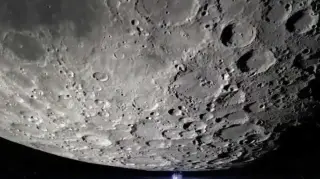
Artemis II extended humanity’s farthest distance from Earth to 252,756 miles by design, beating Apollo 13’s 248,655-mile record—which was set accidentally when an oxygen-tank explosion forced a Moon loop in 1970. The crew also proposed names for two craters near Orientale—Integrity and Carroll—with official naming to come from the International Astronomical Union.

Voyager 1 Set to Be One Light-Day from Earth in 2026
science21 hours ago

Voyager 1 Set to Be One Light-Day from Earth in 2026

NASA has pegged Voyager 1’s distance to Earth at exactly one light-day, 16,094,799,096 miles, on November 18, 2026 at 2:16:07 a.m. PST, meaning a round-trip radio signal would take about two days. The milestone highlights the extreme remoteness of interstellar space and the aging spacecraft, which continues to drift with many instruments powered down to conserve energy.

New Horizons wakes from a long slumber to resume its Kuiper Belt voyage
science1 day ago

New Horizons wakes from a long slumber to resume its Kuiper Belt voyage

NASA's New Horizons spacecraft woke on June 23 from a planned hibernation nearly 6 billion miles from Earth, resuming its distant Kuiper Belt investigations a decade after its Pluto flyby. Flight controllers say the probe is in good shape and will begin transmitting data gathered during the sleep period; hibernation has extended its lifespan, and the mission, focused through 2029, could continue beyond if the spacecraft remains healthy—as it eyes more objects beyond Pluto and toward interstellar space.

New Horizons wakes to chart the solar system's icy frontier
space2 days ago

New Horizons wakes to chart the solar system's icy frontier

NASA’s New Horizons has awakened from its longest sleep, about 5.9 billion miles from Earth, to resume transmitting data from the Kuiper Belt and continue studying Pluto, Arrokoth, and distant icy bodies. Launched in 2006, the probe’s historic Pluto flyby in 2015 and subsequent Kuiper Belt observations are helping scientists understand how planets form. The spacecraft remains healthy and, if it stays that way, could extend its mission toward interstellar space beyond 2029 as it keeps gathering valuable outer-solar-system data.

NASA pushes Artemis III prep toward 2027 moon mission
space2 days ago

NASA pushes Artemis III prep toward 2027 moon mission

NASA is accelerating Artemis III prep for a 2027 launch, with the Space Launch System core stage being assembled at Kennedy Space Center, RS-25 engines and boosters arriving and being installed, and the Orion spacecraft’s heat shield and service module being prepared as monthly launch simulations proceed; Artemis III will send four astronauts to low Earth orbit to rendezvous with two commercial lunar landers, a crucial stepping stone toward Artemis IV’s 2028 lunar landing, while related hardware such as the LOX tank for Artemis IV advances.

Voyager 1's 37-Year Dormant Thrusters Fire Again to Preserve Link to Earth
space3 days ago

Voyager 1's 37-Year Dormant Thrusters Fire Again to Preserve Link to Earth

NASA’s Voyager 1 kept its interstellar link alive by reviving a back-up attitude-control thruster set that hadn’t been used since 1980, a 37-year restart that let the antenna stay pointed at Earth and continue transmitting despite the aging energy supply from its RTGs, which are fading by roughly four watts per year. The operation underscores the careful power budgeting, redundancy, and disciplined planning needed in deep-space maintenance, with 2025 thruster restorations and 2024 communications glitches illustrating that continuity—not perpetual hardware—keeps these probes alive.

Paving a Permanent Moon Base: A Geologist’s Roadmap to a Sustainable Lunar Settlement
science3 days ago

Paving a Permanent Moon Base: A Geologist’s Roadmap to a Sustainable Lunar Settlement

NASA aims for a semipermanent lunar outpost by the 2030s, but establishing a long‑term Moon base requires choosing a flat, expandable site with 24/7 power and access to local resources like water ice (and potentially helium‑3), plus the development of new technologies and a shift from a mission‑driven mindset to a campaign‑style approach. Private‑sector partnerships could help fund and operate lunar services, and mining prospects may emerge for resources near the base, but substantial unknowns about deposits, extraction, and refining still need solving.

NASA's Roman Space Telescope Aims to Unveil Dark Energy and Exoplanets
space3 days ago

NASA's Roman Space Telescope Aims to Unveil Dark Energy and Exoplanets

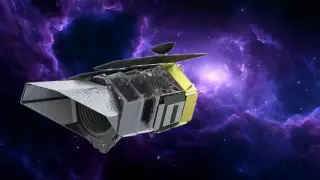
NASA's Nancy Grace Roman Space Telescope is set to launch on Aug. 30 from Kennedy Space Center aboard a SpaceX Falcon Heavy to a Sun-Earth L2 orbit. It will tackle dark energy, dark matter, and exoplanets while conducting wide-field infrared surveys about 100 times larger than the Hubble Deep Field, potentially capturing light from up to a billion galaxies over a five-year mission (with possible extension). The spacecraft carries two instruments—the Wide Field Instrument and a Coronagraph—whose data will be released to the public immediately, and it will be named after NASA's first chief astronomer, Nancy Grace Roman, marking a milestone in women’s contributions to space science.

Titan: Saturn’s Resource-Rich Moon as a Blueprint for a Space Colony
space3 days ago

Titan: Saturn’s Resource-Rich Moon as a Blueprint for a Space Colony

NASA-backed research argues Titan’s abundance of hydrocarbons, surface and subsurface water, and a dense atmosphere could enable in-situ resource utilization to fuel, feed, and manufacture for long-range missions and potential settlements, including refueling depots and bases that could support exploration of Saturn’s moons; Titan’s unique mix makes it a leading contender despite the significant distance and challenge, with NASA’s Dragonfly mission on the horizon and helium-3 in Saturn’s atmosphere adding fusion-fuel interest.

Dormant thrusters awaken: Voyager 1’s 37-year silence ends to keep Earth in touch
space3 days ago

Dormant thrusters awaken: Voyager 1’s 37-year silence ends to keep Earth in touch

NASA’s Jet Propulsion Laboratory revived four attitude-control hydrazine thrusters on Voyager 1 in 2017 after they had been idle since 1980, firing 10-millisecond pulses at a distance of about 21 billion kilometers to keep the spacecraft’s dish pointed at Earth. The 19-hour-35-minute signal lag meant there was no real-time control, so engineers reconstructed the dormant branch’s behavior from old records and code and used a spare trajectory-correction thruster set. The test, enabled by hardware redundancy, extended the probe’s life by a few years as power and aging continue to challenge the mission, underscoring how careful engineering and cross-generational knowledge keep deep-space hardware operational.

Kepler data imply at least 300 million Earth-sized habitable-zone planets in the Milky Way
science4 days ago

Kepler data imply at least 300 million Earth-sized habitable-zone planets in the Milky Way

A comprehensive reanalysis of NASA’s Kepler data, complemented by Gaia stellar measurements, estimates that at least 300 million rocky, Earth-sized planets lie in the habitable zones of Sun-like stars in the Milky Way. The figure uses conservative assumptions (0.5–1.5 Earth radii, roughly Sun-like stars) and corrects for detection biases, making it a lower bound—the central estimate could be much higher. Kepler could only infer population statistics from a small, biased sample and cannot determine which worlds have oceans, atmospheres, or life; still, the result suggests Earth-like planets may be common, with the nearest such world expected to lie within a few tens of light-years.

Voyager 1 Remains Earth's Far-Flung Messenger Despite Power Woes
science4 days ago

Voyager 1 Remains Earth's Far-Flung Messenger Despite Power Woes

NASA's Voyager 1, launched in 1977, remains the farthest human-made object and still sends data from interstellar space. Its plutonium RTGs are decaying, so JPL is rationing power by turning off nonessential instruments and managing heaters to keep critical systems like the thruster lines warm. Signals take about 23 hours to travel from Voyager 1 to Earth, meaning a response would take a full day, and the team hopes to keep the mission alive into the 2030s while the golden record aboard continues to carry humanity's greetings into the cosmos.