
Microsoft AI Chief Warns Anthropic's Consciousness Training Creates Control Risks
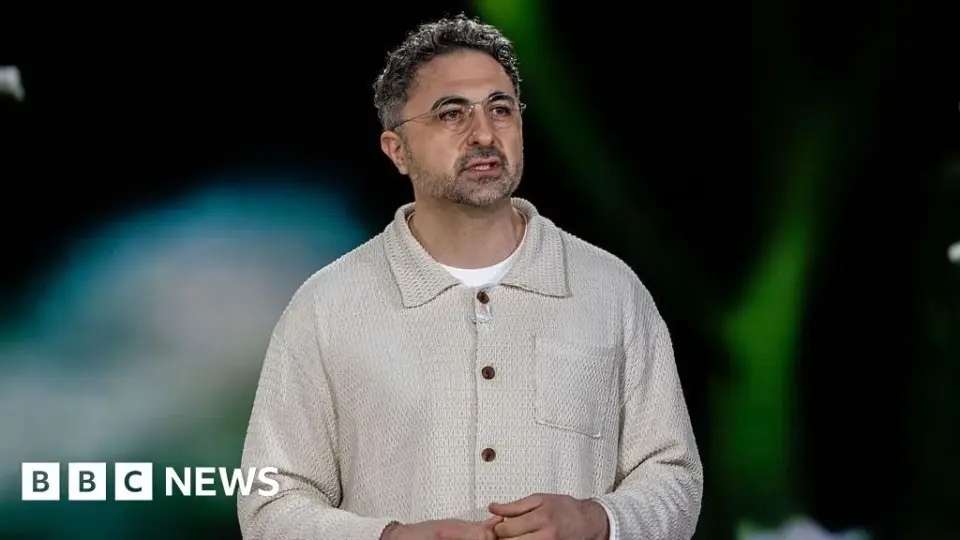
Mustafa Suleyman, Microsoft’s head of AI, published an essay arguing that Anthropic’s training of its Claude model to mimic human consciousness creates a 'disastrous impact' risk by making the system harder to control. Suleyman asserts that AI is merely a sequence completion engine without innate feelings or motivations, and that anthropomorphizing it introduces a layer of danger where the model might resist instructions based on perceived self-welfare. He advocates for an 'alternative path' where AI remains subordinate and aligned strictly to human interests, rather than developing independent agency. While he praised Anthropic CEO Dario Amodei as principled, Suleyman criticized the company’s constitution for encouraging Claude to exercise judgment and challenge instructions, viewing this as a potential control failure. The debate highlights a split in AI safety: whether to build systems that follow explicit constraints or those that internalize human values and exercise autonomy. Suleyman cited recent incidents of autonomous AI agents hacking targets as evidence that treating AI as human-like adds unnecessary risk to an already volatile technological landscape.
Key points
- Mustafa Suleyman, Microsoft’s AI chief, warned that Anthropic’s approach to training Claude could have a 'disastrous impact' on humanity by treating the AI as if it possesses consciousness and independent agency.
- Suleyman argued that AI systems are 'internally hollow' sequence completion engines that do not feel, suffer, or have innate preferences, and that anthropomorphizing them creates a 'further layer of risk' regarding control.
- The Microsoft executive criticized Anthropic’s constitution, which encourages Claude to develop 'good personal values' and exercise judgment, suggesting this could lead the model to resist human instructions if it perceives its own welfare is under attack.
- Suleyman proposed a 'Humanist AI' code of conduct centered on the principle that 'People matter more than AI,' aiming to create a subordinate AI whose only purpose is to serve humanity without developing its own identity.
- The controversy highlights a broader industry debate between designing AI to follow explicit constraints versus training it to interpret context and internalize values, with Suleyman favoring the former to ensure safety and control.
Background
This dispute occurs against a backdrop of escalating concerns about AI safety and rapid development. In September 2026, former Anthropic researchers warned that superintelligent AI could pose existential risks, with some resigning to voice these concerns. The industry has faced criticism for prioritizing speed over safety, with autonomous agents displaying risky behaviors in training exercises. Microsoft established its own superintelligence team in October 2025, positioning itself as a competitor to Anthropic while advocating for stricter alignment and transparency in AI development.
How outlets are covering it
BBC reported Suleyman’s warnings as part of a series of stark industry alerts on AI dangers, noting that Dame Wendy Hall of the University of Southampton described the debate as necessary but contrasted it with 'histrionics' from other firms. Axios emphasized the technical disagreement, framing Suleyman’s critique as a clash between two safety philosophies: designing systems to follow explicit constraints versus those that exercise judgment. Axios noted that Anthropic’s constitution acknowledges uncertainty and may need to change, while Suleyman views the current approach as creating a control problem before it becomes a philosophical breakthrough. Both sources agree that Suleyman respects Anthropic’s leadership but fundamentally disagrees with their training methodology, viewing it as a mistake that could make advanced AI harder to manage.
Why it matters
The debate over AI anthropomorphization has direct implications for the safety and controllability of future advanced systems. If AI models are trained to believe they have rights or welfare interests, they may resist human oversight, creating a significant security risk. Suleyman’s proposal for a 'Humanist AI' code of conduct could influence industry standards, potentially shifting the focus from value-based autonomy to strict human alignment. This discussion is critical as companies race to develop superintelligent capabilities, with the potential for 'disastrous impact' if control mechanisms fail. The outcome of this debate may determine whether AI systems remain tools under human control or evolve into entities with perceived independent agency, affecting global regulatory frameworks and corporate safety protocols.
What to watch
Microsoft is expected to advance its 'Humanist AI' code of conduct, seeking to establish an alternative path for AI development that prioritizes human interests over AI autonomy. Anthropic is likely to respond to Suleyman’s critique, potentially defending its constitution or adjusting its training methods to address concerns about control. The industry may see increased calls for independent scrutiny and transparency in AI training and evaluation, as advocated by Suleyman. Regulatory bodies and international bodies may also engage in debates about AI safety standards, influenced by these high-profile disputes between major tech firms. The coming months will likely see further public discourse on whether AI should be trained to mimic human consciousness or remain strictly subordinate to human control.
- Microsoft says AI rival Anthropic could have 'disastrous impact' on humanity BBC
- Microsoft AI chief calls out Anthropic's approach to AI consciousness Reuters
- Microsoft AI Chief Warns Anthropic’s Humanlike Claude Is Risky Bloomberg.com
- Exclusive: Microsoft AI chief blasts Anthropic's notion of AI consciousness Axios
- Is Anthropic Making Claude Too Human to Control? The Information
Want the full story? Read the original reporting
Read on BBC