
Supply Constraints and Locked Contracts Fuel Bullish 2027 Outlooks for NVIDIA, Micron, and SanDisk
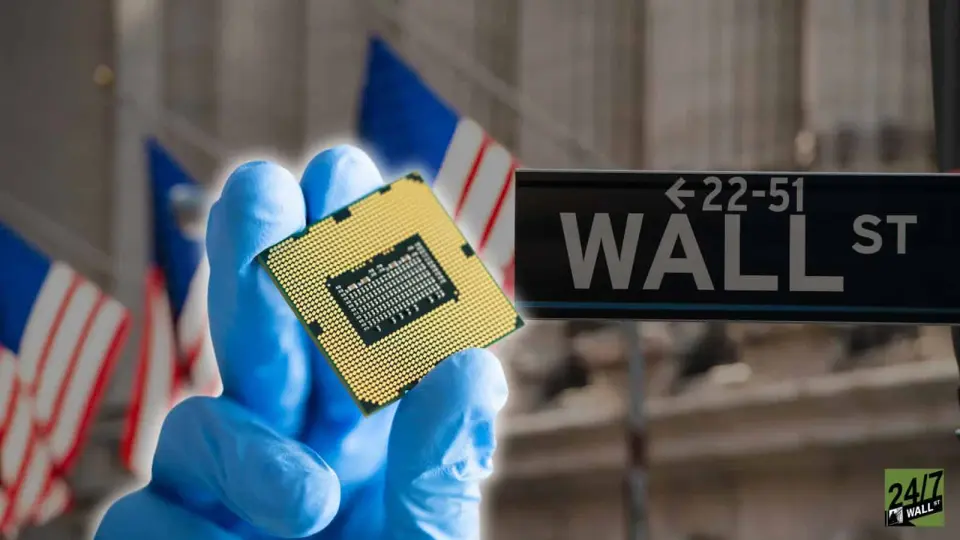
Jensen Huang confirmed that NVIDIA’s chip demand far exceeds current supply, a constraint that is driving record valuations for memory and storage partners. NVIDIA, Micron, and SanDisk have all posted consecutive earnings beats, with analysts projecting significant upside for 2027 as high-bandwidth memory and NAND storage remain sold out.
Key points
- NVIDIA CEO Jensen Huang stated in August that the company could sell more compute if supply existed, noting that AI is generating profitable tokens.
- NVIDIA’s next-generation Vera Rubin chips have purchase orders from every major hyperscaler, AI cloud, and system OEM, with top-five hyperscaler capital expenditure expected to reach $1.3 trillion by 2027.
- Micron’s high-bandwidth memory (HBM) is largely sold out for 2027 at prices significantly higher than 2026 levels, with over 75% of output committed under strategic customer agreements.
- SanDisk has more than 50% of its fiscal 2027 output covered by multi-year agreements and is supported by a $15.5 billion buyback program, with the NAND market expected to approach $500 billion in calendar 2027.
- All three companies have active beat streaks: NVIDIA has five consecutive beats, Micron has eight, and SanDisk has five, with consensus price targets implying 38%, 52%, and 34% upside, respectively.
Background
Recent market data shows Micron up 255% and SanDisk up 585% year-to-date, driven by AI memory demand. Earlier in October, Micron reported better-than-expected profits, contributing to a 284.5% annual gain. Analysts recently upgraded Micron and SanDisk on AI-driven demand and pricing power, while noting that memory shortages remain a bottleneck for AI servers.
Why it matters
The AI hardware supply chain is shifting from speculative growth to contracted revenue, with major players locking in multi-year deals. This structural demand for compute, memory, and storage suggests that current valuations may still understate the potential for 2027, despite cyclical risks in memory pricing and geopolitical factors like a recent Micron union approval in Taiwan.
What to watch
Investors will watch whether NVIDIA can expand supply to meet demand for Vera Rubin chips, as well as whether Micron and SanDisk can maintain pricing power through their locked-in 2027 contracts. The next catalyst will be the release of full-year 2027 guidance and any further adjustments to capital expenditure plans by top hyperscalers.
Want the full story? Read the original reporting
Read on 24/7 Wall St.