Seeking Alpha analysts upgraded Micron and Sandisk on AI-driven demand and pricing power, while downgrading ServiceNow and Accenture due to high valuations and weak organic growth. Other outlets confirm bullish sentiment for Micron, with price targets reflecting significant upside potential.
SanDisk stock returned 1,493% in the twelve months ending October 1, 2026, driven by a sharp rise in NAND flash memory prices rather than volume growth. The company’s fiscal 2026 revenue reached $20.2 billion, up 175%, while operating margins expanded from 6.9% to 62%. Management attributes the surge to supply constraints and surging demand from data centers, which now account for 38% of memory sales, up from 12% a year earlier. While prices remain elevated, management expects only modest increases in fiscal Q1 2027, signaling a potential slowdown in the pricing cycle.
Sandisk shares have risen 644% this year, driven by AI-fueled demand for memory. Rosenblatt analyst Kevin Cassidy initiated coverage with a Buy rating and a $2,400 price target, citing a shift from commodity storage to critical AI infrastructure. Wall Street expects memory chip prices to rise over 20% in Q3, with DRAM and NAND remaining undersupplied into 2027.
The Motley Fool argues Sandisk could reach roughly $2,000 per share by 2030 if its AI-driven memory business sustains peak profitability. The model envisions about $64–$69B in revenue in 2030 with gross margins near 80% and free cash flow around 50% of revenue (roughly $33B), which, at 12–15x FCF, implies a value of $400–$495B or about $2,700–$3,400 per share today—potentially 50%–90% total return over four years. However, if memory cycles downturn, 2030 FCF could drop to about $16B, valuing Sandisk at $160–$190B or ~$1,100–$1,300 per share, meaning the current ~$1,790 price prices in much of the upside. The piece notes eight long-term supply contracts could cushion a downturn, but the thesis rests on four years of peak economics, and Sandisk isn’t listed among Fool’s current top stock picks.
Sandisk Corporation (SNDK) earned promotion to the S&P 100 ahead of market open, after a Friday rally that sent shares up about 11.9% to 1,740, boosting its market value to roughly $273 billion. The memory-chip maker posted a quarterly revenue surge of 372% to $8.97 billion, with gross margin at 84.6% and data-center revenue more than doubling to $2.98 billion. The company also lifted its share buyback authorization to $15.5 billion and guided for as much as $10.8 billion in revenue next quarter. GuruFocus notes a GF Score of 51/100, signaling growth and strength offset by weaker value and momentum, implying valuation risk if NAND supply catches up.
SanDisk Corp. (SNDK) jumped about 11.9% as it prepares to join the S&P 100 on Sept. 21, replacing Nike, Simon Property Group, Colgate-Palmolive and Honeywell Aerospace, a move that could boost visibility with institutions and lift demand. Hedge funds increased their SNDK exposure in Q2, with 128 funds holding the stock and aggregate positions rising 125% to $25.6 billion quarter-over-quarter, according to Insider Monkey. Management also highlighted upcoming appearances at Citi’s Global TMT Conference and Goldman Sachs’ Communacopia + Technology Conference next week.
Sandisk is riding an AI-driven memory boom, with fiscal 2026 revenue and earnings soaring and margins expanding, but the outlook for the next three years is for more modest growth; at about 20x trailing earnings the stock looks reasonably cheap vs the tech sector, yet investors should not expect last year’s outsized returns to repeat as memory shortages linger and AI spending stays elevated.
Sandisk stock jumped as much as about 8.9–11% after Nvidia announced it would acquire Hugging Face, a move investors view as bolstering AI workloads and the memory demand for Sandisk’s NAND/DRAM chips. Dell highlighted memory shortages as a bottleneck for AI servers, reinforcing the bullish case for memory makers. At roughly 23x earnings (8x forward), Sandisk appears reasonably priced, though Motley Fool notes it isn’t among its top stock picks.
Sandisk and Japan’s Kioxia unveiled a $31 billion plan to expand memory-chip production in Japan through 2032, anchored by long-term contracts with data-center and edge customers that set floors and ceilings on pricing and cushion revenue. The move signals confidence in a coming AI-driven memory boom, but it hinges on government support and execution amid ongoing capacity expansion and price pressure in a cyclical industry.
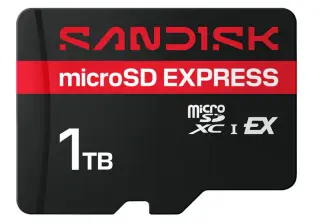
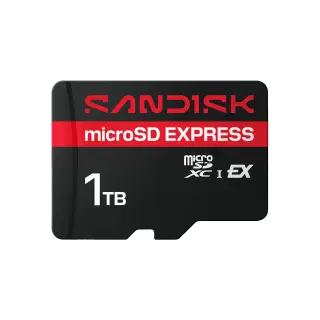
SanDisk reveals a 1TB microSD Express card for the Nintendo Switch 2 with up to 3.5x faster reads than UHS-I, but at a steep $360 it’s a pricey way to expand the Switch 2’s 256GB internal storage.
SanDisk announced a 1TB microSD Express card for Switch 2 (also compatible with some Asus handhelds) with up to 800 MB/s write and 880 MB/s read speeds, but it isn’t directly purchasable yet and is available only via a sales inquiry; priced around €500 in Germany and about $359 in the US, highlighting the premium cost of high‑capacity game storage.
Memory stocks slid after weekend reports that Washington may allow Apple to source DRAM from CXMT and NAND from YMTC in China ahead of Xi’s U.S. visit. SanDisk fell about 9%, Micron around 7%, and Western Digital about 7% as the Roundhill Memory ETF also declined, signaling broad sector weakness. Analysts characterized the move as an overreaction given CXMT’s limited qualification for Apple products and YMTC’s current domestic allocations, while no formal policy decision has been announced — investors should watch for Xi-visit headlines and potential further gaps in this highly beta group.
Top Wall Street analysts see long-run growth in CrowdStrike, Dell Technologies, and SanDisk, boosted by AI-related demand, platform consolidation, and high-margin storage opportunities, with bullish price targets reflecting upside as AI infrastructure spending and NAND demand expand.
Memory and storage names fell 5–7% as rising Treasury yields compressed their valuations, snapping a strong 2026 run (MU +255%, SNDK +653%, WDC +211% YTD). Seagate and the Roundhill Memory ETF also slid about 6%, with the move attributed to a macro rate reset rather than company-specific news. The AI infrastructure story remains intact on the fundamentals, but investors should consider smaller positions given the higher cost of capital and lofty gains.
SanDisk's 2026 investor day argues for a more durable memory cycle, citing a $93.9 billion customer backlog and multiyear supply agreements (NBMs) that could support sustained AI infrastructure demand. Bank of America reiterates a bullish MU case with a $1,550 target, projecting MU could reach roughly $200–$250 in EPS by 2030 and potentially re-rate to 12–15x P/E if earnings volatility stays low. Risks remain around AI-spend sustainability, competition, and how Micron deploys cash. Overall, SanDisk's framework suggests a steadier memory market, which could amplify Micron's upside if demand holds.