
Terafab Targets 1 Million Wafers Monthly by 2032, Matching Samsung’s DRAM Output
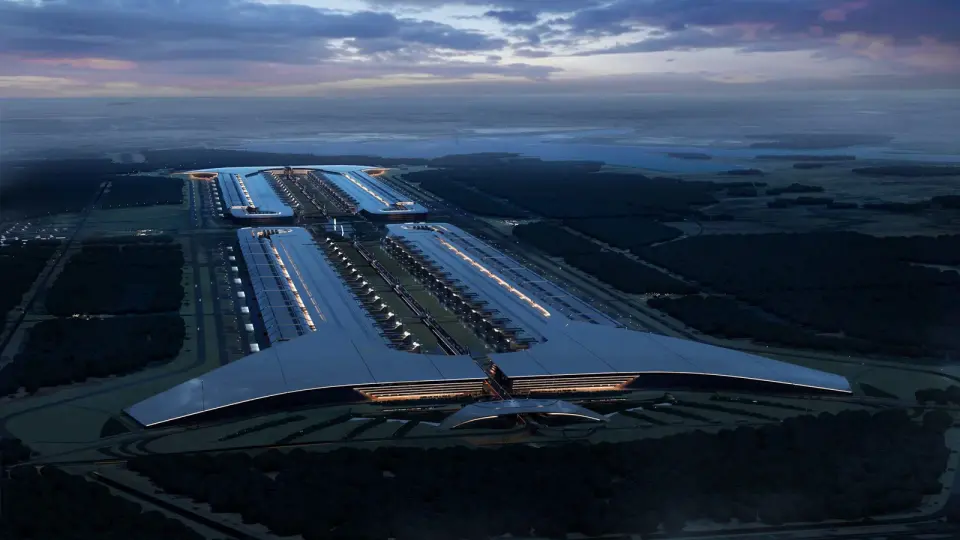
Terafab, a joint venture between Tesla and SpaceX, has informed suppliers it aims for 1 million wafers per month by 2032. This target includes 700,000 wafers for memory, matching Samsung’s current total DRAM capacity. The project seeks to produce 1 terawatt of AI compute annually, with mass production targeted for late 2028.
Key points
- Terafab aims for 1 million wafers per month by 2032, split between 700,000 for memory and 300,000 for logic chips.
- The 700,000-wafer memory target equals Samsung’s entire current DRAM capacity, a significant scale for a new entrant.
- Elon Musk accepted a $1 trillion cost estimate for the project, though spending will occur in phases.
- The first phase in Grimes County, Texas, is valued at $16.8 billion, with a total footprint of 100 million square feet.
- Terafab plans to use Intel’s 14A process for logic chips and is renegotiating terms with TSMC.
- Musk targets a first test chip in mid-2027 and mass production in the third quarter of 2028, calling the timeline 'very aggressive'.
Background
The global memory market faces a shortage through 2028, with Micron and Samsung prioritizing AI and server demand over consumer devices. New manufacturing facilities are not expected to ramp up until 2028, creating a supply gap that Terafab aims to fill. This follows a period where memory price gains stalled, but long-term AI demand remains high.
How outlets are covering it
Wccftech highlights the unprecedented scale of Terafab’s memory target relative to Samsung. Yahoo Finance emphasizes the financial risk, noting Tesla’s falling free cash flow and the unproven nature of the project. Chosun Ilbo and Financial News focus on the aggressive timelines, with Japanese suppliers expressing confusion over delivery deadlines that defy conventional standards. All sources agree on the 1 million wafer target but differ on the feasibility, with industry experts questioning whether a company with no prior semiconductor experience can achieve mass production in under three years.
Why it matters
Terafab’s success could reshape the global semiconductor supply chain, reducing reliance on traditional manufacturers like Samsung and TSMC. If achieved, it would provide a steady supply of memory and logic chips for AI and robotics, potentially alleviating the current memory shortage. However, the project’s massive cost and aggressive timeline pose significant risks to Tesla and SpaceX shareholders.
What to watch
Terafab plans to validate chip processes at a research facility in Austin before expanding to Grimes County. The first test chip is expected in May or June 2027, with mass production targeted for the third quarter of 2028. Renegotiations with TSMC and Intel will continue to finalize partnership terms and operational control.
- Terafab Is Now Aiming For A Memory Production Capacity Of Around 700,000 Wafers Per Month, Which Is Roughly Equal To Samsung’s Entire DRAM Capacity Wccftech
- Elon Musk's Terafab targets 1M wafers per month by 2032 - report (TSLA:NASDAQ) Seeking Alpha
- Musk Says His Terafab Chip Plant Could Cost $1 Trillion Yahoo Finance
- TerraFab Places Unprecedented Orders With Japanese Suppliers 조선일보
- Musk’s procurement team makes secret trip to Japan, places rush orders: “Deliver within a few months” 파이낸셜뉴스
Want the full story? Read the original reporting
Read on Wccftech