
The Evolution of Daily Commutes: How Americans Adapted
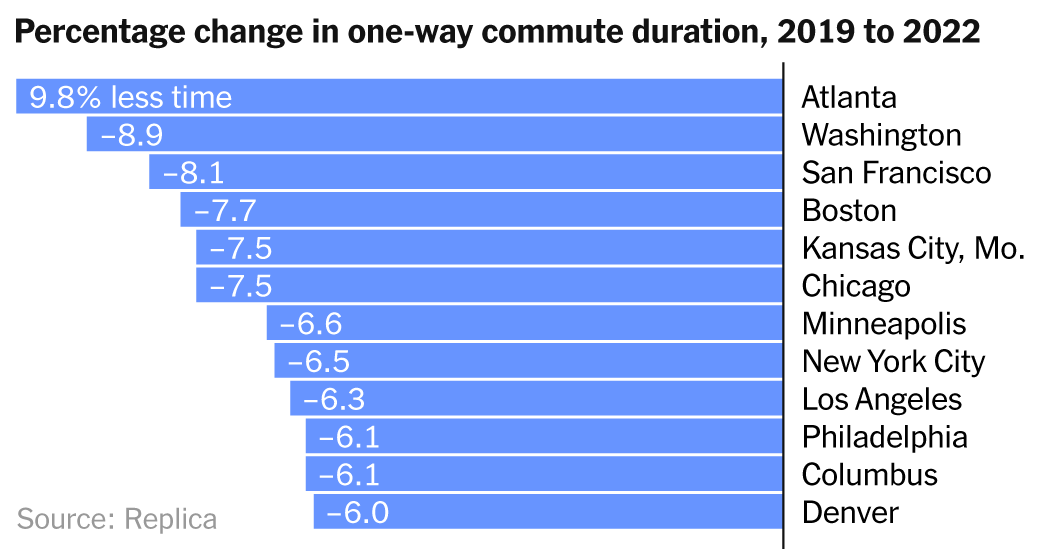
The pandemic has brought significant changes to the daily commute experience for Americans. While some industries shifted to remote work, nearly half of U.S. workers continued to commute, with the duration of commutes decreasing by 9.8% on average. The decrease in travel by remote workers streamlined rush-hour traffic but also reduced public transportation frequency. Commuting experiences varied, with some experiencing shorter and faster drives, while others faced challenges such as rising crime and Covid-19 risks on public transit. The pandemic also revealed disparities, with essential workers feeling worse off due to the lack of commuting options. The average one-way commute increased slightly in 2022 as more people returned to the office, and there was a decline in public transit usage. The future of commuting remains uncertain, with potential implications for transit systems and urban economies.
Reading Insights
0
8
11 min
vs 12 min read
94%
2,236 → 135 words
Want the full story? Read the original article
Read on The New York Times