
Cruise Lines Pivot to High-End Suites as Luxury Fleet Expands
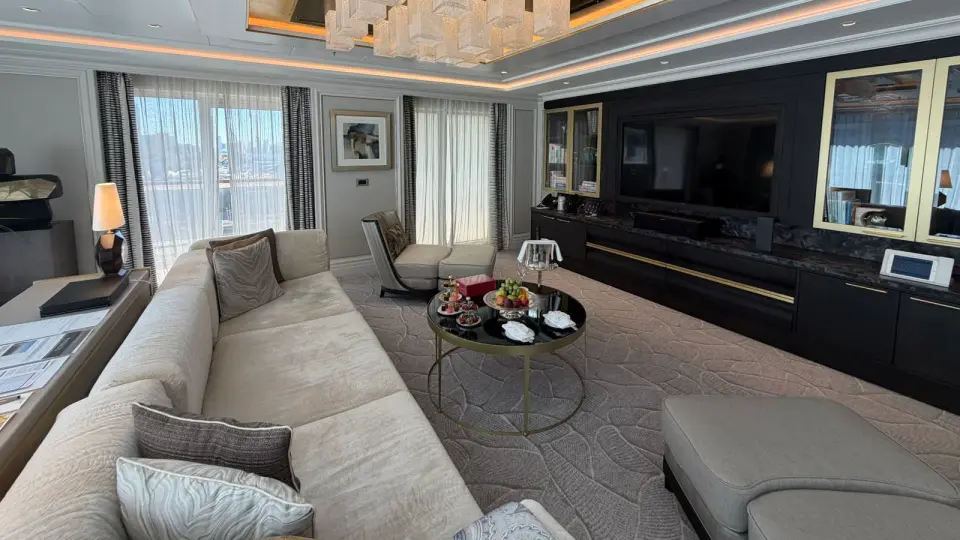
Cruise operators are prioritizing luxury segments to drive profitability, with Regent Seven Seas offering suites priced up to $15,000 per night and introducing a new ship class with a $25,000 nightly rate. While mega-ships remain popular, the industry is shifting investment toward smaller, high-end vessels, with the luxury fleet expected to grow from 104 ships in 2026 to 130 by 2036. This trend mirrors broader hospitality moves by airlines and hotels to enhance premium offerings, though some luxury brands face challenges with occupancy and profitability.
Key points
- Regent Seven Seas Splendor offers a top-tier suite for $15,000 per night, featuring 5,100 square feet, a Steinway piano, and a private dining room.
- Norwegian Cruise Line Holdings is launching Seven Seas Prestige in December, its first new ship class in a decade, with a top suite priced at $25,000 per night.
- The luxury cruise fleet is projected to grow from 104 ships in 2026 to at least 130 by 2036, with orders indicating a 26% increase in ships through 2029.
- From 2020 to 2025, the number of luxury ships increased by 71% and berths by 84%, according to the Cruise Lines International Association.
- While luxury travel is growing, some brands like Ritz-Carlton Yacht Collection have struggled with occupancy, accumulating nearly $700 million in losses since 2017.
Background
Recent industry trends show a broader shift toward premium experiences across travel sectors. Delta Air Lines is launching a $1 billion overhaul of its Delta One cabin for 2027, featuring new lie-flat suites and enhanced dining, while Marriott has reported faster growth in luxury revenue per available room compared to its broader hotel business. Additionally, Princess Cruises recently won top megaship awards, highlighting consumer interest in innovative ship designs, though the current focus is increasingly on exclusive, high-end luxury offerings rather than mass-market mega-ships.
Why it matters
The shift toward luxury cruise offerings reflects a broader trend in hospitality where affluent customers are willing to pay for space, personal service, and distinctive experiences. This strategy is driving profitability for companies like Norwegian Cruise Line Holdings, even as global cruise passenger numbers grow at a slower rate. However, the success of luxury offerings is not guaranteed, as some brands face challenges with occupancy and profitability, highlighting the need for unique experiences to maintain customer loyalty.
What to watch
The luxury cruise fleet is expected to continue expanding, with orders indicating a 32% increase in capacity through the end of 2029. Companies will need to differentiate their offerings to maintain profitability, as increased competition could undercut the perception of scarcity. The industry will likely see further investment in smaller, high-end vessels and specialized experiences to cater to affluent travelers.
Want the full story? Read the original reporting
Read on CNBC