
TSA Eases 9/11-Era Restrictions with New Gateside Program and Shoe Policy
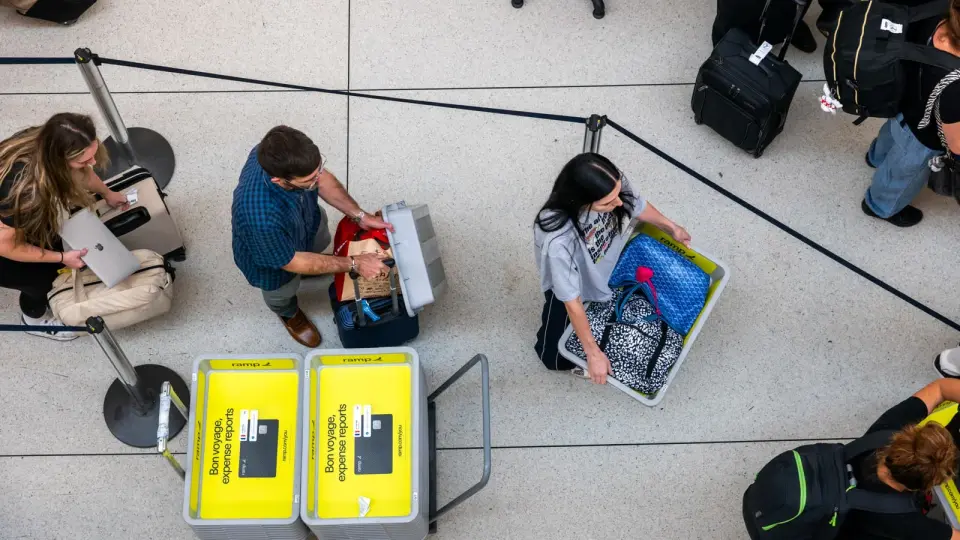
Twenty-five years after the September 11 attacks, U.S. airport security is undergoing a significant shift. The Transportation Security Administration (TSA) has launched 'Gateside,' a free program allowing trusted travelers to access secure gate areas without a boarding pass. Additionally, the mandatory shoe removal rule, a staple since 2006, was relaxed last year. While liquid restrictions remain, new technology allows some travelers to keep liquids in their bags. These changes reflect a broader move toward efficiency, though privatization efforts like 'TSA Gold+' have faced recent setbacks.
Key points
- TSA launched 'Gateside,' a free program at 13 U.S. airports, allowing PreCheck members to enter secure areas without a ticket to meet family or friends.
- The mandatory shoe removal rule, introduced after the 2001 'shoe bomber' incident, was officially relaxed last year, though steel-toe boots still require X-ray screening.
- Liquid restrictions remain in effect, but new scanners at some airports allow travelers to leave liquids in their bags during screening.
- TSA scrapped its 'TSA Gold+' privatization program after Tampa International Airport opted out due to unresolved technology questions.
- Security experts note that while physical rules are easing, threats have evolved to include AI, cybersecurity, and drones, requiring adaptive security measures.
Background
This development follows a 25-year trajectory of post-9/11 security reforms. Our archive from September 2026 noted the initial rollout of the Gateside program, highlighting its expansion to major hubs like LAX and DFW. The current news confirms the program's operational status and adds context regarding the broader relaxation of restrictions, such as the shoe removal policy, which had been a point of contention for years. The shift reflects a long-term trend of balancing security with passenger convenience, a dynamic that has evolved since the Aviation and Transportation Security Act was signed in 2001.
How outlets are covering it
CNBC emphasizes the technological advancements and the new 'Gateside' program as a major shift in the post-9/11 era, highlighting the trade-off between convenience and data privacy with PreCheck. Al Jazeera provides a broader historical context, detailing the evolution of security measures from reinforced cockpits to full-body scanners, and notes that while some rules like shoe removal have been relaxed, others like liquid limits remain strict in the U.S. compared to other countries. CNN focuses on the human element, recounting the experiences of FAA and NTSB personnel on 9/11, underscoring the emotional and operational impact of the attacks that led to these current security frameworks. The sources agree on the easing of some restrictions but differ in emphasis: CNBC and Al Jazeera focus on the practical changes for travelers, while CNN highlights the historical and emotional weight of the security measures.
Why it matters
The easing of long-standing security restrictions signals a shift in U.S. aviation policy, prioritizing efficiency and passenger experience alongside security. The 'Gateside' program and relaxed shoe rules could improve airport throughput and reduce congestion, potentially mitigating the impact of staffing shortages. However, the failure of the 'TSA Gold+' privatization program suggests ongoing challenges in balancing public and private sector roles in security. As threats evolve, the TSA must adapt its strategies to maintain safety without imposing excessive burdens on travelers.
What to watch
The TSA is expected to expand the 'Gateside' program to more airports and refine its technology partnerships. The agency may also introduce new screening technologies to replace the scrapped 'TSA Gold+' program. Travelers should monitor updates on liquid and shoe policies, as these may continue to evolve based on technological advancements and security assessments. The TSA will likely face pressure to balance security with efficiency, especially as staffing shortages and government shutdowns continue to impact airport operations.
- 25 years after 9/11, the U.S. starts rolling back travel restrictions, from liquids to gate access cnbc.com
- They were on duty the day airplanes were used to attack America. This is how they remember it 25 years later CNN
- 25 years after 9/11, airport security gets second look from Trump thehill.com
- Airline boss felt 'total numbness' after 9/11 BBC
- From hours at security to bulletproof cockpits: How 9/11 changed air travel Al Jazeera
Want the full story? Read the original reporting
Read on cnbc.com