
Harvard Art Museums Unveils 'The Way We Never Were' to Deconstruct Postwar American Myth
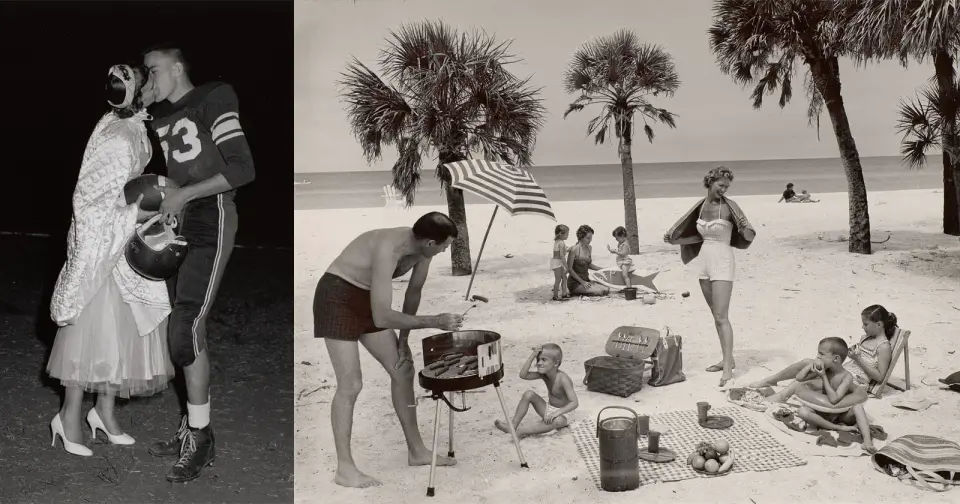
Harvard Art Museums is hosting an exhibition titled 'The Way We Never Were' that critically examines the American Professional Photographers Collection. The show argues that mid-20th-century commercial photography constructed an idealized, exclusionary narrative of postwar life, masking the era's social tensions and racial segregation. Featuring approximately 70 images, the exhibit runs until May 2027.
Key points
- The exhibition, 'The Way We Never Were,' is currently on view at the University Research Gallery at Harvard Art Museums in Cambridge, Massachusetts, and will remain open until May 9, 2027.
- The show draws from the American Professional Photographers Collection, an archive of over 20,000 negatives and prints collected in the 1970s by Harvard sociologist Barbara P. Norfleet from dozens of studios across the United States.
- Curators Audrey Sands and Madison Brown argue that these images were not neutral records but carefully staged constructs that promoted a narrow vision of American belonging, focusing on white, middle-class suburban life.
- The exhibition highlights how professional photography obscured significant historical realities, including racial segregation, Cold War anxiety, strict gender roles, and political repression, by presenting a polished fantasy of prosperity.
- The display features approximately 70 photographs covering various subjects, from formal studio portraits and family milestones to corporate commissions and promotional imagery for consumer goods and real estate.
Background
This exhibition builds on the broader academic interest in visual culture and the role of media in shaping historical narratives. While recent archival efforts have focused on diverse global imagery, such as regional Latin American photography or space exploration, this project specifically isolates the domestic American experience to critique the 'rosy' postwar narrative. It aligns with contemporary efforts to re-evaluate historical archives for their biases and exclusions, moving beyond the traditional celebration of mid-century optimism to analyze the mechanisms of social control and idealization embedded in commercial photography.
Why it matters
The exhibition challenges the enduring cultural myth of postwar America as a period of universal harmony and prosperity. By revealing the constructed nature of these images, it offers a critical lens for understanding how visual media can shape collective memory and exclude marginalized voices. This analysis is significant for historians, sociologists, and the public, as it underscores the importance of scrutinizing historical archives for their ideological functions and the gaps in their representation of diverse national experiences.
What to watch
The exhibition will continue to be on view at the Harvard Art Museums until May 9, 2027. Visitors are encouraged to engage with the curated selection of photographs to critically assess the constructed nature of postwar American identity. Future discussions may expand on the broader implications of commercial photography in shaping social norms and historical narratives, potentially leading to further academic research or related exhibitions exploring other periods or regions.
Want the full story? Read the original reporting
Read on PetaPixel