
Nolan’s Circe: A Feminist Reimagining of Homer’s Goddess
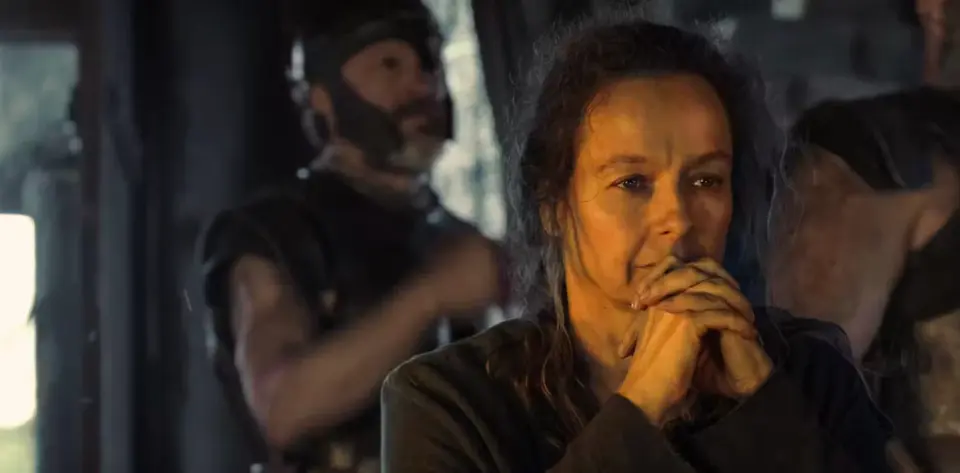
Christopher Nolan’s adaptation of The Odyssey reimagines Circe not as Homer’s hospitable goddess, but as a vindictive witch who transforms Odysseus’s men into pigs to expose their violent, entitled masculinity. Samantha Morton’s performance frames the character as a survivor of abuse, aligning with modern feminist retellings that view Circe’s magic as a tool for asserting bodily autonomy against patriarchal aggression.
Key points
- Nolan’s Circe, played by Samantha Morton, is depicted as a dirt-smudged, isolated witch in a dilapidated hut, contrasting sharply with Homer’s description of a beautiful, hospitable goddess living in a polished stone house.
- In the film, Circe transforms Odusseus’s men into pigs after they greedily devour her stew, a scene that serves as a moral indictment of their violent and entitled behavior.
- The character’s dialogue, including the line 'Back into your disguises,' is interpreted as a moral judgment on men’s insatiable appetites, rather than the ramblings of a madwoman.
- This portrayal aligns with feminist literary traditions, such as Carol Ann Duffy’s poem and Madeline Miller’s novel, which reframe Circe as a figure of resistance against patriarchal values and sexual violence.
- Nolan’s version limits Circe’s role to a brief obstacle, omitting her year-long hospitality and guidance in Homer’s epic, but uses her to critique the Greeks’ campaign of plunder and the collapse of Bronze Age civilization.
Background
Samantha Morton’s role as Circe has been a significant focus in recent coverage, with earlier reports highlighting her one-take performance and the standing ovation it received from the crew. Morton has discussed how the role felt like a rebirth after a year out of acting, attributing her hiatus to ageism and industry shifts. Classics experts have also debated Nolan’s adaptation, noting that while some performances are praised, the portrayal of characters like Circe and Penelope diverges significantly from Homer’s original text, sparking discussions about agency and historical accuracy.
Why it matters
Nolan’s reimagining of Circe challenges traditional interpretations of Homer’s epic by framing the character as a feminist symbol of resistance. This shift not only redefines the narrative of The Odyssey but also reflects broader cultural conversations about gender, power, and the reclamation of mythological figures from patriarchal control. The film’s portrayal of Circe as a survivor of abuse resonates with contemporary audiences, making the ancient text relevant to modern discussions on violence and autonomy.
What to watch
The film’s release will likely spark further debates among classics scholars and film critics about the balance between historical fidelity and modern reinterpretation. Samantha Morton’s performance may also influence future adaptations of mythological figures, potentially leading to more nuanced portrayals of female characters in epic narratives. Additionally, the film’s thematic focus on the collapse of Bronze Age civilization may attract academic attention for its historical and cultural insights.
Want the full story? Read the original reporting
Read on The Conversation